Tel : +86-13812850975 E-mail : info@winsoarst.com

Views: 0 Author: Winsoar Engineering Team Publish Time: 2026-11-12 Origin: Site


Glow-in-the-dark PLA filament combines a familiar biodegradable printing material with a photoluminescent additive. The additive makes the printed part emit visible light after exposure to a light source, but it also changes the way the melt flows, cools and is wound. A stable production process therefore needs coordinated control from material preparation to the finished spool.
This guide explains the main equipment and process controls used on a luminous PLA filament production line, including the target process tolerance of +/-0.02 mm when the selected formulation and operating conditions are validated in a production trial.
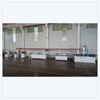
Complete line configuration for luminous PLA 3D printer filament
Glow-in-the-dark PLA filament is made by dispersing a photoluminescent pigment or masterbatch in a PLA-based formulation. The final filament must still feed consistently through an FDM or FFF printer, so diameter, roundness, moisture and surface quality are as important as the visible glow.
Because the additive loading, particle size and color can affect melt behavior, the recipe should be confirmed before selecting screw speed, die design, cooling capacity and line speed. Finished performance should be checked on printed samples rather than inferred from the raw pellets alone.
PLA and the luminous additive should be dried and handled according to the material supplier's recommendations. Stable feeding reduces moisture-related bubbles and helps keep the extruder supplied at a consistent rate. A gravimetric or well-calibrated volumetric feeder can be selected according to the target output and formulation.
The single-screw extruder plasticizes the blend and delivers a controlled melt stream to a precision die. Operators normally tune temperature zones, screw speed, melt pressure and die temperature together. Excessive shear or an unsuitable temperature profile can damage the additive, create surface defects or make the diameter fluctuate.
Hot-water pre-cooling allows the newly formed filament to stabilize gradually before cold-water sizing. This staged approach helps reduce sudden shrinkage and supports a round, smooth filament path. Water temperature, level, cleanliness and the distance between the die and the first cooling stage should be recorded during commissioning.
An online laser gauge measures filament diameter continuously without touching the surface. The measurement signal can be used to guide haul-off speed and process adjustments. The gauge position and calibration must match the target diameter and the actual filament path; a display alone does not guarantee a production tolerance.
The haul-off synchronizes traction with extrusion output. Stable traction helps prevent stretching, ovality and surface marks. The winding unit then lays the filament onto the spool with controlled tension and traverse. Spool width, flange size, changeover method and packaging requirements should be confirmed before finalizing the winding configuration.
A target tolerance of +/-0.02 mm is a process specification, not a universal result for every formulation. It should be verified with a production trial and a measurement record that identifies the PLA grade, luminous additive, filament diameter, line speed, cooling settings, laser gauge and environmental conditions.
Control point | Why it matters |
|---|---|
Material moisture and feed rate | Reduces bubbles and melt instability. |
Temperature, pressure and screw speed | Supports consistent plasticizing and die flow. |
Hot and cold cooling stages | Stabilizes shape before measurement and traction. |
Laser gauge feedback | Makes diameter variation visible during production. |
Haul-off and winding tension | Prevents stretching and inconsistent spool winding. |
Prepare the target filament diameter, formulation, luminous color, required output, tolerance, spool format, power standard, workshop dimensions and delivery destination. The supplier can then recommend a die, cooling length, measurement range, haul-off capacity and winding configuration that match the project instead of relying on a generic line layout.
The short factory video shows the luminous PLA filament line and its downstream handling: Watch the Luminous PLA Filament Production Line on YouTube.
For a machine configuration review, see the Luminous PLA Filament Production Line product page or send the material and output requirements for a quotation.