Tel : +86-13812850975 E-mail : info@winsoarst.com

 |


| Quantity: | |
|---|---|
SJ-35 / SJ-45
Product Description
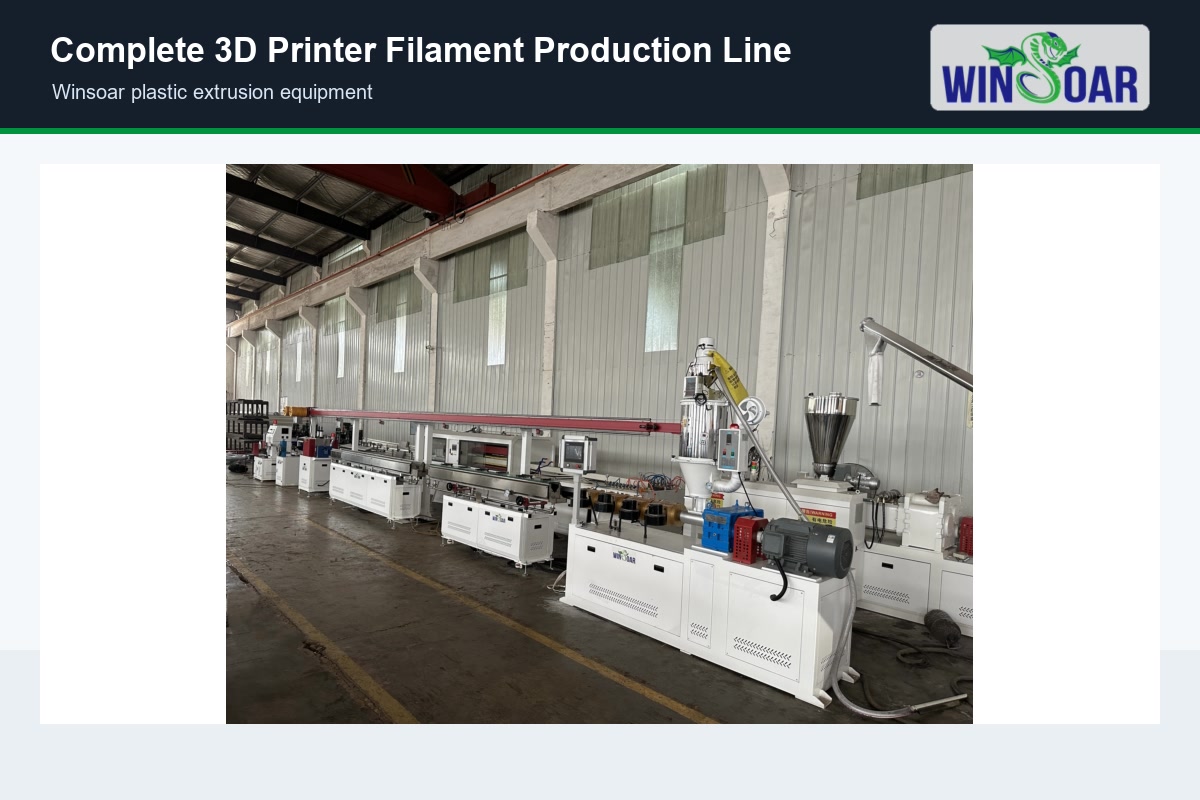
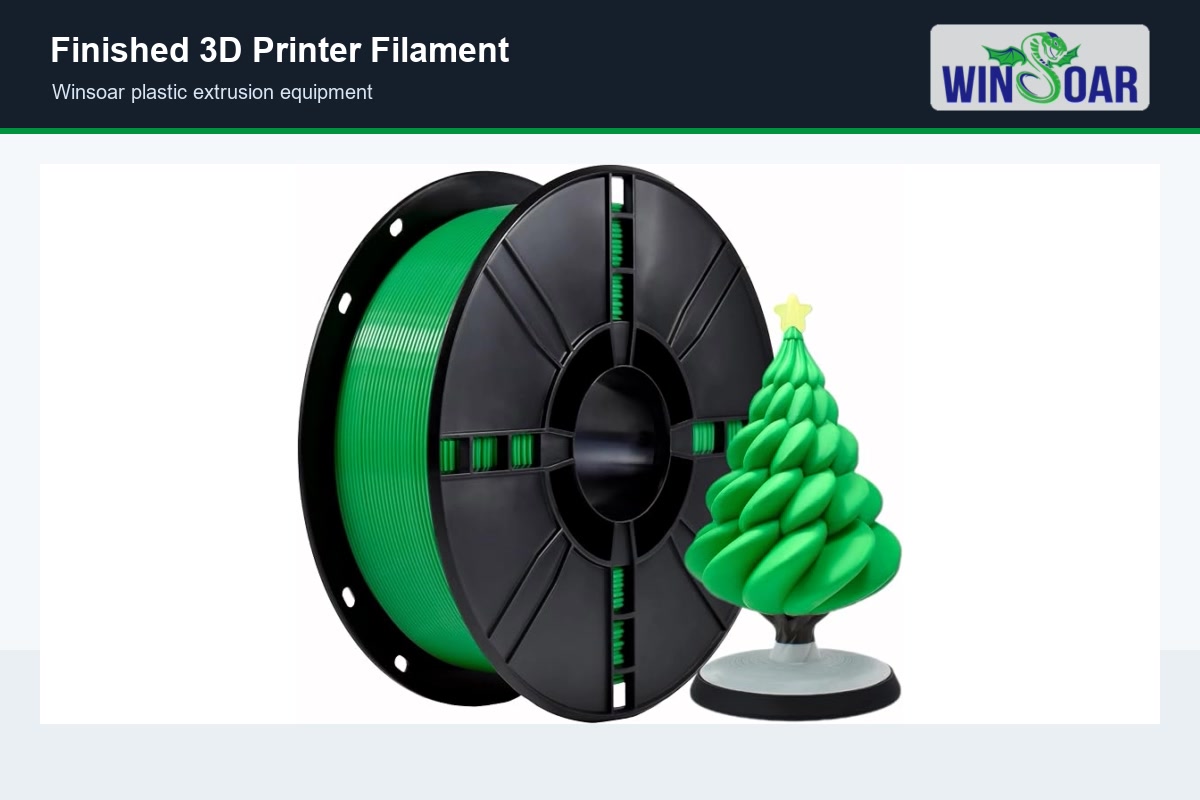
Direct answer: A 3D printer filament production line converts PLA, ABS, PETG and other thermoplastic pellets into controlled-diameter filament for FDM and FFF 3D printers. The complete line normally includes material drying, a single-screw extruder, filament die, staged hot and cold water cooling, online diameter measurement, servo haul-off and constant-tension winding.
PLA filament for prototypes, education, models, decorations and general FDM printing.
ABS filament for functional parts, housings and applications requiring toughness.
PETG filament for durable containers, mechanical parts and chemical-resistant printed products.
Specialty filament such as color, wood-filled or carbon-fiber-filled formulations after material and screw design confirmation.
The finished filament can be supplied to 3D printing material brands, filament wholesalers, desktop printer users, industrial prototyping departments, technical universities and customized color or composite filament projects. The selected material grade, additives, drying method and diameter tolerance should match the target printer and end-use requirements.
Dry and prepare pellets to control moisture before extrusion.
Melt, plasticize and homogenize the polymer in the single-screw extruder.
Form the filament through a precision die for the selected diameter.
Use gradual hot-water pre-cooling followed by cold-water sizing and solidification.
Measure the filament diameter online and coordinate haul-off speed with the extrusion output.
Wind the qualified filament onto spools with controlled tension for packaging and shipment.
| Item | Typical configuration |
|---|---|
| Raw materials | PLA, ABS, PETG and selected thermoplastic compounds |
| Filament sizes | 1.75 mm, 2.85 mm and 3 mm, subject to die and process setup |
| Quality control | Online laser diameter measurement and synchronized traction |
| Downstream handling | Servo haul-off, spool winding, inspection and packing |
For a project quotation, send the filament diameter, material grade, target output, color or additive formulation, spool size, tolerance, local voltage and workshop layout.
Machine Configuration
The line is configured as a continuous system. Each section affects filament diameter, roundness, surface quality, feeding stability and spool appearance, so the equipment should be matched to the raw material and finished filament specification.
The extruder melts, plasticizes and meters the polymer. Screw geometry, barrel heating, cooling zones and drive capacity are selected according to PLA, ABS, PETG or the confirmed specialty compound.
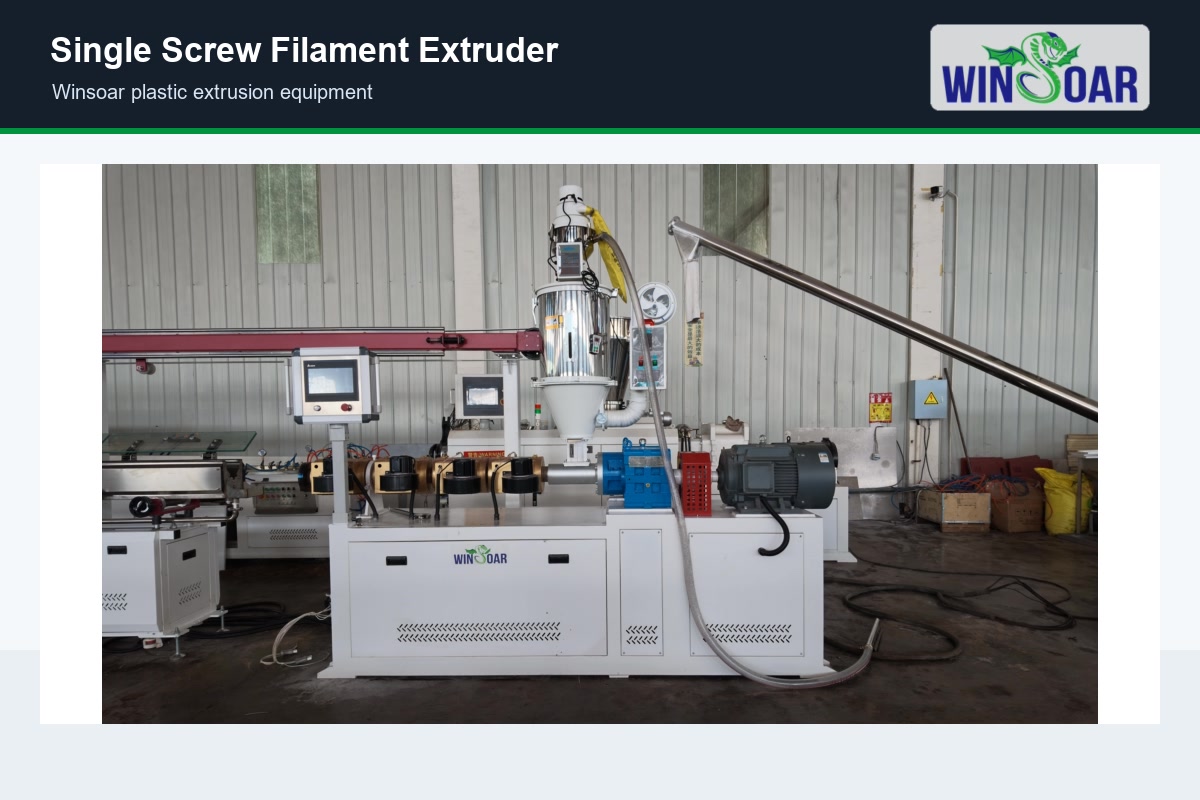
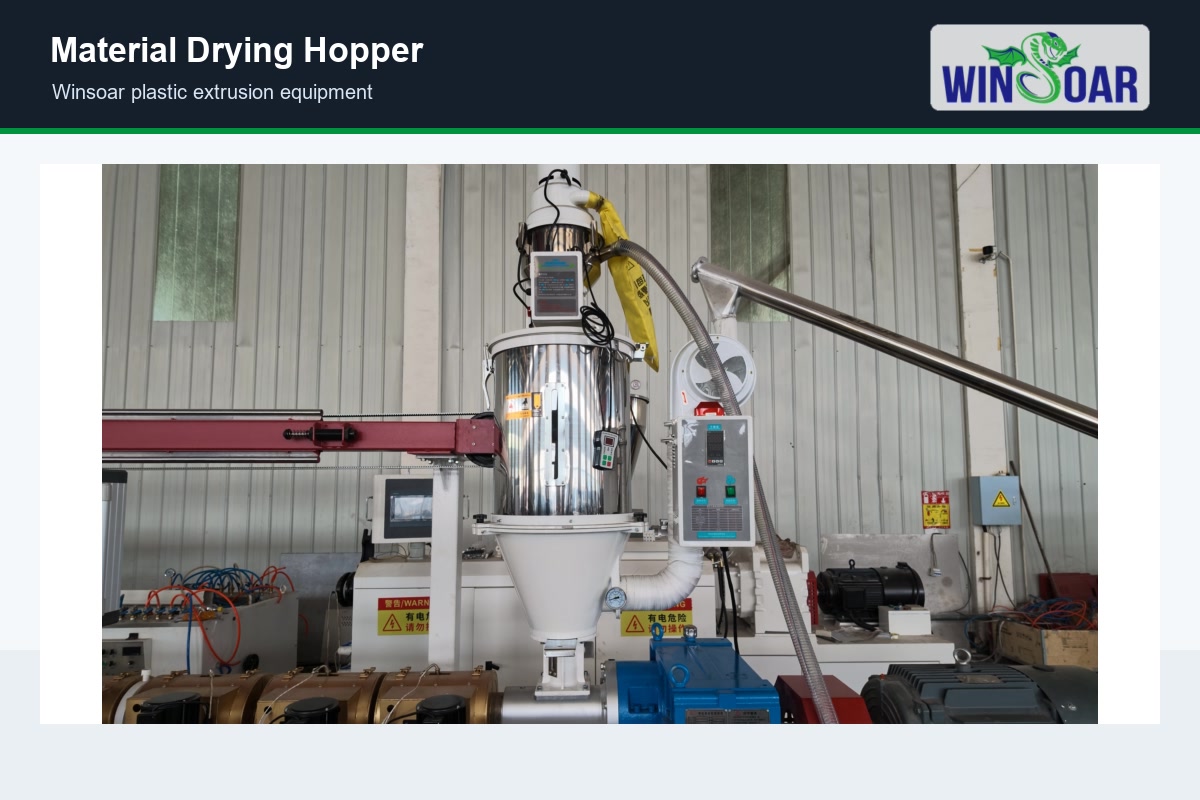
A controlled drying hopper prepares moisture-sensitive pellets before extrusion. Correct drying helps reduce bubbles, voids, surface defects and diameter fluctuation caused by material moisture.
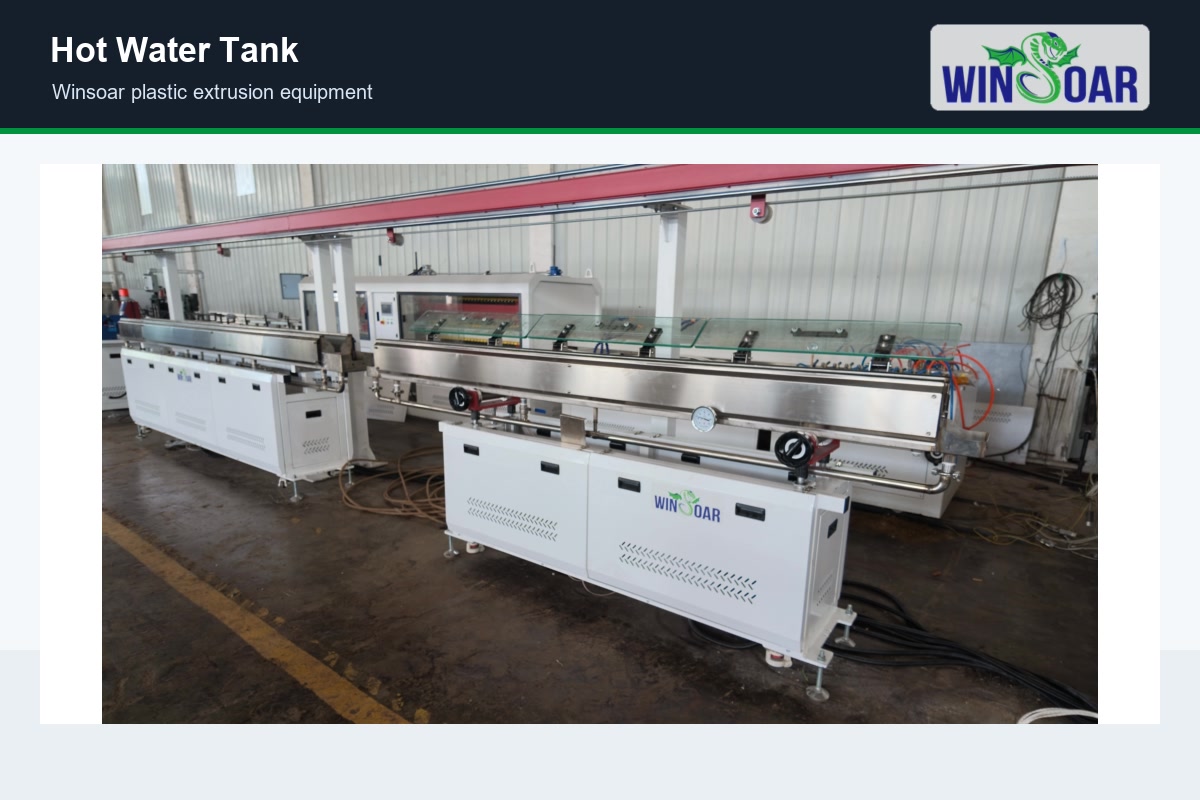
The hot-water section provides gradual pre-cooling after die forming. Controlled temperature change helps reduce internal stress and supports filament straightness before final cold-water sizing.
The cold-water tank completes cooling and solidification. Water circulation, guide alignment and tank length affect final diameter stability, roundness and smooth passage to the measuring section.
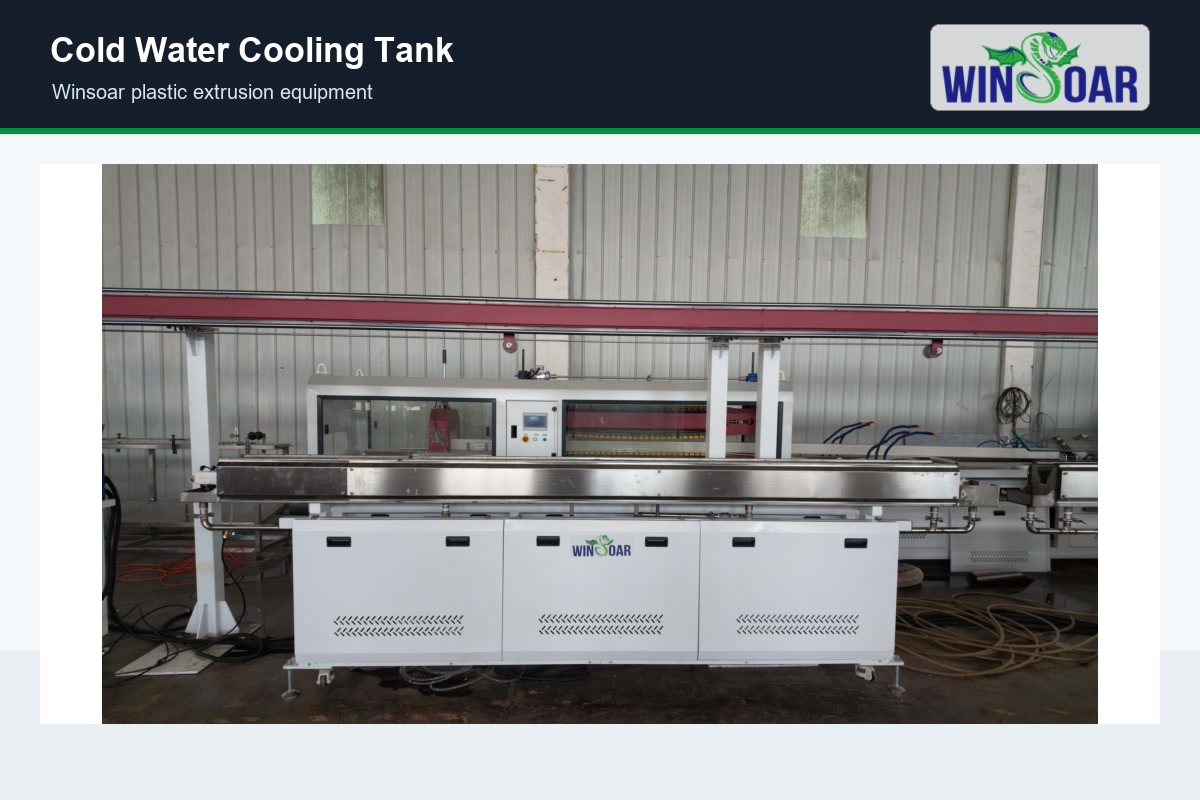
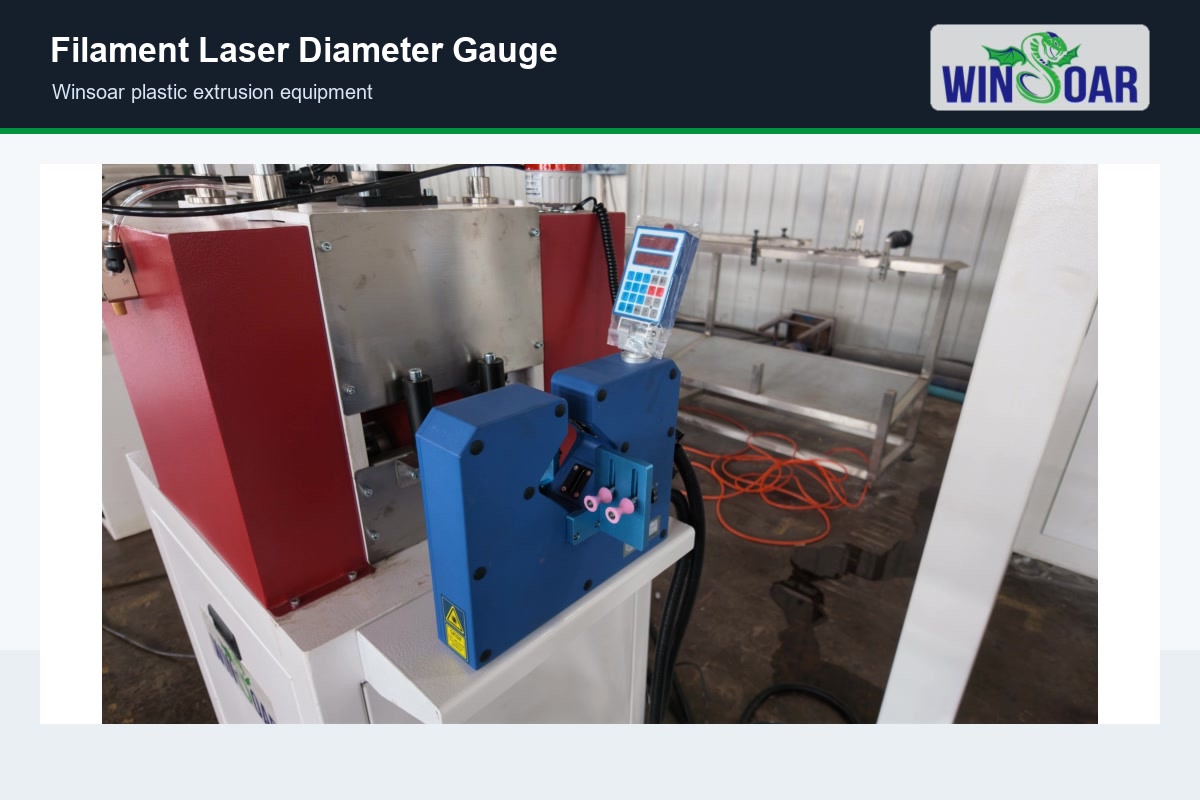
The laser gauge measures filament diameter during production. The operator or control system can coordinate extrusion and haul-off speed adjustments when the measured value moves away from the target.
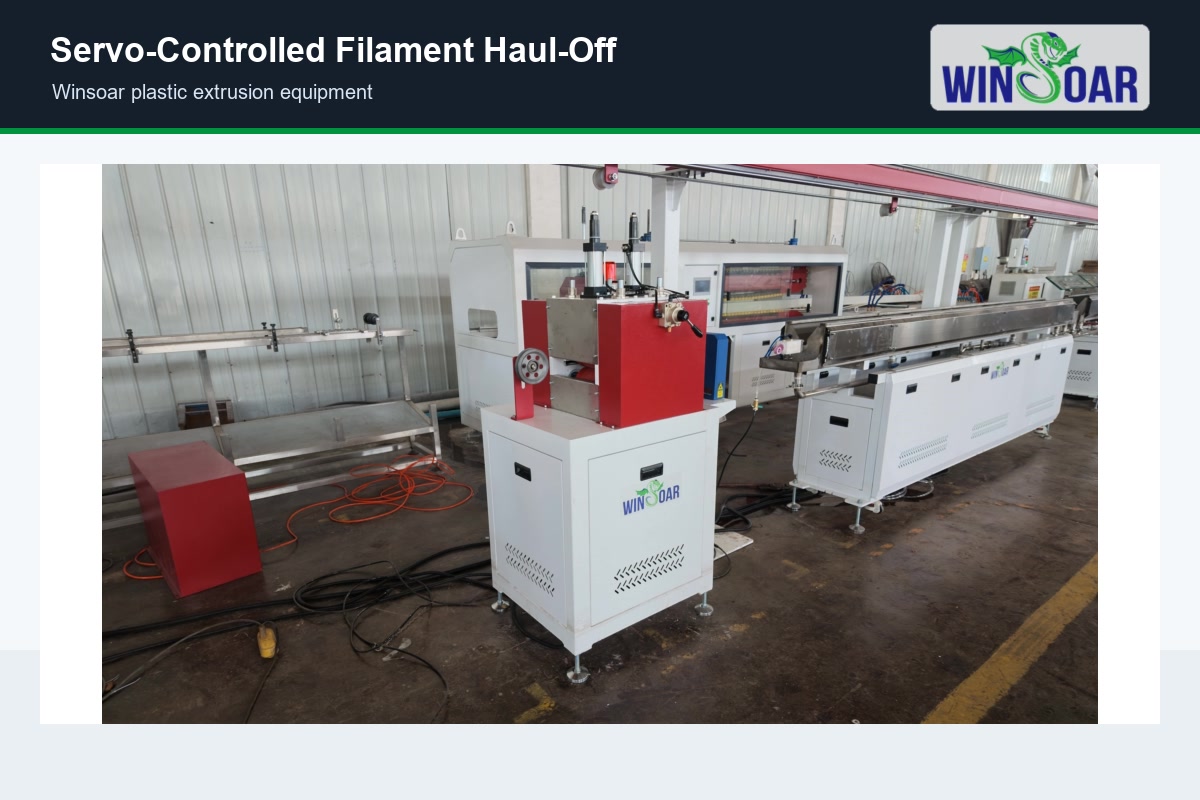
The servo haul-off maintains synchronized traction through the cooling and measurement sections. Stable tension helps reduce stretching, ovality and irregular feeding into the winding unit.
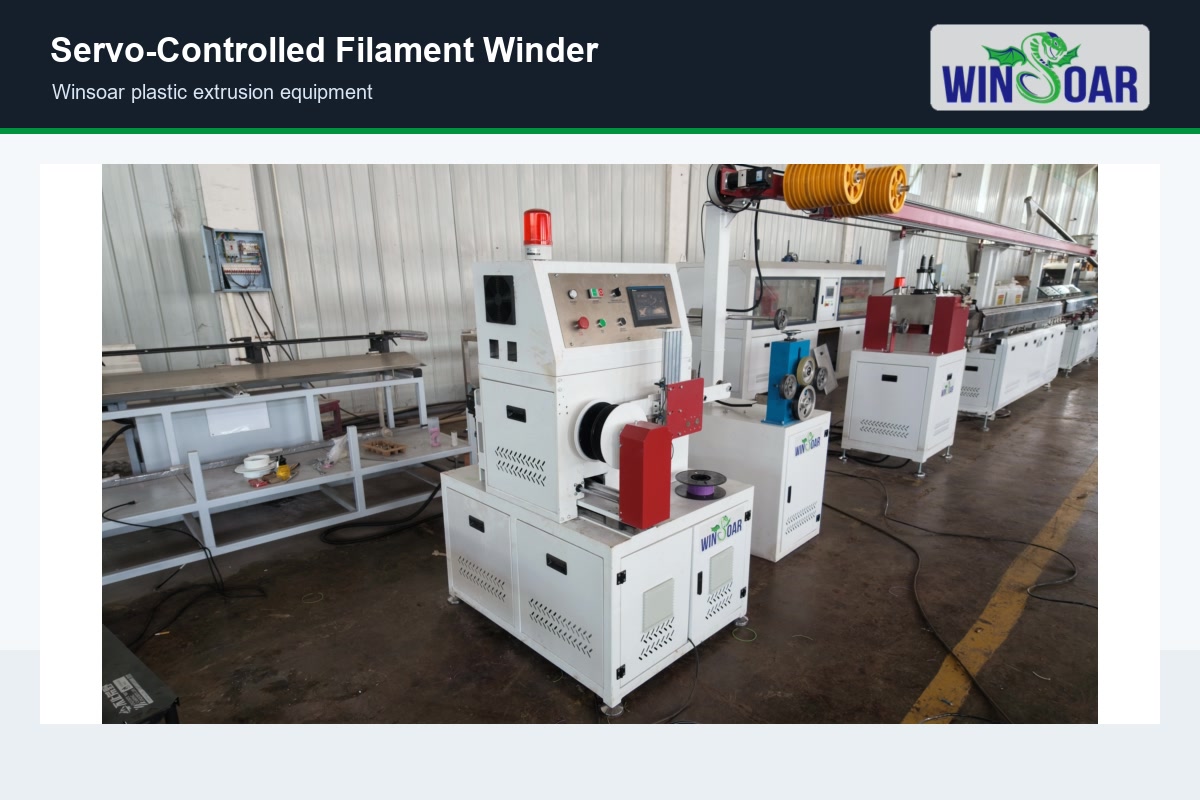
The winder collects qualified filament onto spools with controlled tension and organized traverse movement. Spool diameter, winding speed, coil length and packaging requirements should be confirmed before quotation.
The finished filament is checked for appearance, diameter, winding condition and spool weight before labeling and packing. The final inspection standard can be adjusted to the buyer's product specification.
Main Technical Parameter
Watch the complete 3D printer filament production line video to review the extrusion, cooling, diameter control, haul-off and winding arrangement:
Watch the 3D Printer Filament Production Line on YouTube
| Item | SJ-35 | SJ-45 |
|---|---|---|
| Motor power | 5.5 kW | 15 kW |
| Typical output | 8-12 kg/h | 16-20 kg/h |
| Suitable material | PLA / ABS / PETG pellets | PLA / ABS / PETG pellets |
| Filament size | 1.75 / 2.85 / 3 mm | 1.75 / 2.85 / 3 mm |
| Reference tolerance | Approximately 0.03 mm under suitable material and process conditions | |
Output is affected by filament diameter, material grade, moisture, screw design, extrusion temperature, cooling capacity, haul-off speed, winding tension and the required tolerance. Before confirming the configuration, provide the target diameter, material and additives, kg/h target, spool dimensions, color-change frequency, tolerance, power standard and available factory length.
Factory, Packaging & Exhibition
Winsoar supports 3D printer filament production line projects from material and filament specification review to equipment assembly, process checking, export packaging, container loading, delivery coordination and exhibition communication. The support section below is separated from the machine configuration so buyers can clearly review manufacturing and delivery capability.
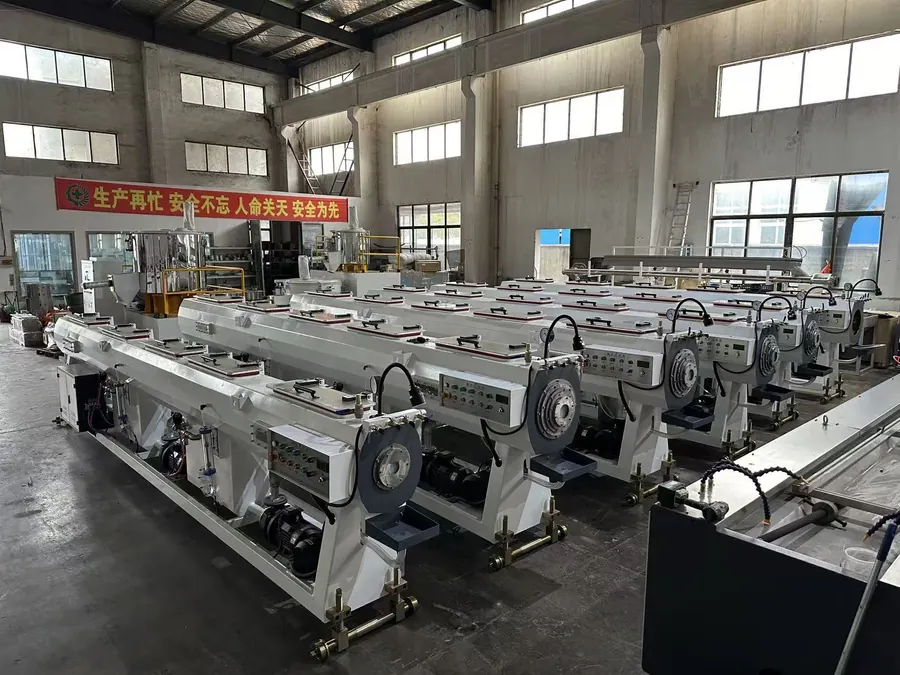
The factory workshop is where plastic extrusion machinery is assembled, checked and prepared for delivery. For a filament line, the layout review includes the extruder, cooling tanks, laser gauge, haul-off, winder, electrical cabinet and operator access.
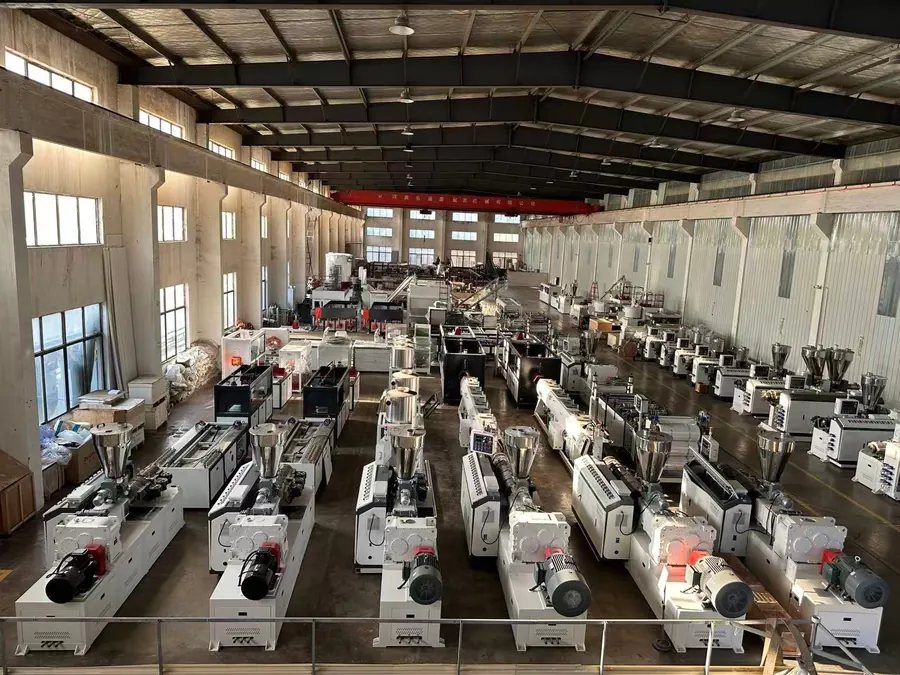
Mechanical sections, electrical control components, dies, cooling utilities and downstream equipment are checked during assembly. This helps reduce installation risk after the line arrives at the customer's factory.
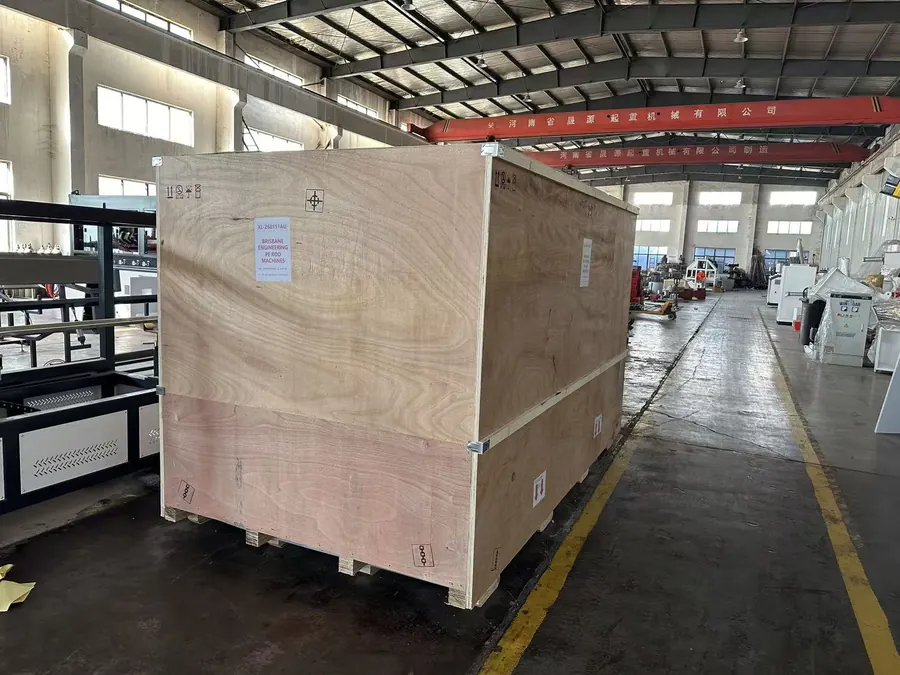
Packaging is planned according to machine dimensions, transport distance and unloading conditions. Protective wrapping and wooden cases can be used for electrical parts, dies, accessories and other line components.
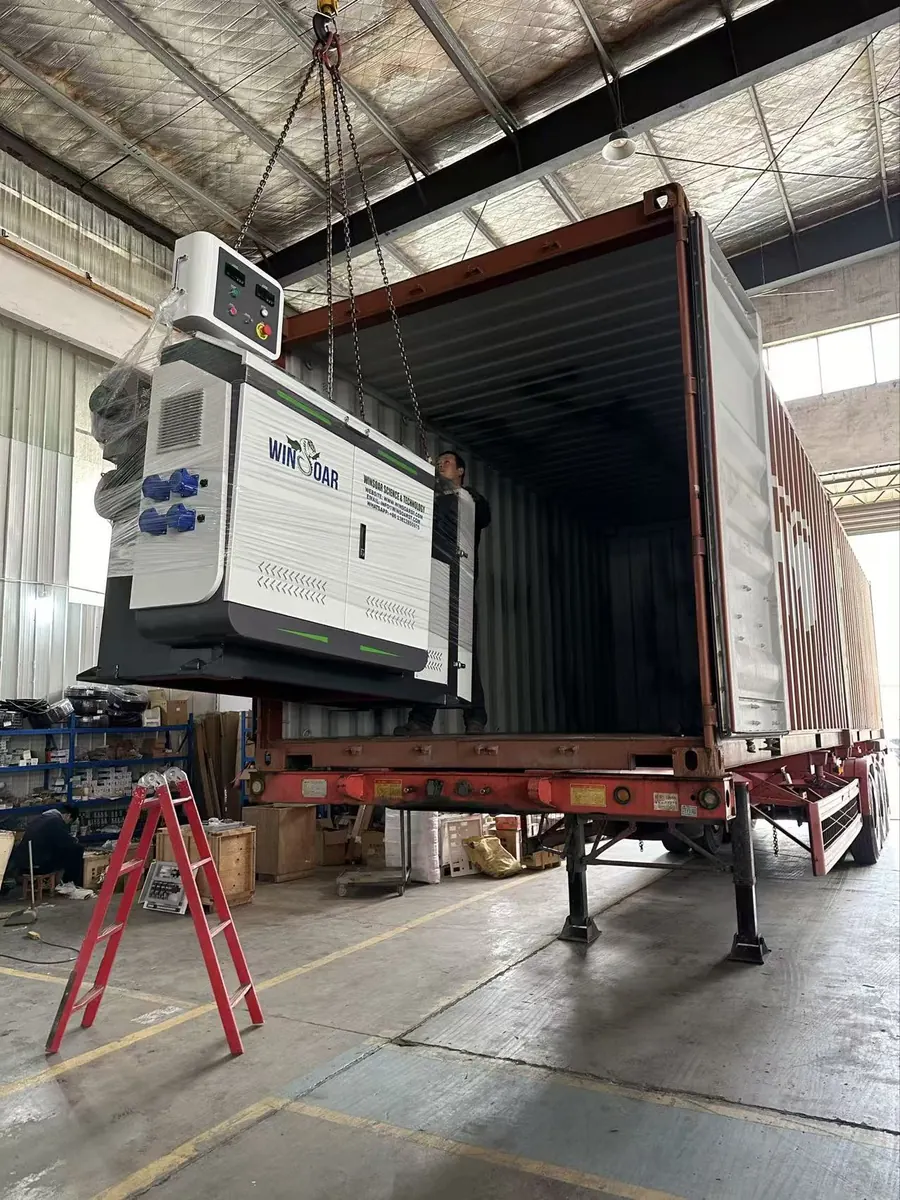
Container loading is organized around equipment size, protection requirements and destination arrangements. Winsoar can coordinate loading plans, shipment documents and delivery communication for overseas filament projects.
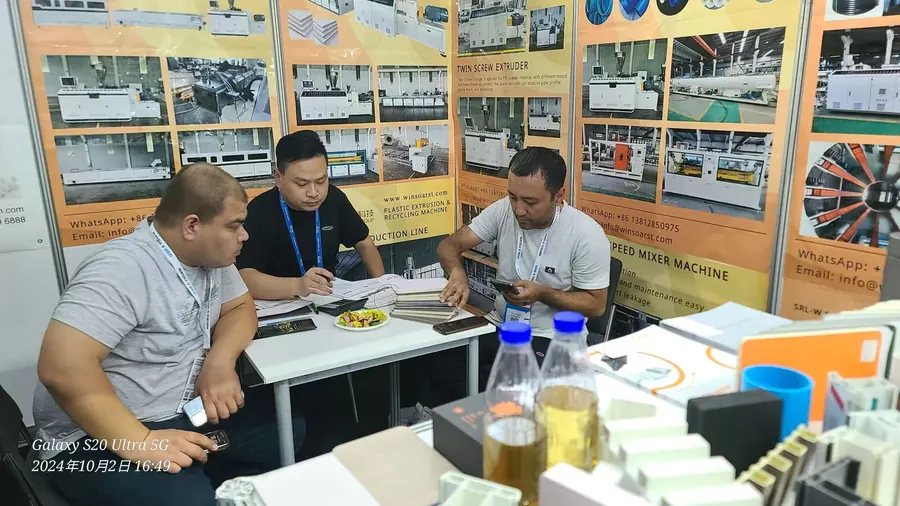
Exhibitions and technical meetings help Winsoar understand the buyer's filament material, target diameter, output, spool format and factory conditions before finalizing a line proposal.
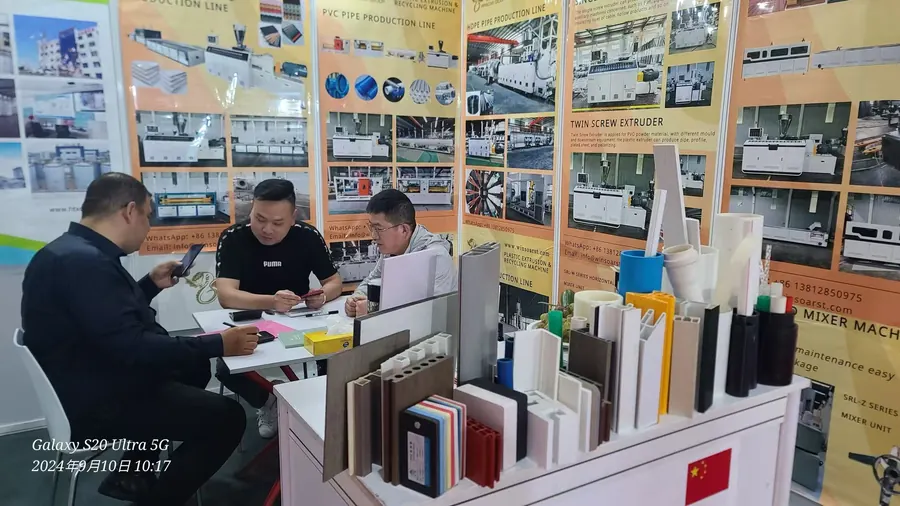
Finished filament samples help buyers and engineers discuss diameter tolerance, surface quality, color, spool winding and possible PLA, ABS, PETG or composite material expansion.
Send the filament diameter, material grade, additives, target output, tolerance, spool size, local voltage and factory layout. Winsoar can then recommend the extruder, die, drying, cooling, laser measurement, haul-off and winding configuration.
Share the product specification and target spool format for a project review.
The line can be configured for PLA, ABS, PETG and selected thermoplastic compounds. TPU, filled or specialty formulations require confirmation of material moisture, melt behavior, screw design, die and cooling requirements.
Common options are 1.75 mm, 2.85 mm and 3 mm. Different diameters require the corresponding die, cooling and process settings, and the final tolerance should be confirmed with the buyer's quality standard.
The filament is cooled and measured online by a laser diameter gauge. Extruder speed, haul-off speed, melt temperature, cooling conditions and winding tension are coordinated to maintain stable production.
Please provide material and additives, filament diameter, target tolerance, output in kg/h, color-change frequency, spool dimensions, winding method, local voltage and available workshop space.
Yes, the line can be planned around different dies, materials and spool formats. The extruder, screw, drying, cooling, laser gauge, haul-off and winder should be checked together when the product range includes multiple material grades or composite formulations.
For more filament extrusion options, compare the 3D Printer Filament Making Machine, the ABS/PLA 3D Printer Filament Extrusion Machine and the ABS/PLA 1.75mm Plastic Filament Extrusion Machine. These related pages help buyers compare general filament production, ABS/PLA extrusion configurations and the common 1.75 mm filament format before requesting a complete line proposal.
Contact Winsoar for a project-matched 3D printer filament production line proposal.