Tel : +86-13812850975 E-mail : info@winsoarst.com

Views: 0 Author: Site Editor Publish Time: 2026-08-29 Origin: Winsoar


Direct answer: Select a PVC window profile extrusion machine from the approved profile drawing, material formula, target output, profile section, wall thickness, surface finish, tooling plan, co-extrusion requirement and factory conditions. The extruder, profile die, calibration mould, vacuum calibration table, haul-off, cutter and stacker must be matched as one line rather than purchased as unrelated machines.
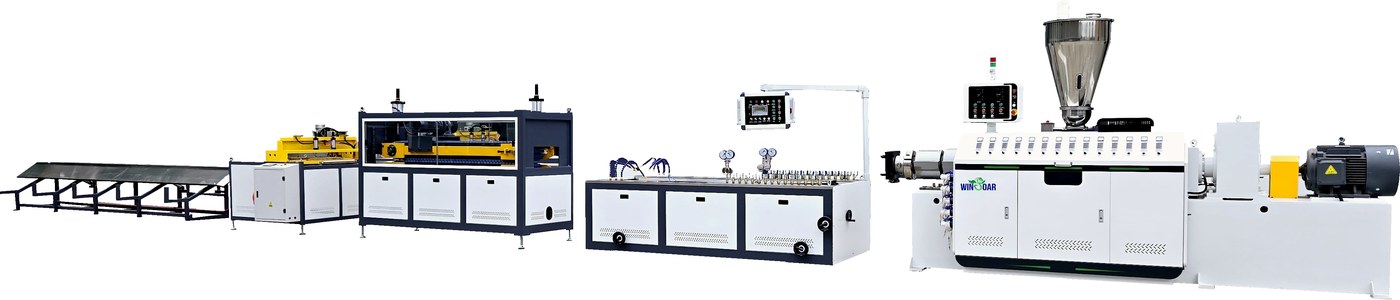
A PVC window profile extrusion machine is a continuous production system for manufacturing rigid PVC window, door and related building profiles. The line plasticizes a controlled PVC compound, forms the profile through a die, stabilizes the section with a matched calibration mould and vacuum table, then pulls, cuts and stacks the finished profile.
Window and door profiles are not defined only by their outside width. The profile drawing may include several chambers, reinforcing-steel cavities, sealing-gasket grooves, drainage paths, snap-fit features and visible co-extruded surfaces. These details determine the tooling, cooling, haul-off and quality-control requirements.
A machine model should therefore be evaluated against the intended profile family, not only its motor power or maximum advertised output.
Before comparing suppliers, prepare a technical brief. The most useful input is a readable profile drawing together with the material and production target.
| Input | Why it matters |
|---|---|
| Profile drawing | Defines width, height, chambers, grooves, wall thickness and the required die and calibration mould. |
| Material formula | Affects plasticizing behavior, melt strength, surface quality and practical output. |
| Target output | Determines extruder capacity, cooling length, haul-off speed and production planning. |
| Profile family | Identifies whether the line will run frame, sash, mullion, bead, skirting or other profiles. |
| Surface requirement | May require co-extrusion, film lamination, embossing, polishing or special calibration treatment. |
| Factory conditions | Determine line length, water circulation, drainage, power supply and maintenance access. |
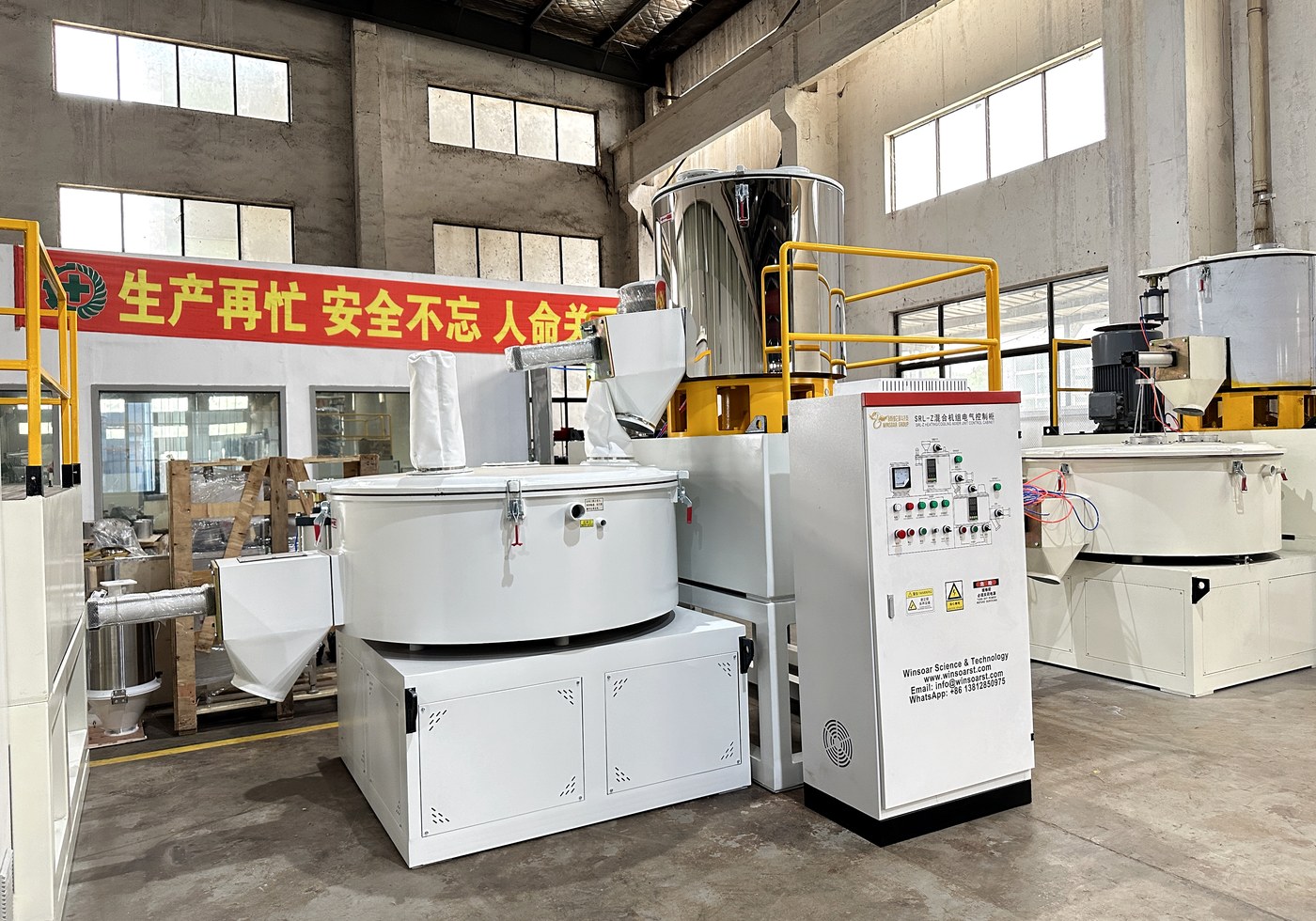
Mixing prepares a consistent PVC compound before extrusion. The hot mixer disperses resin and additives, while the cooling stage reduces the compound temperature before feeding. Stable mixing helps reduce melt-pressure variation and visible surface defects.
Confirm mixer volume, heating and cooling method, discharge arrangement, feeding height and whether automatic conveying is needed for the planned production schedule.
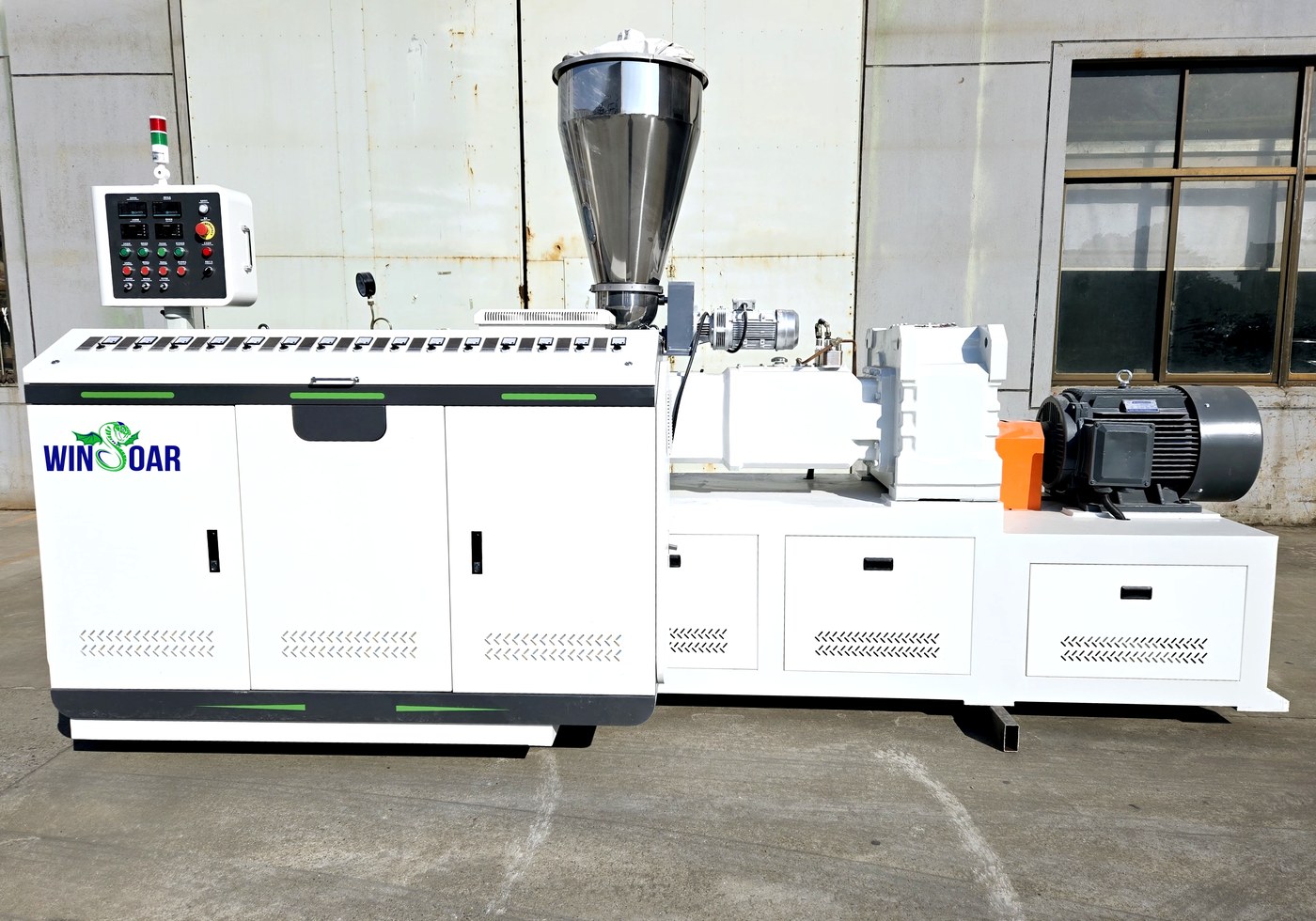
A conical twin-screw extruder is commonly considered for rigid PVC profile production. The correct screw diameter, motor power, screw design, heating and cooling arrangement and drive control depend on the formula, profile size and target output.
Ask whether the stated output is a normal continuous production value or a maximum test value. Also confirm the practical changeover requirements when the factory runs several profile families.
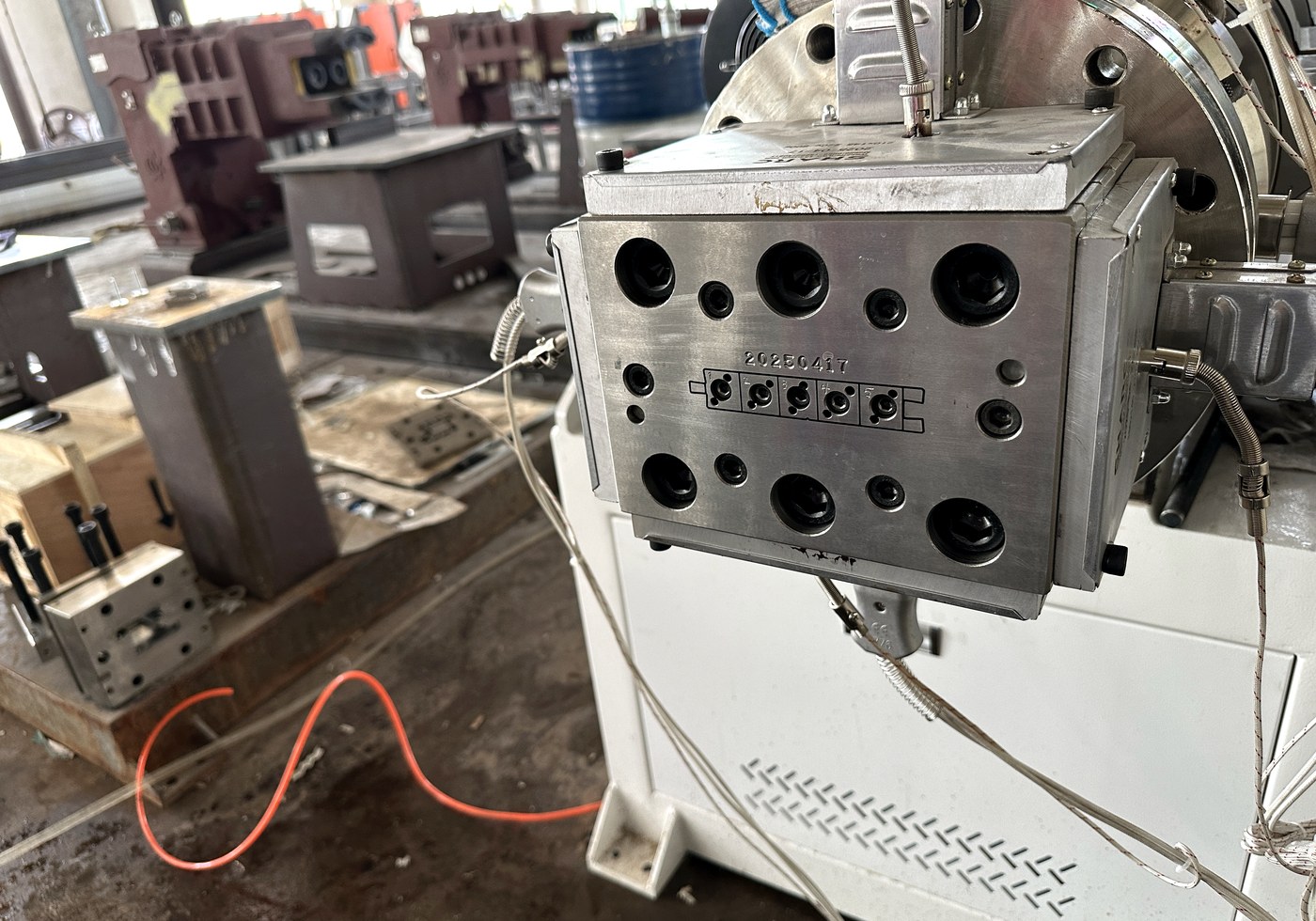
The die distributes the PVC melt into the approximate profile section. The calibration mould then establishes the final external dimensions while the material is hot. Each profile drawing normally requires a matched die and calibration mould set.
For a multi-profile project, list the tooling quantity, profile changeover method, mould material, surface finish and expected delivery schedule. A low initial tooling price may not be useful if the mould cannot maintain the required dimensions or surface quality.
The vacuum calibration table supports the hot profile, supplies controlled vacuum and removes heat through water circulation. Its width, useful cooling length, vacuum zones, adjustment range and mould connections must match the profile and expected line speed.
Profiles with multiple chambers or visible high-gloss surfaces are particularly sensitive to alignment, cooling uniformity and contact marks. Review the table together with the dedicated PVC profile vacuum calibration table selection guide.
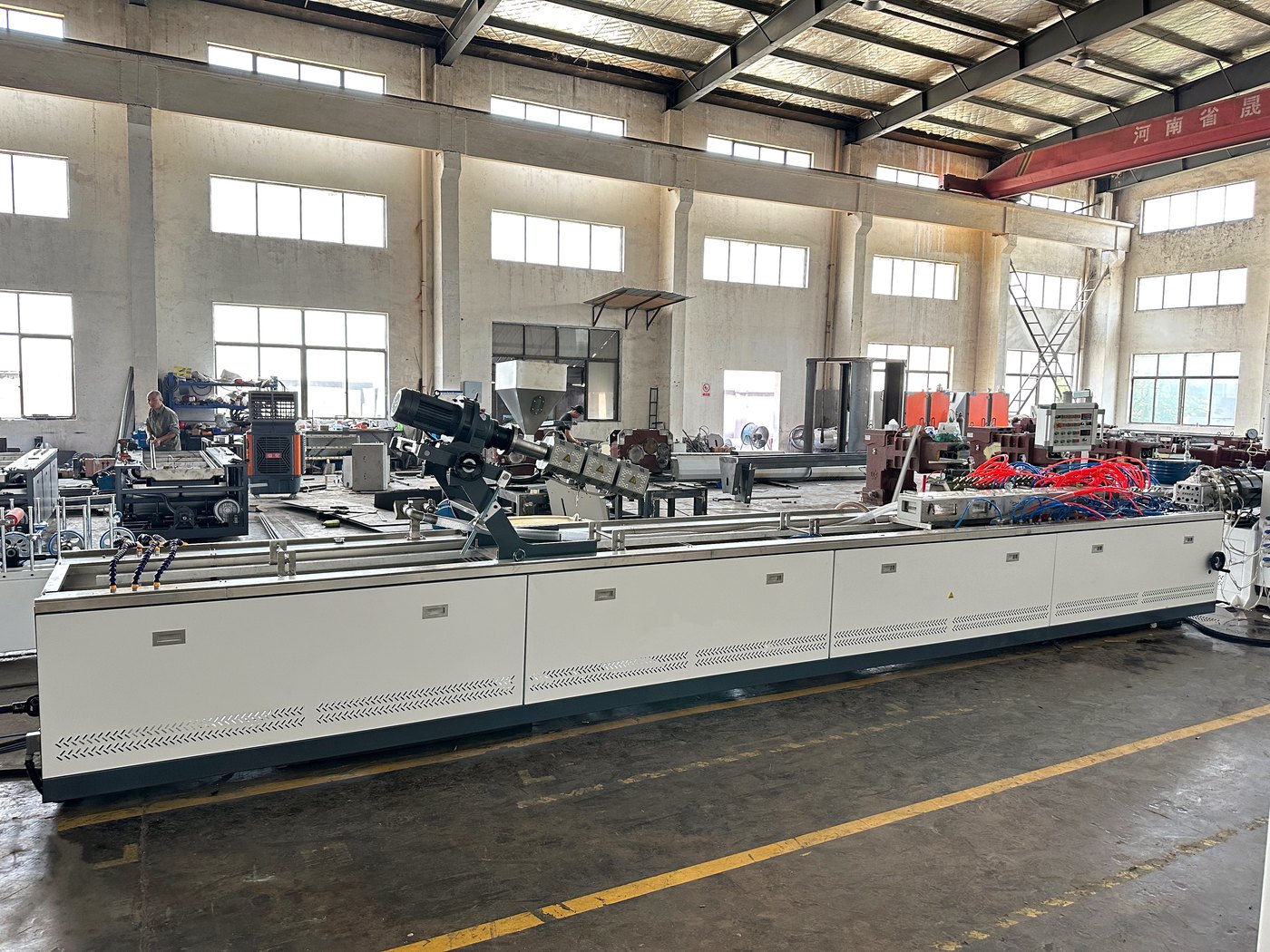
The haul-off pulls the profile through the cooling section at a controlled speed. Its traction, contact surface and width must protect visible surfaces and avoid compressing hollow sections. The cutter should match the profile size, finished length and required cut quality.
Check the synchronization between extruder output, haul-off speed and cutter timing. A line that produces the right profile but cannot maintain stable length or clean ends will create additional finishing work.
The stacker supports long profiles after cutting and helps prevent scratches, bending and edge damage. Confirm the support length, roller or belt surface, profile separation method and packing workflow.
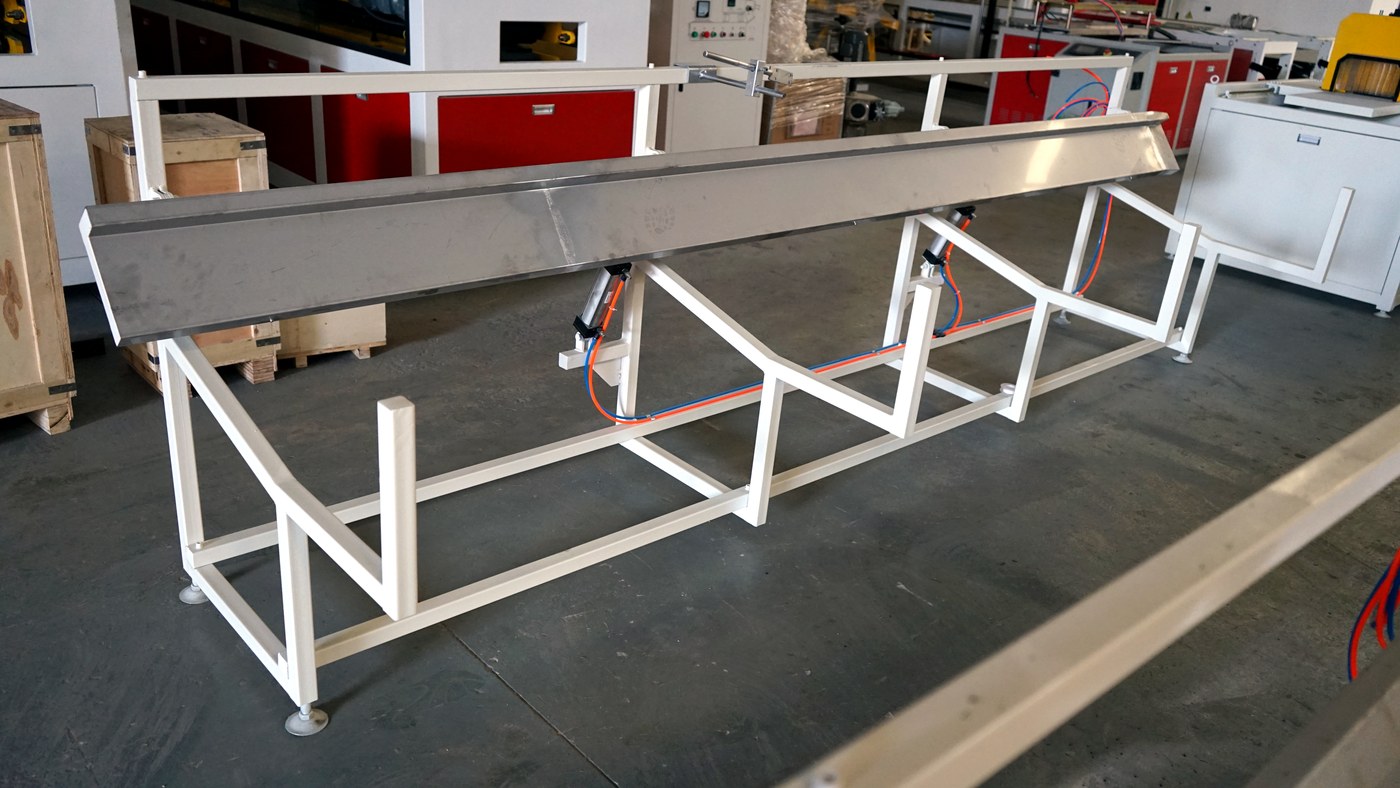
Output should be compared using the same profile, formula, wall thickness, line speed and quality standard. A large extruder does not automatically produce higher saleable output if the die, calibration, cooling or haul-off cannot keep up.
For a window and door profile project, the profile drawing and target quality should be used as the baseline for a fair supplier comparison.
Co-extrusion can be useful when a profile requires a different surface color, soft sealing section, weather-resistant cap layer or another functional layer. It is not required for every profile, and it adds equipment, tooling, control and material coordination.
Clarify whether the requirement is a full-body color, a narrow stripe, a soft gasket, a laminated surface or a separate finishing operation. The supplier should define the co-extruder, feed path, die structure, calibration arrangement and material compatibility for the selected design.
Before approving a line, reserve enough space for the complete material flow from mixing to finished-profile packing. The layout should include operator access, mould changeover, electrical cabinets, water circulation, drainage and maintenance paths.
| Factory item | Questions to confirm |
|---|---|
| Workshop length | Can the extruder, die, calibration table, haul-off, cutter and stacker fit with safe access? |
| Electrical supply | What voltage, frequency, phase and installed power are available? |
| Cooling water | What water source, flow, temperature control, filtration and drainage are available? |
| Material handling | How will PVC compound move from mixing to the extruder and how will finished profiles be packed? |
| Maintenance access | Can operators reach heaters, vacuum lines, pumps, moulds and electrical cabinets? |
Send the following information for a technically useful PVC window profile extrusion machine quotation:
For the complete equipment page, see the PVC Profile Extrusion Line. The Profile Production Line category and Plastic Profile and Board Production Line category provide additional product and equipment context.
Watch the PVC Profile Extrusion Line running video on YouTube to review the real machine arrangement from extrusion and calibration to downstream handling.
For the machine sequence and equipment roles, read the PVC Profile Extrusion Line Machine Configuration article. For calibration-specific decisions, use the vacuum calibration table selection guide.
The suitable extruder depends on the PVC formula, profile section, wall thickness, target output and required surface quality. A conical twin-screw extruder is commonly considered for rigid PVC profiles, but the final model should be confirmed against the actual drawing and production target.
Each distinct profile section normally requires a matched die and calibration mould set. The required quantity depends on the number of frame, sash, mullion, bead or other profiles planned for production and how often the factory changes products.
Co-extrusion is useful when the profile needs a separate color, soft sealing section, weather-resistant surface or functional cap layer. It should be specified from the required product structure rather than added only because it is available.
Compare output using the same profile drawing, formula, wall thickness, line speed, cooling conditions and quality standard. Ask for normal continuous output separately from maximum trial output and include the downstream capacity in the comparison.
The quotation should identify the extruder, die, calibration mould, vacuum table, haul-off, cutter, stacker, control system, tooling quantity, output basis, layout, utilities, commissioning scope, spare parts and delivery terms.