Tel : +86-13812850975 E-mail : info@winsoarst.com

 |


| Quantity: | |
|---|---|
Product Overview & Applications
PVC Profile Extrusion Line is designed for PVC window profiles, door profiles, decorative profiles, trims, strips and customized building material profiles. The final configuration should be selected by profile drawing, mould size, profile weight per meter, PVC formula, cooling length, cutting method and output requirement.
If you are searching for a PVC profile extrusion line, PVC window door profile making machine, UPVC profile production line or decorative profile extrusion machine, this page gives a practical project reference for line selection, mould matching, cooling control and quotation preparation.
A practical PVC profile line normally includes PVC material mixing, conical twin screw extruder, profile extrusion mould, vacuum calibration table, haul-off and cutting machine, profile stacker and auxiliary equipment. Co-extrusion can be added when the profile needs a colored surface layer, soft sealing strip or multi-material structure.
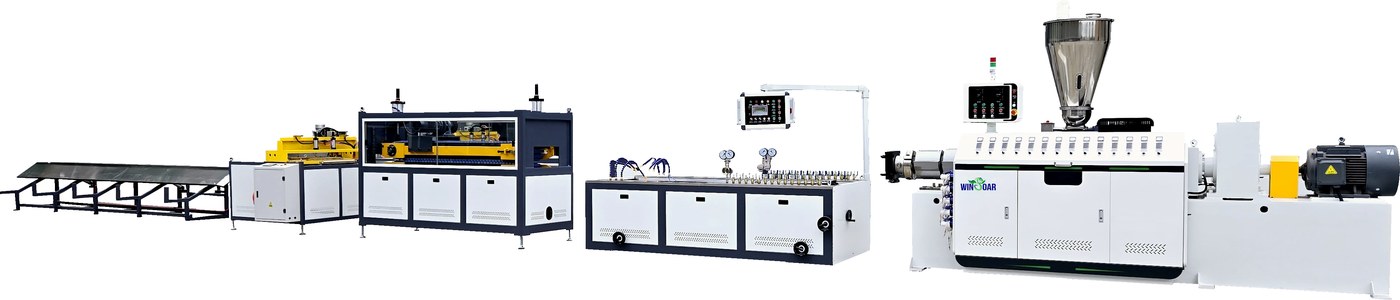
Complete PVC Profile Extrusion Line
PVC window profile
PVC door profile
Decorative profile
Building material trim
Customized profile section
Co-extrusion optional
What does a PVC profile extrusion line make? It produces PVC window profiles, door profiles, decorative profiles, trims and customized rigid PVC profile sections from matched moulds and calibration tooling.
How should the line be configured? A typical project uses a PVC mixer, conical twin screw extruder, PVC profile extrusion mould, vacuum calibration table, haul-off cutter and profile stacker. The final model depends on profile drawing, formula, width, weight per meter and output target.
What information helps Winsoar quote faster? Send the profile drawing or sample photo, PVC formula, required cutting length, voltage, workshop layout and target capacity so the machine configuration can be checked before quotation.
Please prepare the profile drawing or sample photo, material formula, profile width and thickness, profile weight per meter, surface requirement, cutting length, target output, workshop voltage and available installation space.
For the full profile and board range, visit Plastic Profile and Board Production Line, Profile Production Line and PVC and WPC Profile Production Line.
Useful guides: PVC WPC profile extrusion line process and machine configuration, PVC profile making machine process flow and PVC resin and extrusion material guide.
Related auxiliary machines include Plastic Mixer, Twin Screw Extruder and Conical Twin Screw Extruder.
A PVC profile extrusion line should be selected from the finished profile cross-section, not only from the extruder model. Window frame, door frame, decorative trim and technical profiles can have different chambers, wall thicknesses, visible surfaces and reinforcement spaces. The profile drawing or physical sample is therefore the starting point for the die, calibration mould and downstream handling design.
Buyer information | Why it matters to the line |
|---|---|
Profile width, height and wall thickness | Defines die opening, calibration mould, cooling contact and practical line speed. |
Chambers, corners and reinforcement space | Affects internal calibration, dimensional stability and window or door assembly compatibility. |
PVC or PVC/WPC formula | Influences screw and barrel selection, melt temperature, surface finish and cooling conditions. |
Cut length and packing method | Determines haul-off synchronization, cutter setting, stacker layout and protective handling. |
The profile die forms the complete section while the vacuum calibration table controls the dimensions during cooling. For a visible window or decorative profile, the buyer should also specify color, gloss, co-extrusion layer, embossing or film-lamination requirements. These details can change the die structure, calibration arrangement and auxiliary equipment even when the nominal profile width stays the same.
When one line will produce several profile sections, provide the regular product list and expected changeover frequency. A project with three similar window profiles may share part of the downstream arrangement, while a change from a narrow trim to a wide multi-chamber frame can require different tooling and calibration parts. Planning the tool set in advance helps reduce changeover time and start-up waste.
Confirm the approved profile drawing and critical dimensional tolerances.
Identify the main profile, the widest profile and the heaviest profile per meter.
State whether the product is rigid PVC, PVC/WPC, co-extruded or surface-finished.
Provide target output, line speed, cut length and stacking direction.
Confirm local voltage, cooling-water conditions and available workshop length.
With these inputs, Winsoar can match the mixer, conical twin screw extruder, profile die, vacuum calibration table, haul-off, cutting machine, stacker and optional co-extrusion or surface-treatment equipment to the actual profile project.
This PVC profile extrusion line is configured for rigid PVC construction profiles and technical sections. The final die and calibration tooling follow the exact cross-section, cavity layout, wall thickness and surface requirement. One line can support a family of related profiles, but each profile normally requires its own die and calibration solution.
Profile type | Main selection focus |
|---|---|
PVC window frame and sash profile | Cavities, reinforcement space, wall thickness, dimensional tolerance and surface finish. |
PVC door frame and construction profile | Profile width, rigidity, cutting length, output and downstream receiving. |
PVC decorative trim and skirting | Appearance, color, embossing, changeover frequency and surface protection. |
PVC technical section or cable profile | Functional dimensions, rigidity, cavity accuracy and continuous line stability. |
A profile line should be designed from a dimensioned profile drawing rather than only a product name. The drawing should show the outer width and height, cavities, ribs, wall thickness, tolerance, reinforcement space and any visible surface requirement. The profile die forms the melt into the section, while the calibration mould and vacuum table establish the final dimensions during cooling.
Profile die: controls melt distribution, wall thickness and cavity filling.
Calibration mould: supports the final section size, straightness and surface finish.
Vacuum calibration table: stabilizes the profile immediately after die exit.
Haul-off and cutter: coordinate traction and fixed-length cutting without profile distortion.
Stacker or receiving table: protects long profiles from scratches, bending and impact.
The extruder, screw geometry and temperature settings must match the PVC compound. PVC powder or pellets, stabilizer, lubricant, filler, impact modifier and color masterbatch affect plasticizing, torque, die pressure and surface quality. If a wood-fiber-filled or WPC material is planned, moisture, fiber ratio and thermal behavior should be supplied separately because the process window may differ from rigid PVC.
Manufacturers producing several window, door or decorative sections should plan the changeover method before ordering. Confirm the number of profile dies, calibration moulds, material formulas, target profile widths, expected changeover frequency, cleaning procedure and storage method for tooling. A practical line layout should leave access around the die, calibration table, haul-off and cutter so operators can change tools and inspect the profile safely.
Yes, when the extruder capacity and downstream width are suitable, but the profile die and calibration mould must be changed for different cross-sections. The material formula and process settings may also need adjustment.
Send a dimensioned cross-section drawing, outer width and height, cavities, wall thickness, tolerance, visible surface requirement, material formula and target output. A physical sample can supplement the drawing but should not replace dimensional data.
Vacuum calibration supports the profile dimensions and shape while the hot melt cools. Its table length, cooling arrangement and mould design must match the profile cross-section and line speed.
A PVC/WPC project should be reviewed separately because wood fiber, moisture and filler content affect melting, mixing, wear, die pressure and cooling. Send the complete raw material formulation before selecting the screw, die and calibration system.
Provide the profile drawing, material formula, target output, line speed, required fixed length, surface finish, local voltage, cooling-water conditions and workshop dimensions. These inputs allow the extruder, die, calibration, haul-off, cutter and stacker to be matched as one line.
See the plastic profile and board production line category, the high speed PVC WPC window profile line and the PVC single screw profile extrusion line for related configuration and application references.
Video & Technical Parameters
Watch the running video to review the production line layout, profile water cooling section, stable branding overlay and actual workshop operation.
The table below is a general selection reference. Final configuration should be confirmed by profile drawing, material formula, mould design, cooling stability and required output.
| Model | Max profile width | Recommended extruder | Reference output | Typical application |
| WS108 | 108 mm | SJZ51/105 | 80-120 kg/h | small trim and narrow profiles |
| WS180 | 180 mm | SJZ51/105 or SJZ55/110 | 80-150 kg/h | window and door profile parts |
| WS240 | 240 mm | SJZ65/132 | 175-250 kg/h | PVC frame and decorative profiles |
| WS400 | 400 mm | SJZ65/132 or SJZ80/156 | 175-350 kg/h | wide profile and panel-like sections |
| WS600 | 600 mm | SJZ80/156 | 250-350 kg/h | large decorative profiles |
| WS800+ | 800-1220 mm | SJZ80/156 or SJZ92/188 | 300-700 kg/h | wide custom profile projects |
Machine Configuration
A PVC profile extrusion line should be configured around the profile section and formula, not only by machine width. Winsoar checks profile sample, drawing, cooling length, haul-off force and cutting requirement before recommending the complete line.
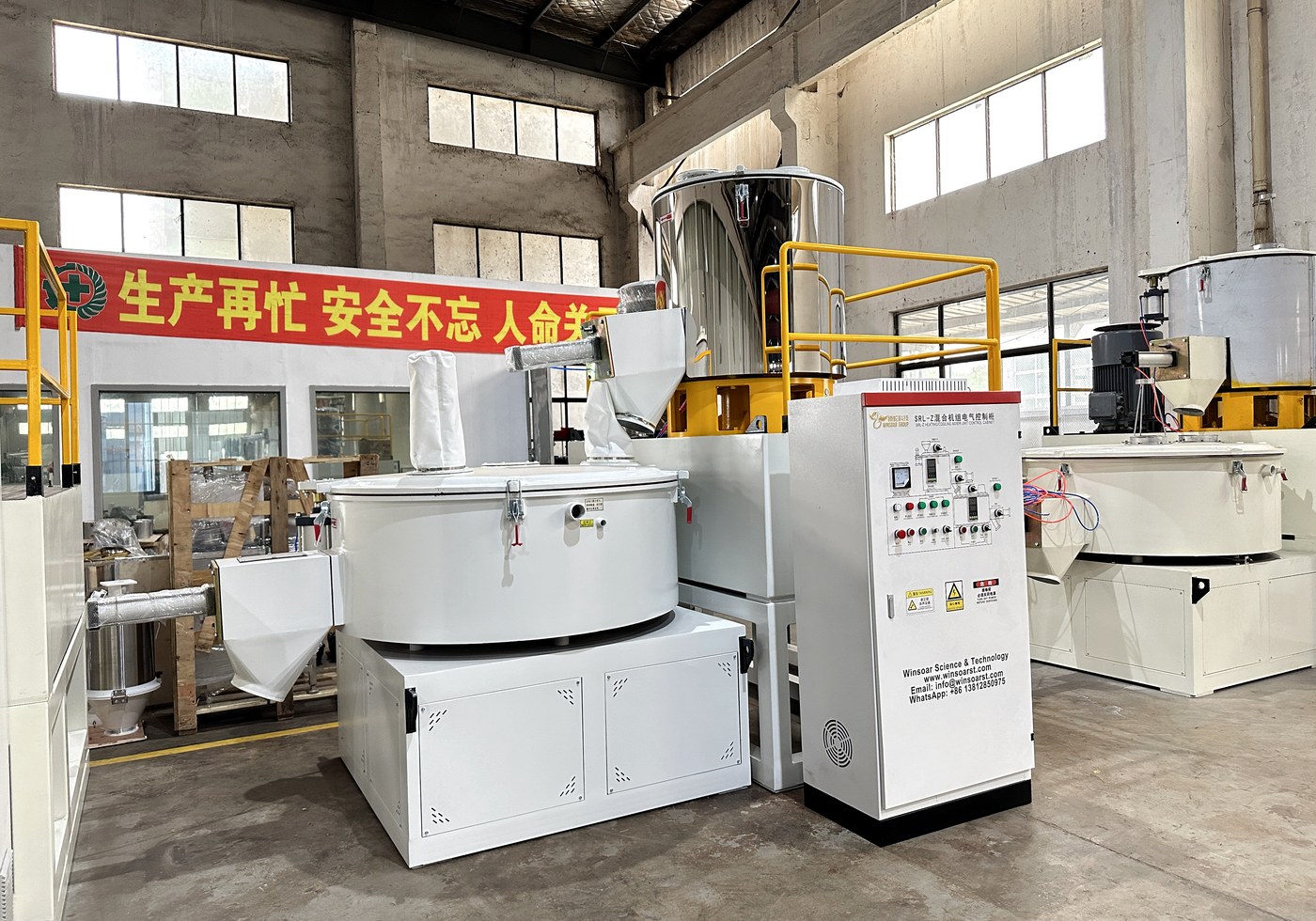
PVC profile quality starts from stable dry blend preparation. The mixer prepares PVC resin, calcium carbonate, stabilizer, lubricant and other additives before extrusion.
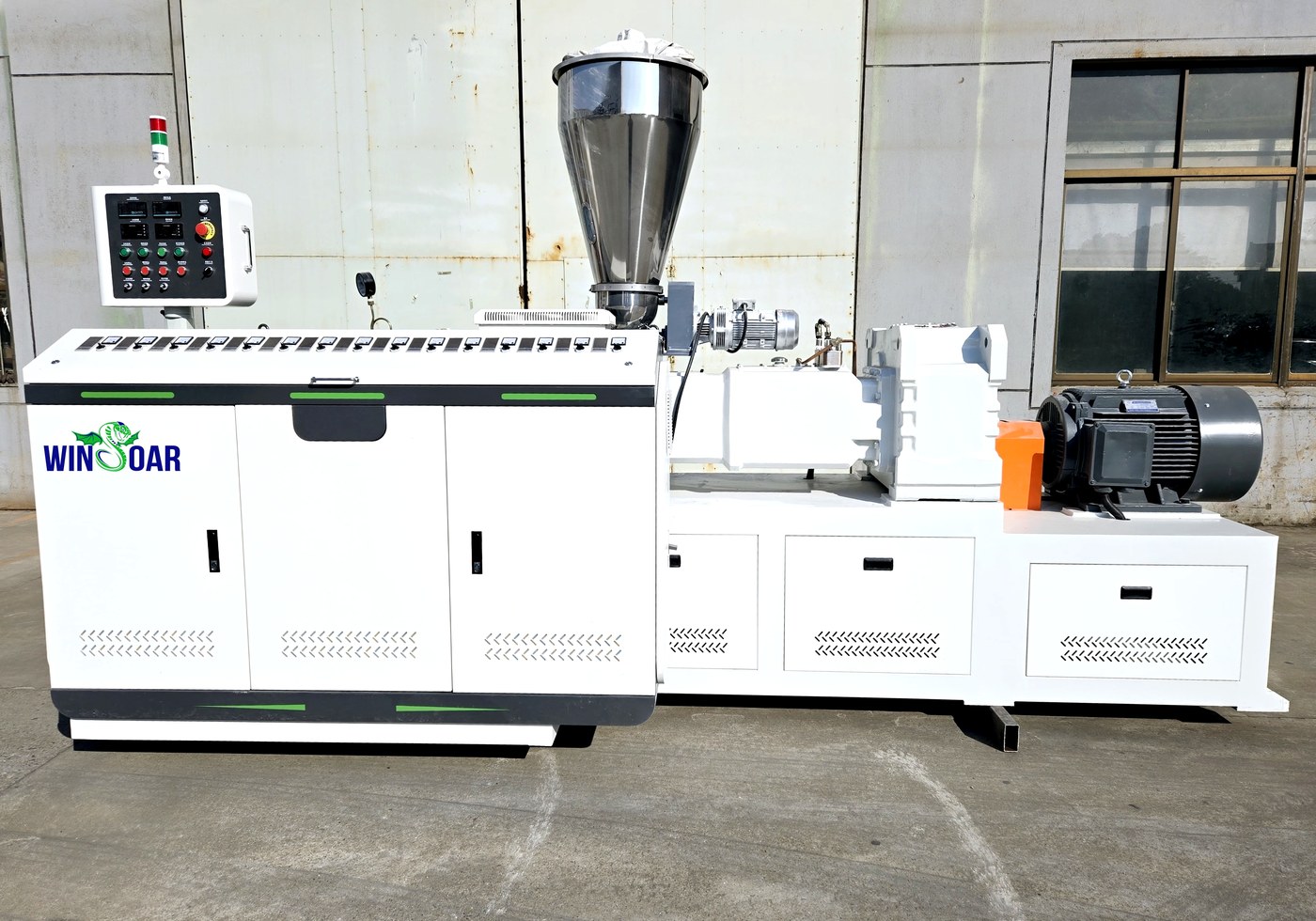
The conical twin screw extruder is used for PVC powder processing. It provides stable plasticizing and melt pressure for the profile mould.
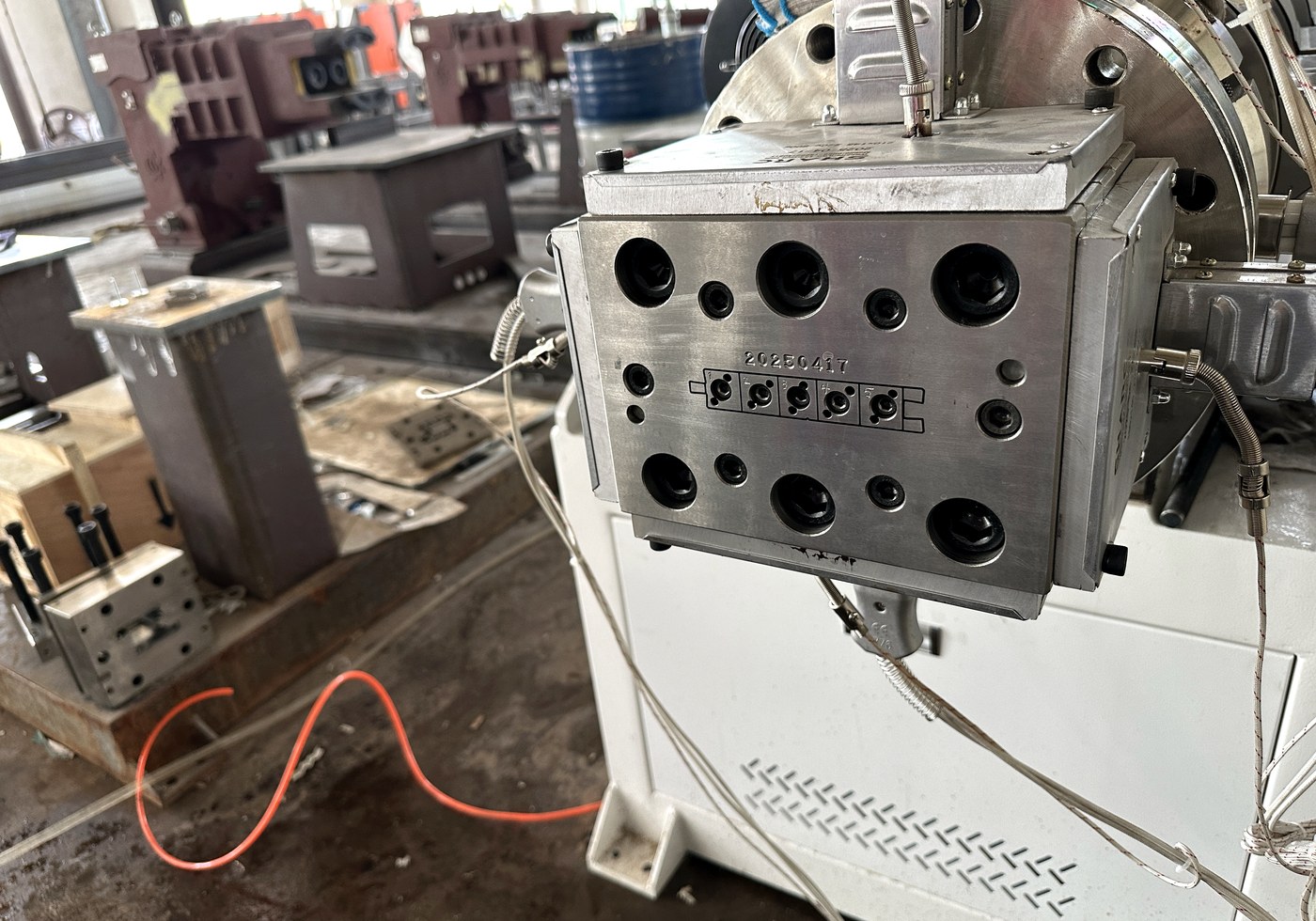
The profile mould decides the final section shape. It should be designed from the buyer's drawing or sample and matched with the calibration mould.
The calibration mould is installed after the profile extrusion mould. It works with vacuum and water cooling to hold the profile section during early shaping.
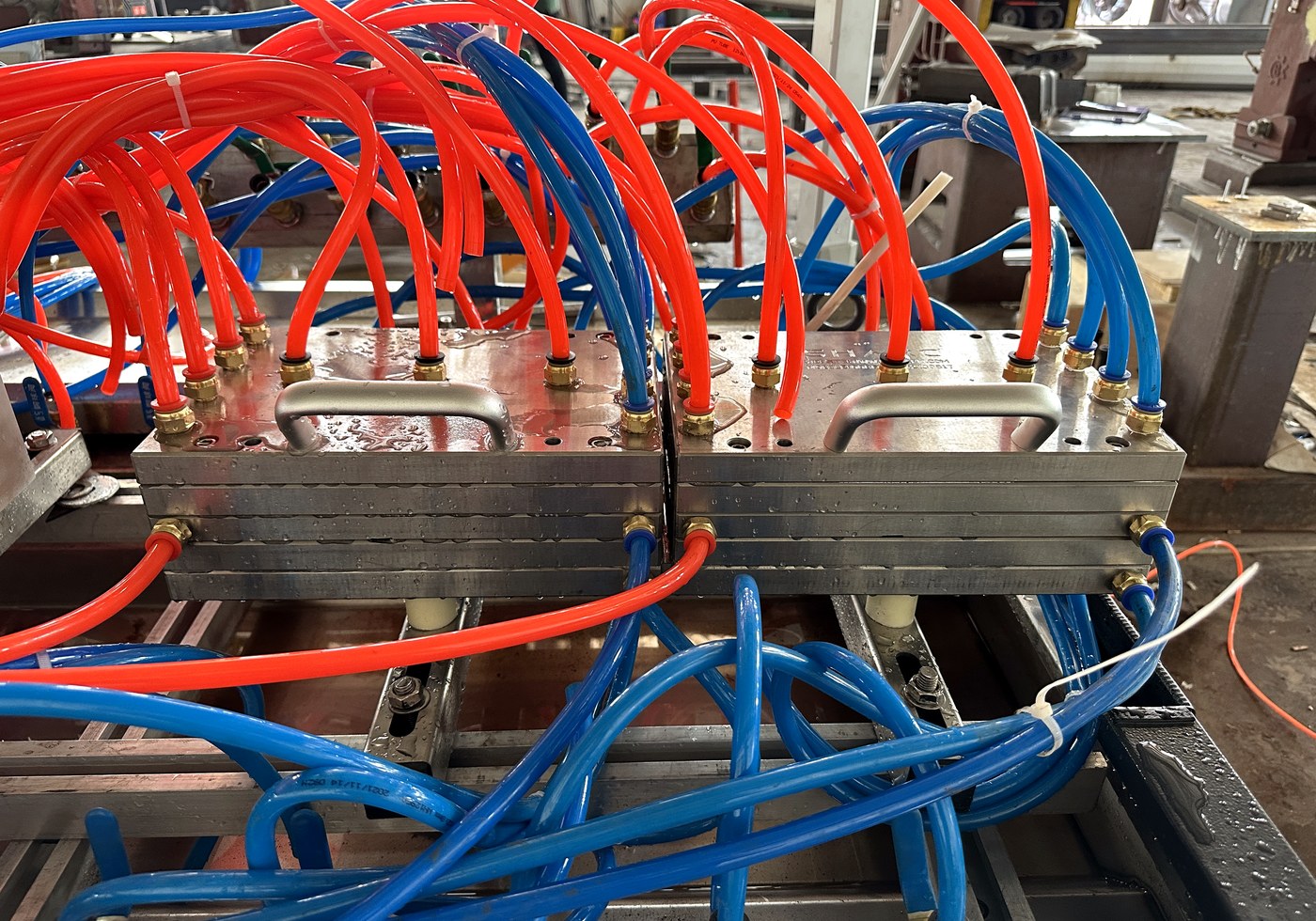
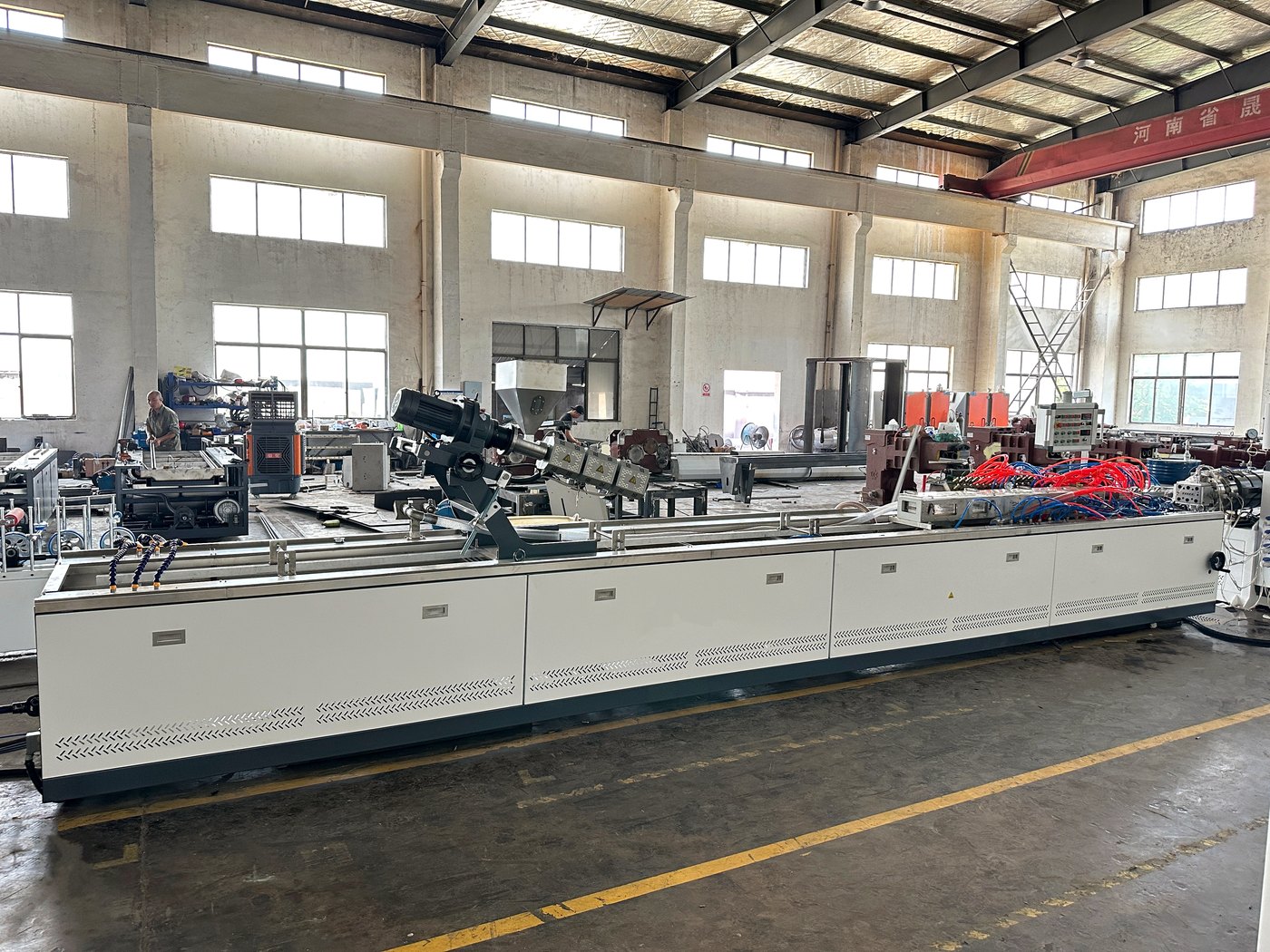
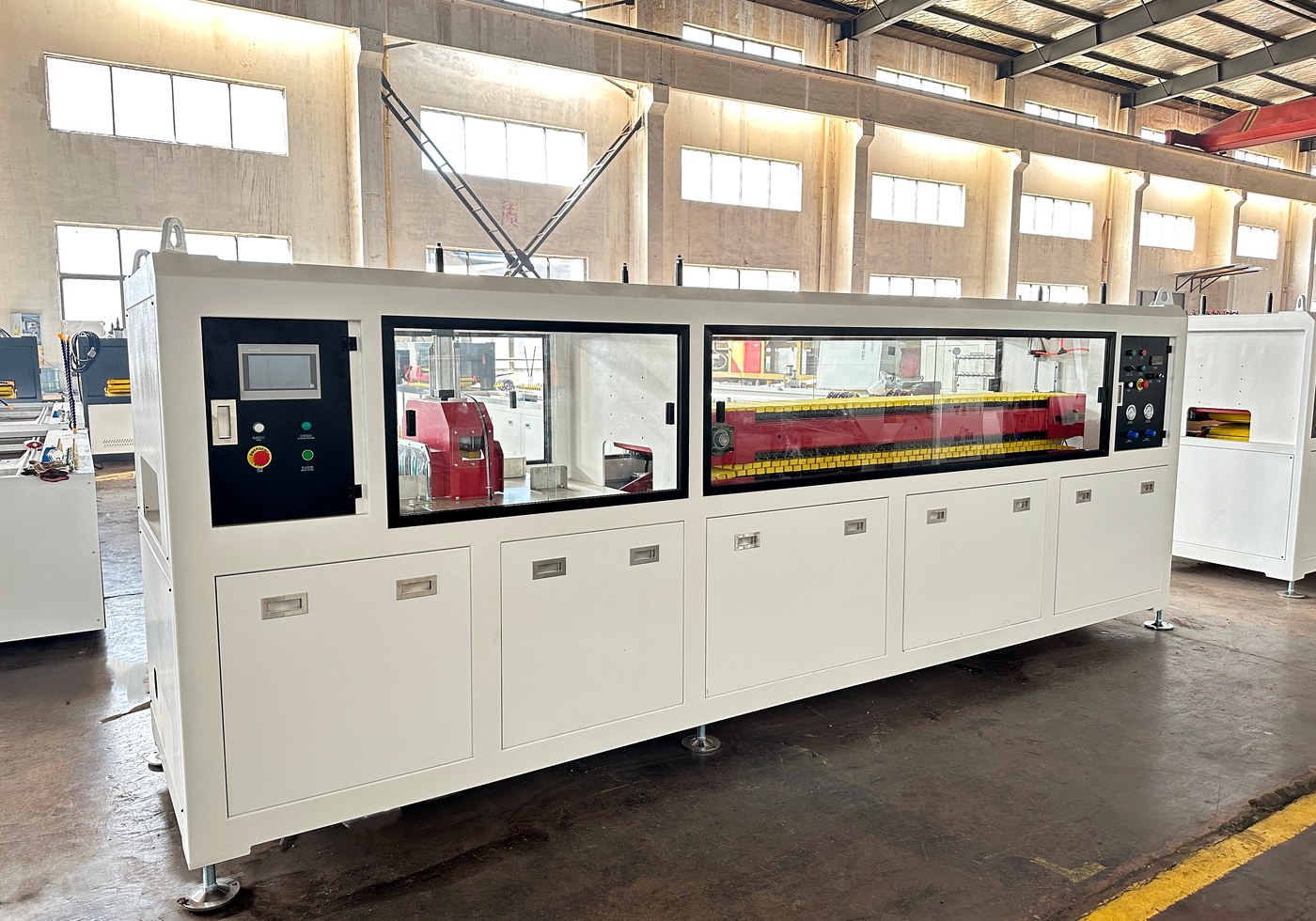
The vacuum calibration table supports calibration moulds, cooling water, vacuum lines and downstream shaping control. This real machine photo shows the table section used before haul-off and cutting.
The haul-off and cutting section keeps profile traction synchronized with the extruder and cuts the finished profile to the required length.
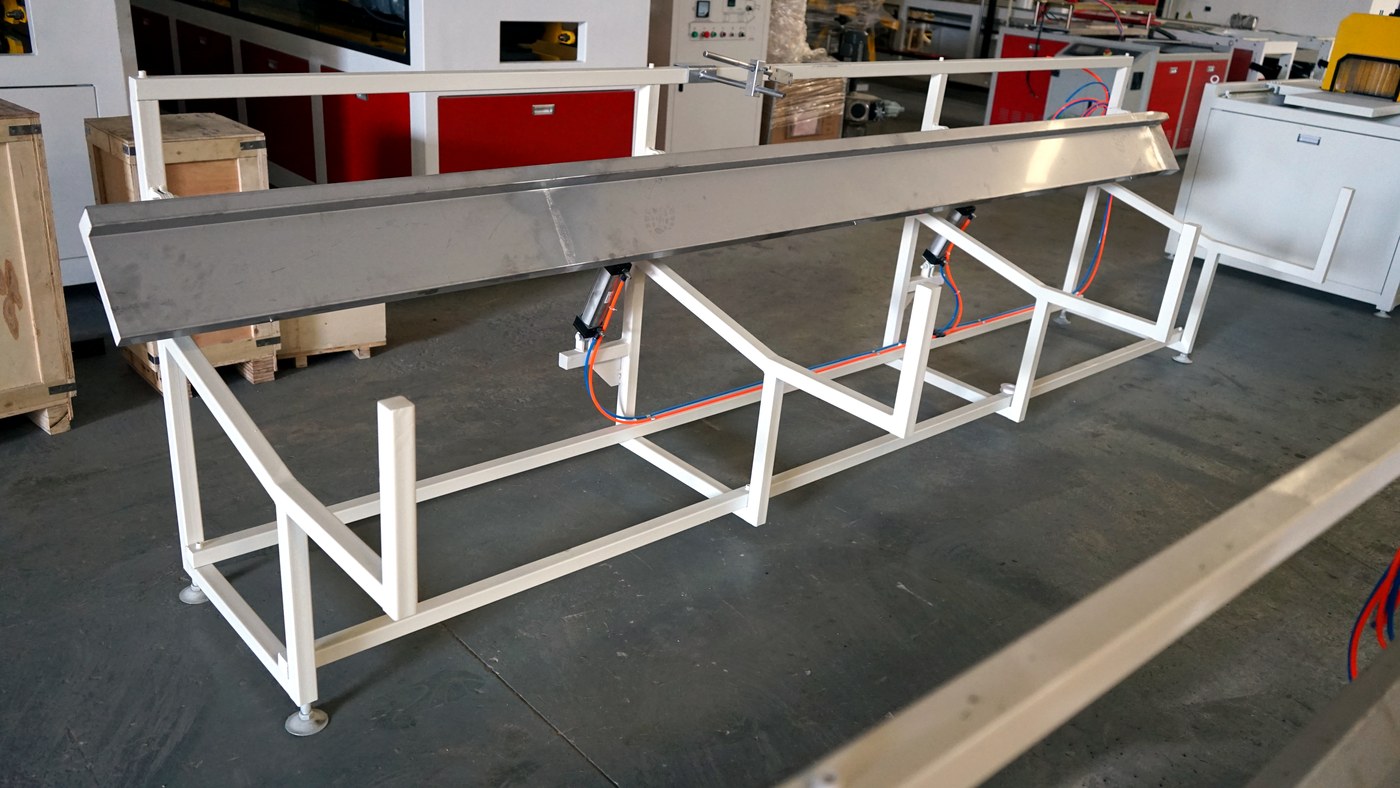
The profile receiving and turnover stacker supports finished profile collection after cutting. It should be selected by profile length, weight and factory packing workflow.
Factory, Packaging & Support
Winsoar supports machine configuration, drawing confirmation, production assembly, packaging, overseas delivery and exhibition communication for PVC profile extrusion projects.
This support section is written for users comparing PVC profile extrusion line suppliers, looking for factory photos, packaging methods, exhibition proof and project communication details before making a quotation request.
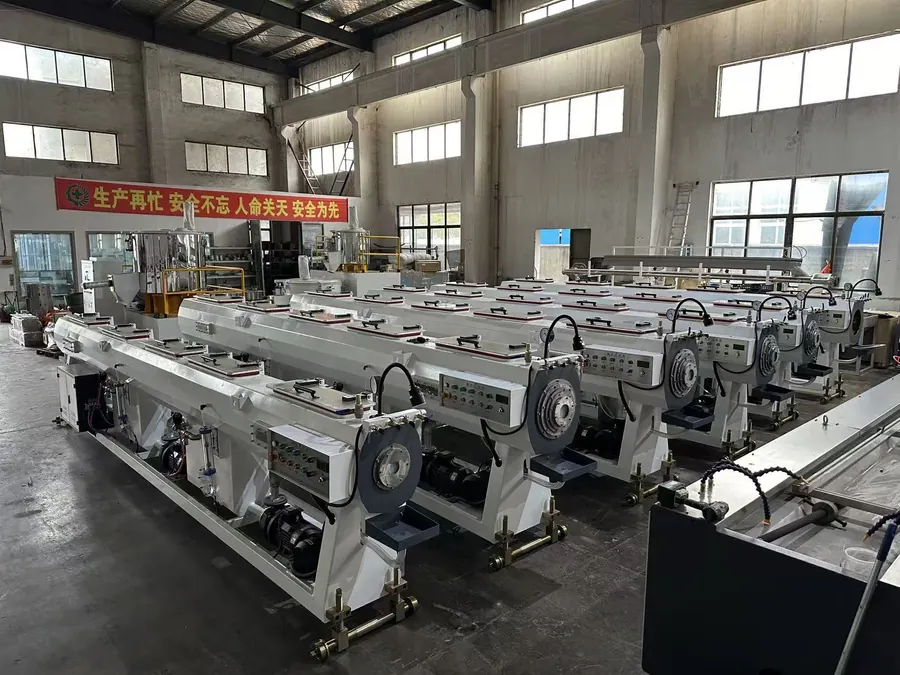
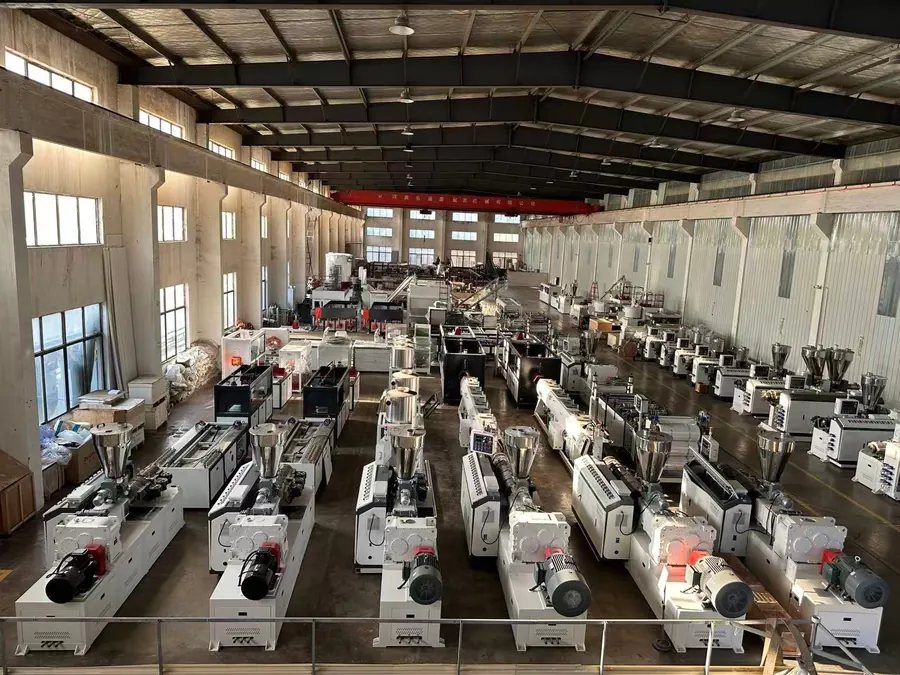
Winsoar manufactures plastic extrusion machines according to confirmed profile section, output requirement, voltage and factory layout.
Machine parts, control cabinet, downstream equipment and auxiliary systems can be checked in the workshop before shipment.
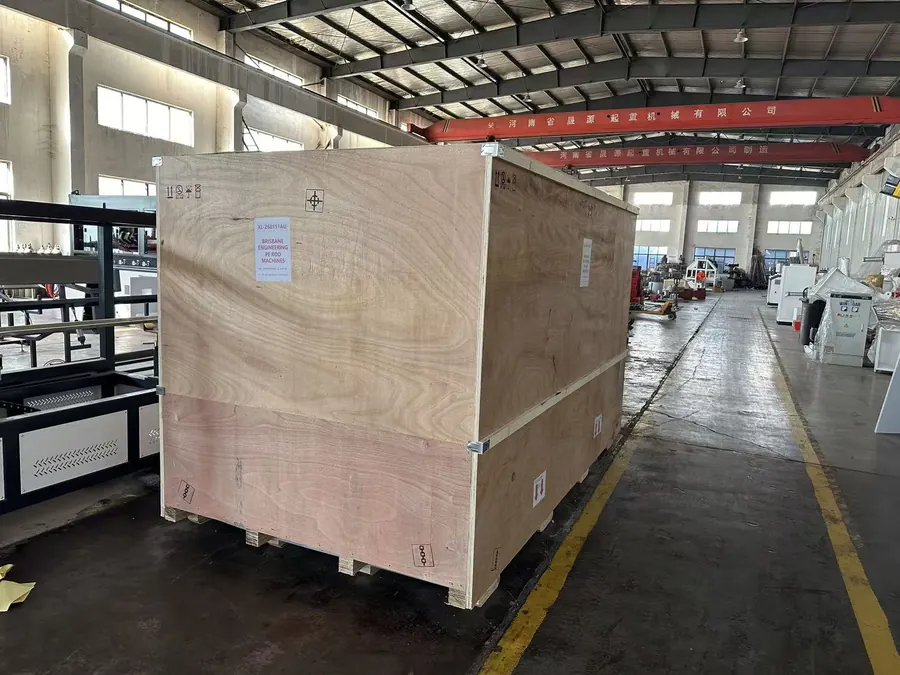
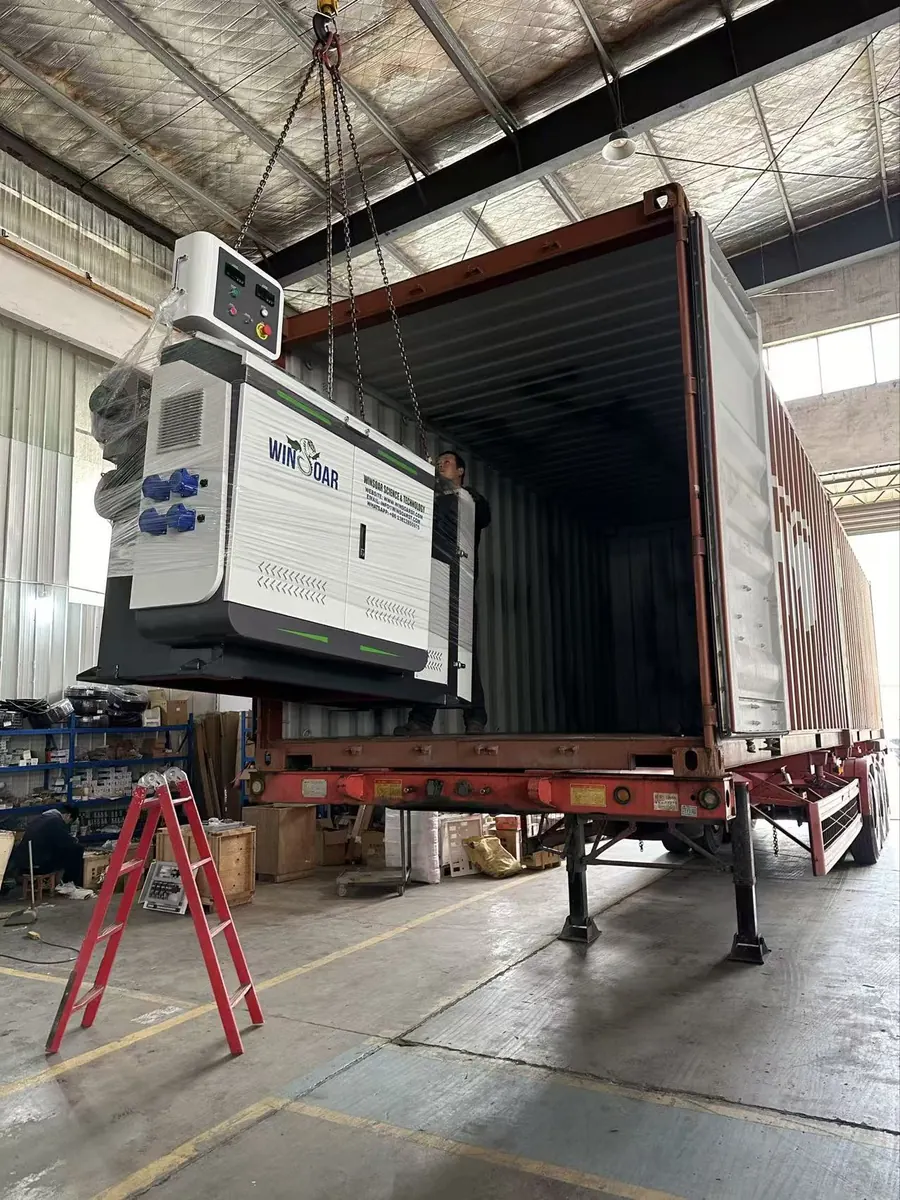
Winsoar prepares export packaging according to machine size and transportation requirements. Protective packaging helps protect moulds, electrical parts and auxiliary equipment.
For overseas delivery, machine layout and loading sequence are checked according to equipment size, packaging method and destination unloading conditions.

Winsoar displays plastic extrusion machinery and profile samples at exhibitions, helping customers compare profile sections, machine configuration and project requirements.
Customers can review plastic profile samples, surface options and application ideas during exhibition meetings before confirming machine and mould requirements.


Winsoar discusses profile drawing, material formula, target output, voltage and layout with buyers before recommending the final PVC profile extrusion line configuration.
Tell Winsoar your profile drawing, material formula, target output, workshop voltage and layout. We will recommend a suitable PVC profile extrusion line configuration, including mixer, extruder, mould, calibration table, haul-off cutter, stacker, spare parts and shipment support. Contact Winsoar for project quotation.