Tel : +86-13812850975 E-mail : info@winsoarst.com

Views: 0 Author: Site Editor Publish Time: 2026-07-25 Origin: Winsoar


Choosing a PVC profile extrusion line is not only about buying an extruder. A complete PVC profile production line should be configured around the final profile drawing, PVC formula, profile width, wall thickness, output target, cutting length and factory layout. For window profiles, door profiles and decorative building profiles, the relationship between mould design, calibration, cooling, haul-off and cutting directly affects profile size, surface quality and production stability.
This guide explains the main machines in a PVC profile extrusion line from raw material mixing to finished profile collection. It is written for buyers comparing a PVC profile extrusion line, PVC profile production line, PVC window profile extrusion machine or PVC profile making machine before requesting a quotation.
For a complete product reference, see the Winsoar PVC Profile Extrusion Line.
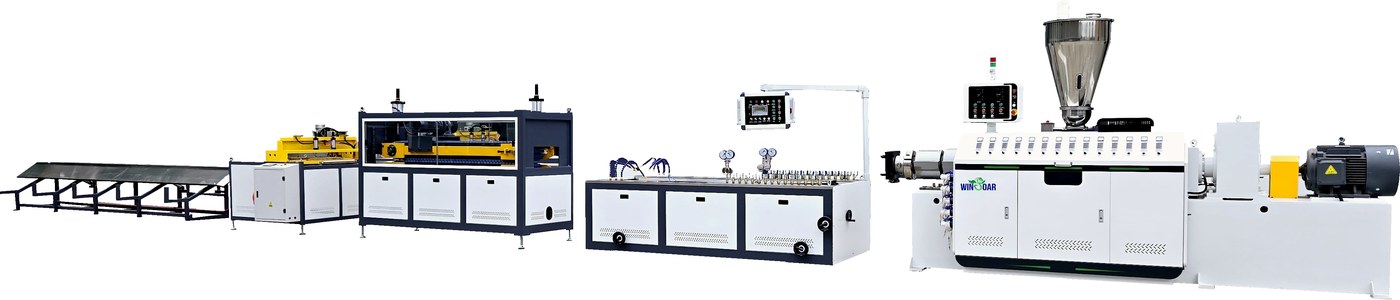
Complete PVC profile extrusion line configuration from extrusion to downstream handling.
A typical PVC profile extrusion line includes a PVC material mixing system, conical twin screw extruder, PVC profile extrusion mould, PVC profile calibration mould, vacuum calibration table, haul-off and cutting machine, profile receiving table or turnover stacker, and electrical control system. Optional equipment can include automatic feeding, dosing, co-extruder, embossing, lamination, punching or other downstream handling machines.
The exact configuration depends on the profile section and production target. A simple decorative profile, a window frame profile and a wider door profile may all be PVC profiles, but they may need different moulds, calibration lengths, haul-off structures and output settings.
PVC profile production usually starts from PVC resin and additives. The formula may include stabilizer, lubricant, calcium carbonate, processing aid, pigment and other materials according to the final product requirement. A stable mixing system helps prepare consistent dry blend before extrusion.
The mixer capacity should match the expected output of the extrusion line. If the mixer cannot supply stable material, the extruder may face feeding fluctuation, unstable pressure and uneven profile surface. For a complete project, the mixer and feeding system should be considered together with the extruder model and production schedule.
Related page: Plastic Mixer.
Rigid PVC profile production commonly uses a conical twin screw extruder because PVC powder needs stable plasticizing and controlled melt pressure. The extruder model should be selected according to profile size, wall thickness, material formula and target output.
For PVC window and door profiles, the extruder must provide a stable melt to the profile mould. Poor plasticizing or unstable pressure can affect profile dimension, surface gloss and long-term production consistency. When comparing extruders, buyers should not only look at motor power. Screw design, barrel condition, gearbox, temperature control, feeding stability and control system are also important.
Related pages: Twin Screw Extruder and Conical Twin Screw Extruder.
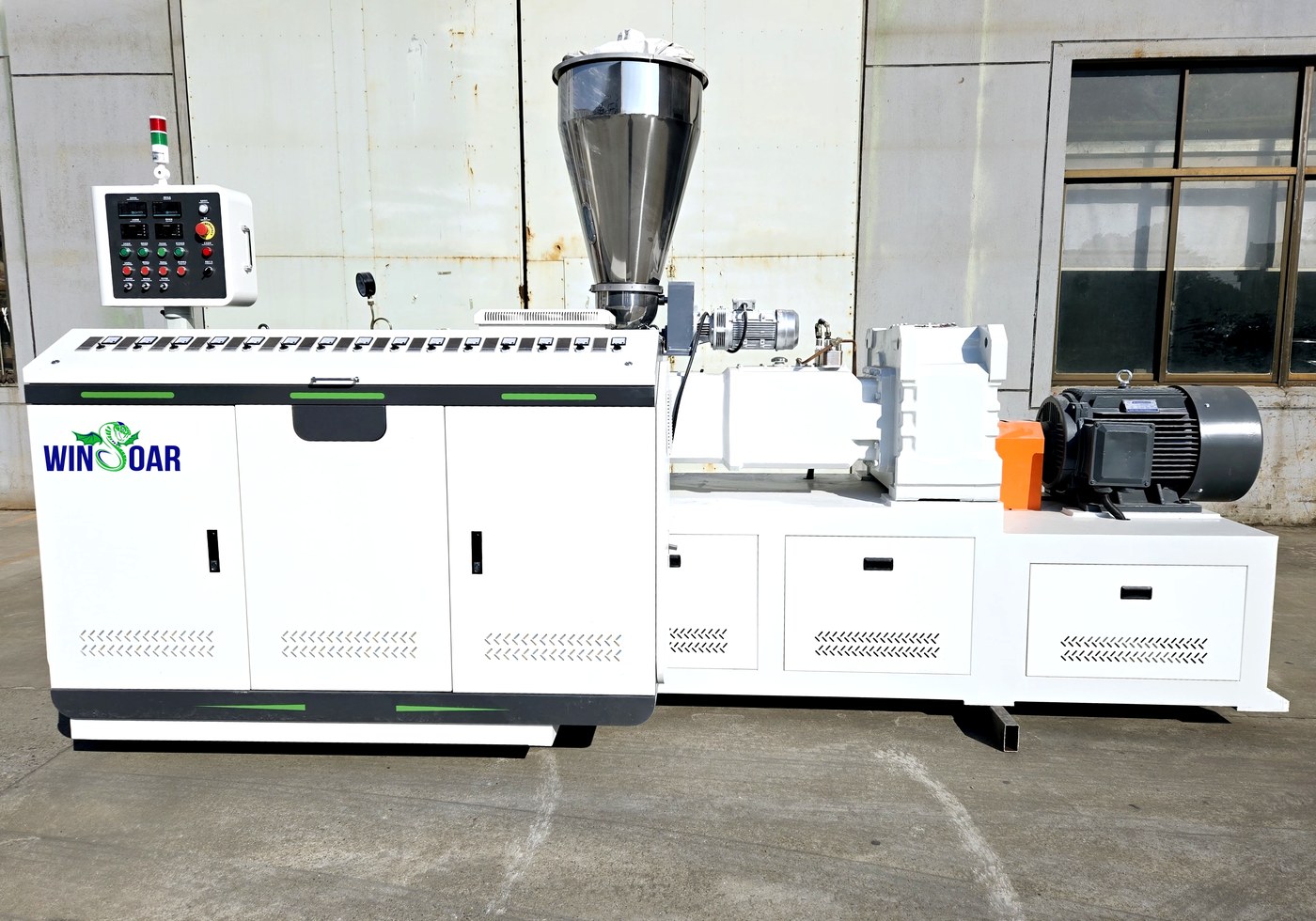
Conical twin screw extruder for rigid PVC profile plasticizing.
The profile mould forms the cross-section of the final product. For window profiles and door profiles, the mould is normally designed according to the buyer's profile drawing or physical sample. The drawing should show profile width, height, chambers, wall thickness, visible surface, gasket groove, reinforcement area and tolerance requirements.
One mould usually corresponds to one profile section. If the factory needs to produce several profile shapes, the mould list should be confirmed before quotation. For complex profiles, mould design and material flow balance are key factors for stable extrusion.
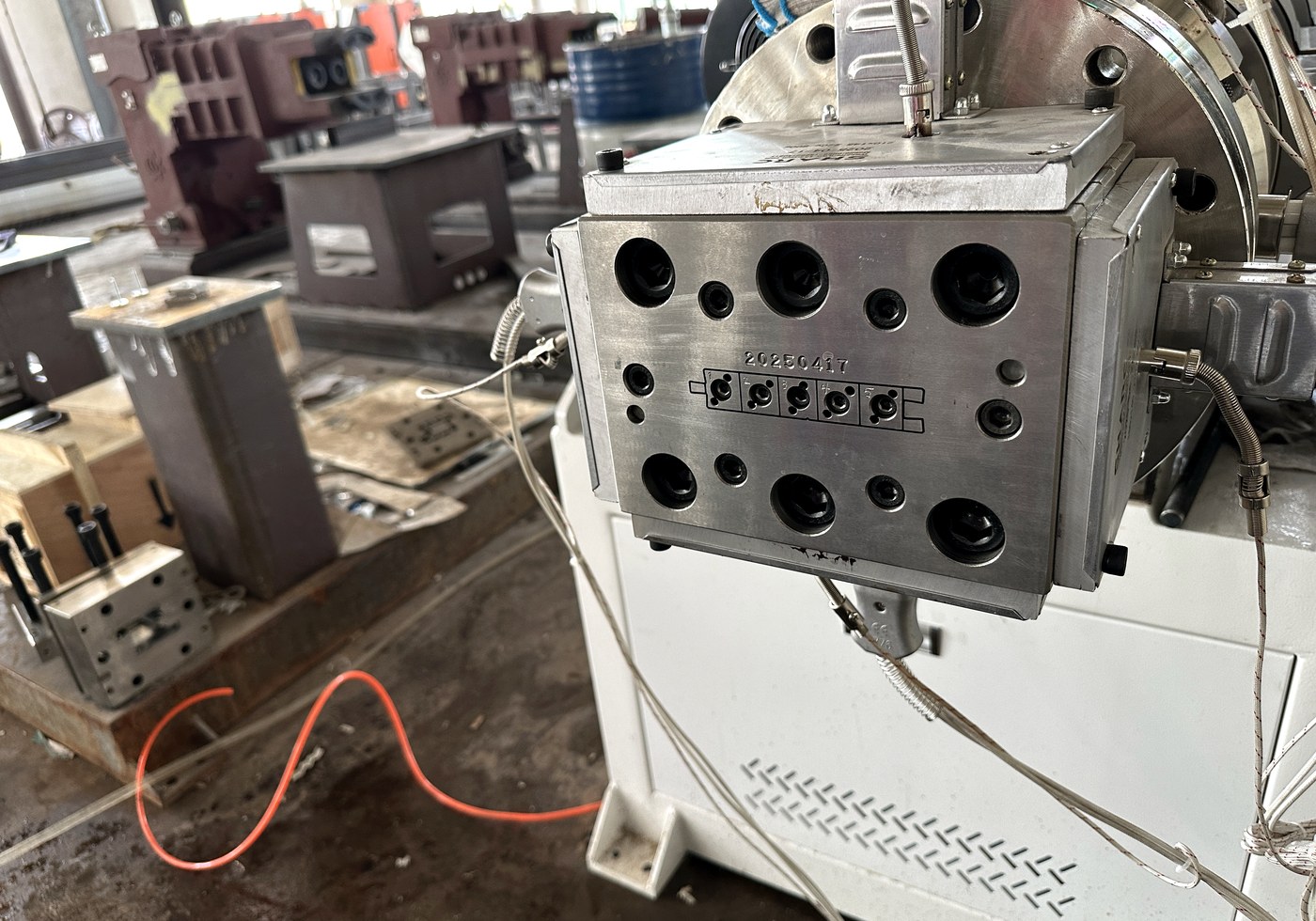
PVC profile extrusion mould designed according to the required profile section.
The calibration mould works after the extrusion mould. It helps hold the hot profile section during early cooling and shaping. For hollow window profiles, door profiles and decorative profiles, calibration accuracy has a strong effect on final dimensions.
The calibration mould should match the extrusion mould and the vacuum calibration table. It may include water and vacuum channels to help keep the profile shape stable. If the calibration mould is not matched correctly, the profile may have size deviation, deformation, uneven cooling or surface problems.
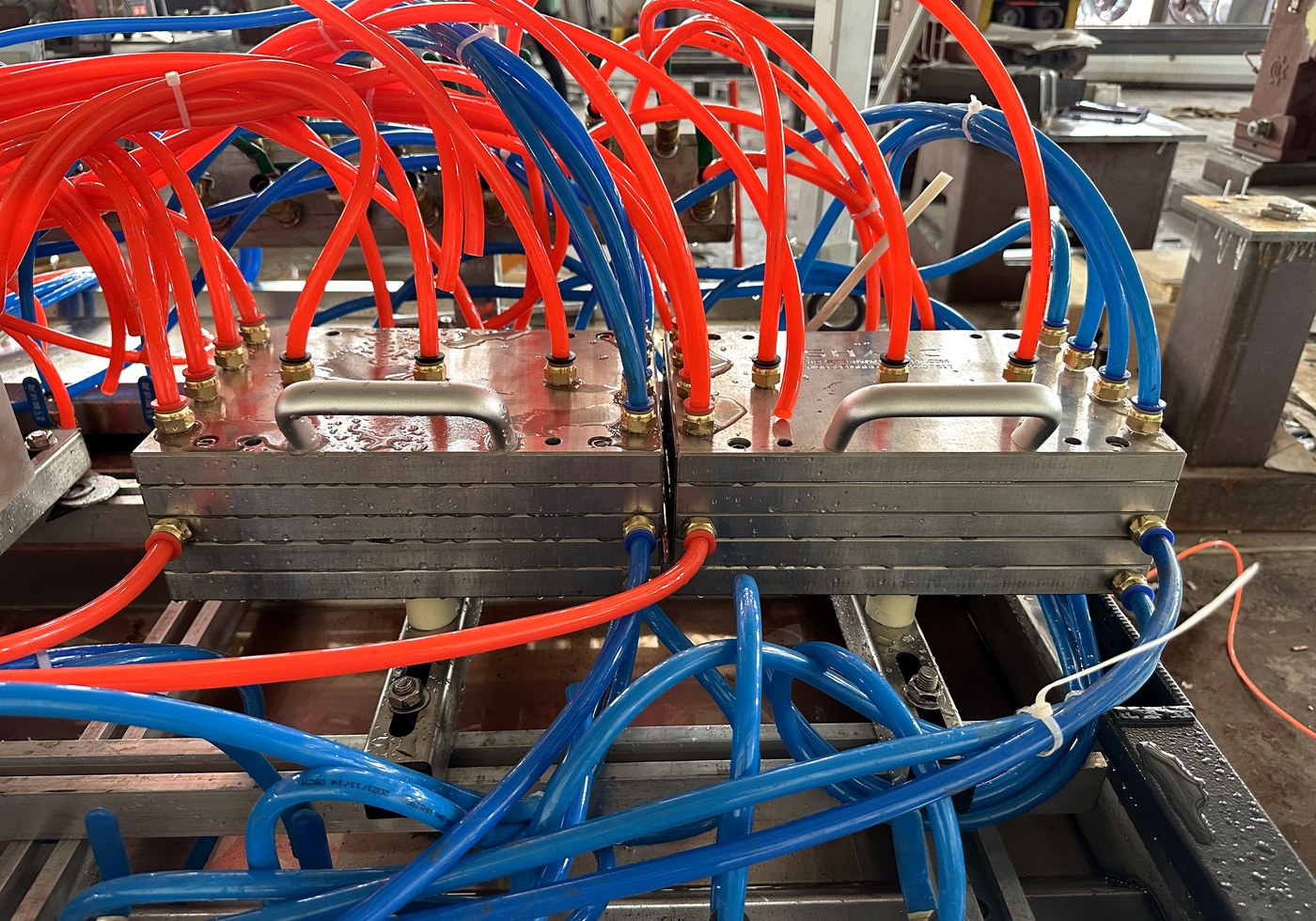
Calibration mould matched with the profile extrusion mould and vacuum table.
The vacuum calibration table is one of the most important downstream machines in a PVC profile production line. It supports the calibration moulds, vacuum system, water cooling and profile guiding section before haul-off.
The table helps control profile dimensions while the profile is still hot. Vacuum and cooling must be stable so that the profile can keep its shape before traction. For wider profiles, higher output or stricter surface requirements, the calibration table length, water circulation, vacuum zones and mechanical support should be selected carefully.
The vacuum calibration table should be placed before the haul-off and cutting machine. Its purpose is different from the profile mould and calibration mould: the table is the machine base and cooling/vacuum system, while the calibration mould is the tooling that directly shapes the profile.
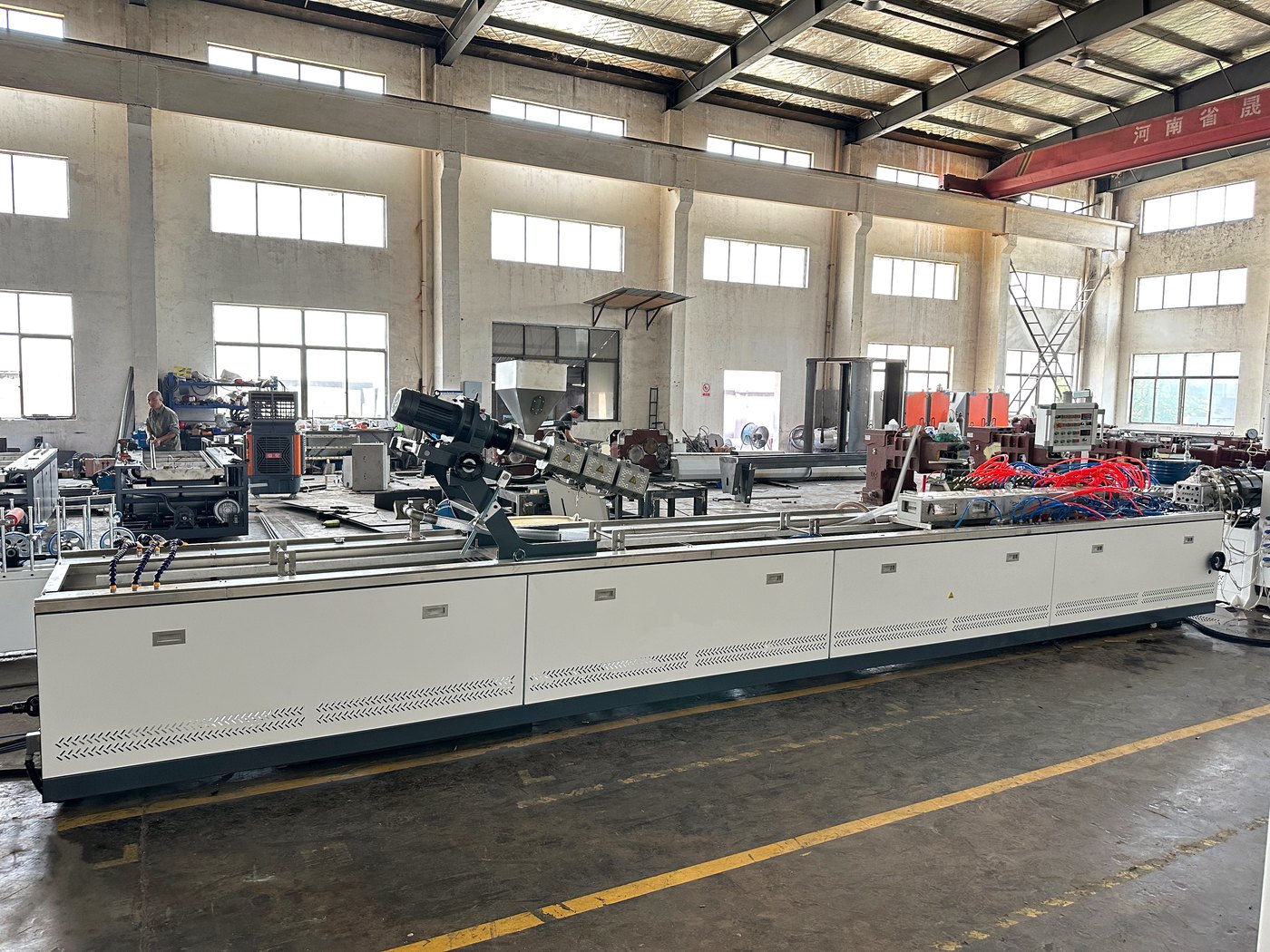
Vacuum calibration table used before the haul-off and cutting section.
The haul-off pulls the profile at a stable speed. The cutting machine cuts the continuous profile to the required length. These two functions must work with the extruder and calibration section, otherwise the line may produce length error, deformation, surface marks or unstable profile size.
For PVC window and door profiles, haul-off pressure should be enough to move the profile smoothly but not so high that it damages the surface or hollow chambers. Cutting should match the final profile length and packing method. Some projects need dust collection, special cutting blades or synchronized control.
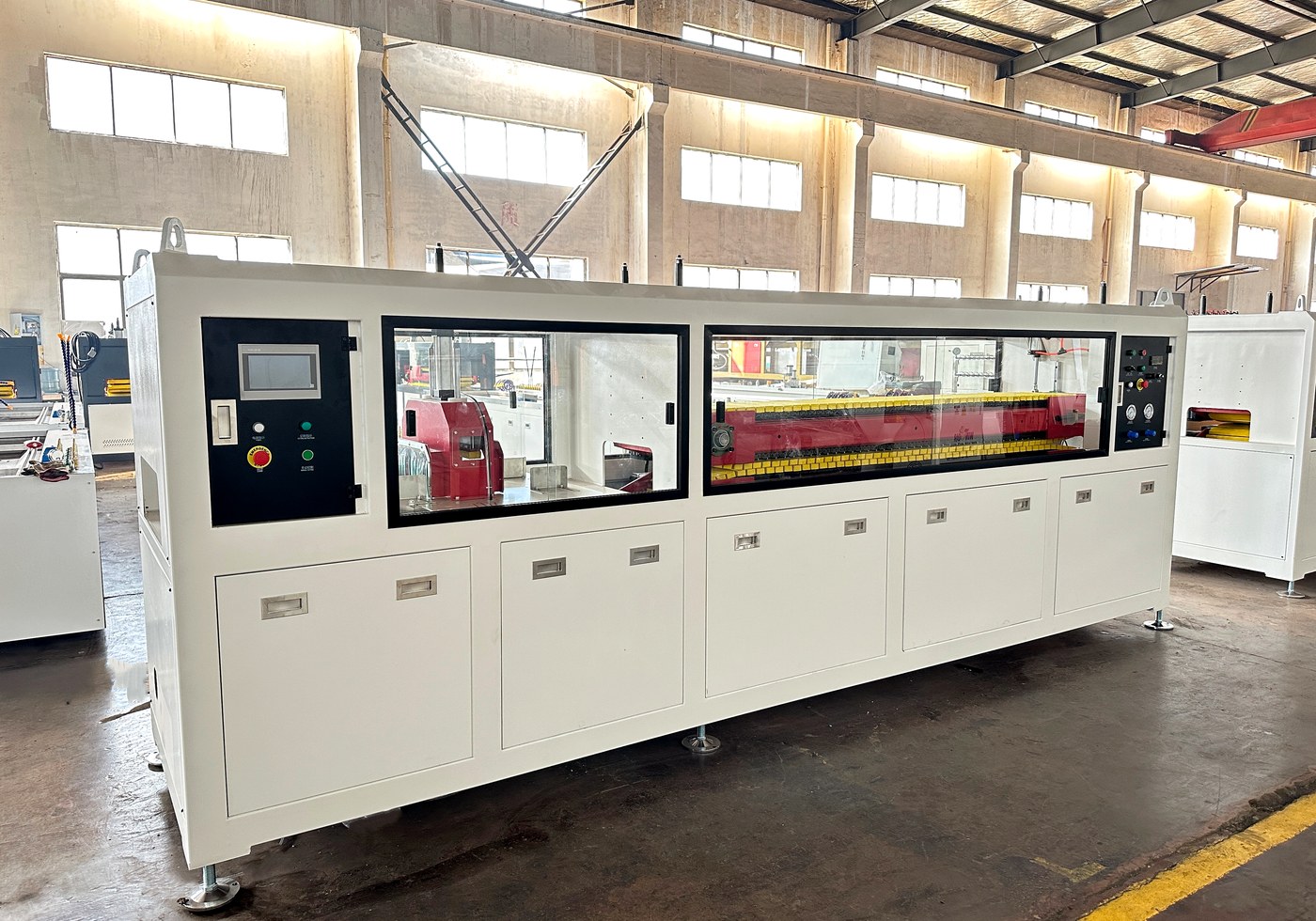
Haul-off and cutting section for synchronized traction and length cutting.
After cutting, the finished profile needs to be received, turned over, stacked or transferred for packing. A profile receiving table or turnover stacker reduces manual handling and helps keep long profiles straight after cutting.
The stacker should be selected according to profile length, profile weight, factory workflow and packing method. For standard window profile production, finished lengths are often long, so downstream handling should be planned early instead of added as an afterthought.
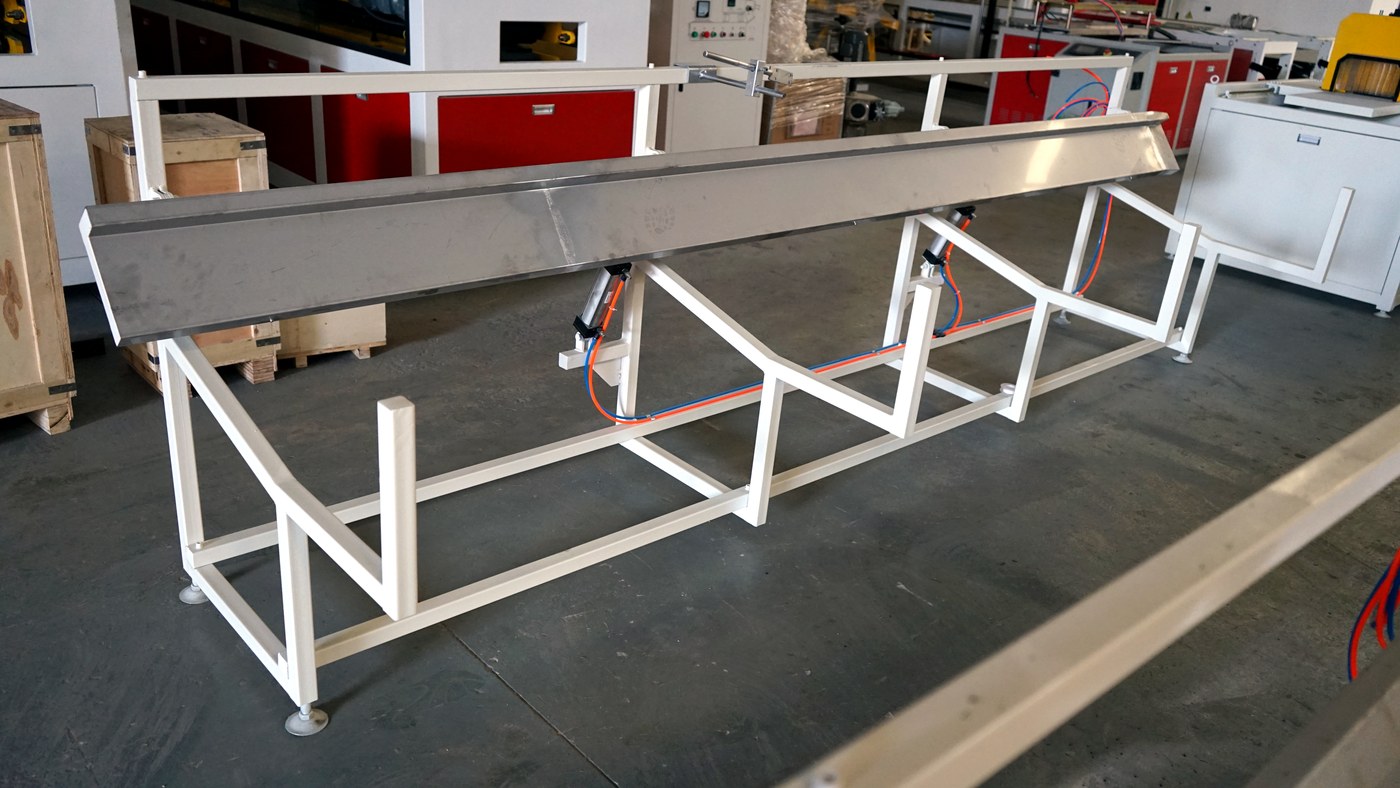
Profile receiving and turnover stacker for finished profile handling.
Some PVC profile projects require extra equipment. Possible options include automatic feeding and dosing system, co-extruder for color layer or functional layer, embossing or surface treatment equipment, lamination equipment, punching or drilling unit, chiller or water temperature control system, crusher or recycling support equipment for production waste, air compressor and auxiliary utilities.
Not every project needs these options. They should be selected according to final profile application, surface requirement, automation target and budget.
Before requesting a PVC profile extrusion line quotation, prepare the following information:
Information | Why It Matters |
|---|---|
Profile drawing or sample | Determines mould, calibration mould and downstream configuration |
Profile width and height | Affects extruder model, calibration table and haul-off structure |
Wall thickness and chamber design | Affects output, cooling and profile stability |
PVC formula or material plan | Helps select screw, temperature setting and mixer configuration |
Target output | Determines extruder capacity and downstream speed |
Final product application | Window, door, decorative profile and industrial profile may need different settings |
Cutting length | Affects cutter and stacker configuration |
Voltage and frequency | Needed for electrical design |
Workshop layout | Helps confirm line length, machine placement and operation space |
Optional functions | Co-extrusion, lamination, embossing or punching change the full line configuration |
The profile section determines mould, calibration and output demand. Choosing an extruder without a drawing can lead to under-configured or over-configured equipment.
For PVC profiles, dimensional stability depends heavily on calibration and cooling. A strong extruder cannot solve problems caused by weak calibration tooling or insufficient cooling length.
The vacuum calibration table is not just a table. It provides vacuum, cooling, guiding and mechanical support for the shaping process. It should match the profile mould, calibration mould and production speed.
Long PVC profiles need stable receiving and stacking after cutting. Poor handling can scratch profiles, bend products or slow down production.
The conical twin screw extruder is the main plasticizing machine, but the complete line also needs moulds, calibration, vacuum cooling, haul-off, cutting and stacking equipment.
Yes, one line can make different profiles by changing moulds and calibration tooling, as long as the extruder and downstream machines can support the required profile size and output.
The profile mould forms the molten PVC into the required cross-section. The calibration mould holds and stabilizes the hot profile shape during early cooling, usually working with vacuum and water cooling.
The vacuum calibration table supports vacuum shaping and cooling before haul-off. It helps control profile dimension, straightness and surface stability.
Send the profile drawing or sample, profile size, wall thickness, material formula, target output, cutting length, voltage and workshop layout. If you need co-extrusion, lamination or other optional functions, include those requirements as well.
A practical PVC profile extrusion line should be configured as a complete production system, not as separate machines chosen only by price. The mixer, conical twin screw extruder, profile mould, calibration mould, vacuum calibration table, haul-off cutter and stacker must match the same profile drawing and output target.
Winsoar can recommend a PVC profile production line configuration according to your profile drawing, PVC formula, profile application, output requirement and factory layout. Visit the PVC Profile Extrusion Line page or contact Winsoar for a project quotation.