Tel : +86-13812850975 E-mail : info@winsoarst.com

Views: 0 Author: Site Editor Publish Time: 2026-07-31 Origin: Winsoar


PE WPC decking production line is used to manufacture outdoor decking boards and related WPC profile products from PE resin, wood powder and additives. This article explains the practical process flow, main machine configuration and quotation data needed before choosing a WPC decking machine.
Direct answer: A PE WPC decking production line normally includes material mixing and feeding, WPC main extruder, optional surface co-extruder, decking profile mould, vacuum calibration table, embossing or surface treatment machine, haul-off, cutting machine and turnover stacker. The line should be selected according to PE grade, wood powder ratio, board section drawing, output target, surface texture and finished board length.
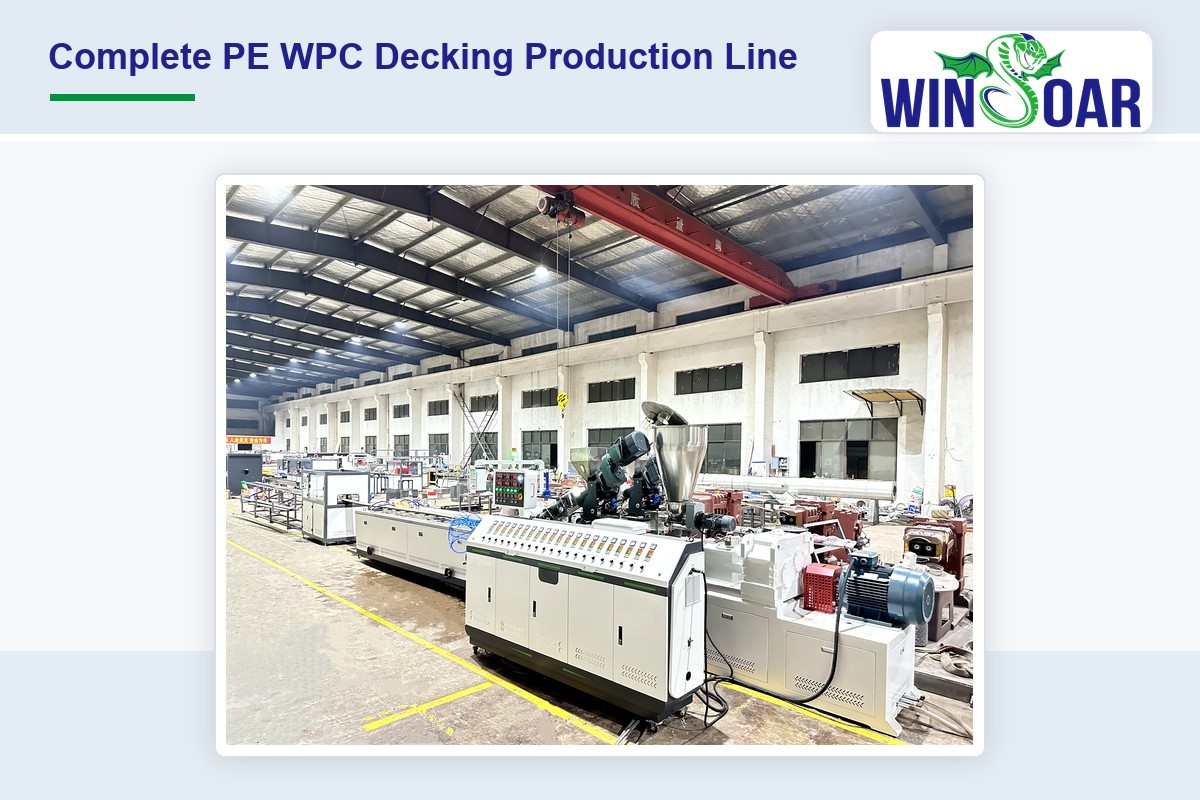
Complete PE WPC Decking Production Line Layout
PE WPC decking is a wood plastic composite material based on polyethylene resin and wood powder. It belongs to WPC profile extrusion, but it should not be confused with PVC-based WPC because the polymer base, processing window and machine selection points are different.
For outdoor decking, the formula normally needs stable dispersion of wood powder, suitable PE resin, coupling agents, lubricants, pigments and other additives. Moisture control and mixing quality affect surface finish, density, extrusion pressure and line speed.
Material Point | Why It Matters | Machine Impact |
|---|---|---|
PE resin | Controls plasticizing, melt strength and outdoor performance. | Affects screw design, temperature setting and extrusion stability. |
Wood powder | Influences decking appearance, density and processing difficulty. | Requires good mixing, moisture control and stable feeding. |
Additives and color | Improve processing, color consistency and weathering performance. | Need uniform dispersion before extrusion. |
Surface layer | Optional co-extrusion can improve color, surface feel or weathering layer. | Requires co-extruder and matched co-extrusion mould design. |
The production process starts from formula preparation and ends with finished board stacking. Each machine section should match the board width, thickness, hollow or solid structure, output target and packing method.
Process Step | Main Equipment | Selection Point |
|---|---|---|
Material preparation | Mixing system and feeding equipment | Confirm PE, wood powder and additive dispersion before extrusion. |
Plasticizing and extrusion | WPC main extruder | Selected by formula, profile weight per meter and target output. |
Optional surface co-extrusion | Co-extrusion extruder | Used when a protective surface layer or color layer is required. |
Profile forming | Decking profile mould | Designed by board width, thickness, hollow chamber and locking groove. |
Vacuum calibration and cooling | Vacuum calibration table | Controls size, straightness, cooling and long-board stability. |
Surface texture | Embossing, sanding or brushing equipment | Selected by wood grain, anti-slip and market appearance requirement. |
Cutting and stacking | Cutting machine and turnover stacker | Matched with finished board length, output and packing workflow. |
The main extruder is the core machine in a PE WPC decking board production line. It must provide stable melt pressure and plasticizing for a composite material that contains both polymer and wood powder. The screw and barrel should be selected according to formula, expected output and wear resistance requirement.
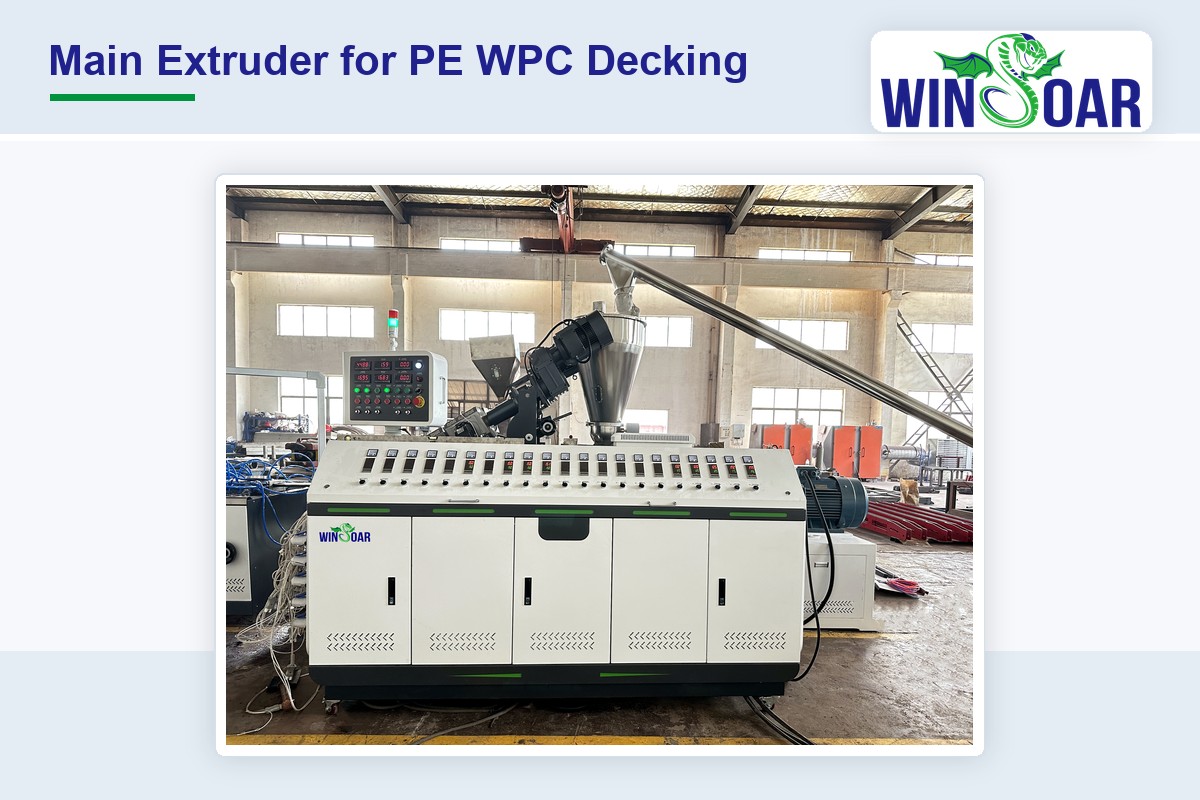
Main Extruder for PE WPC Decking Machine
Stable feeding for PE resin, wood powder and additives.
Temperature control matched with WPC formula and board weight.
Output selected by decking board width, thickness and line speed.
The profile mould forms the actual decking section. Buyers should provide a drawing or sample with board width, thickness, hollow chamber, rib structure, groove detail and surface requirement. The vacuum calibration table then stabilizes the hot profile and controls straightness before embossing and cutting.
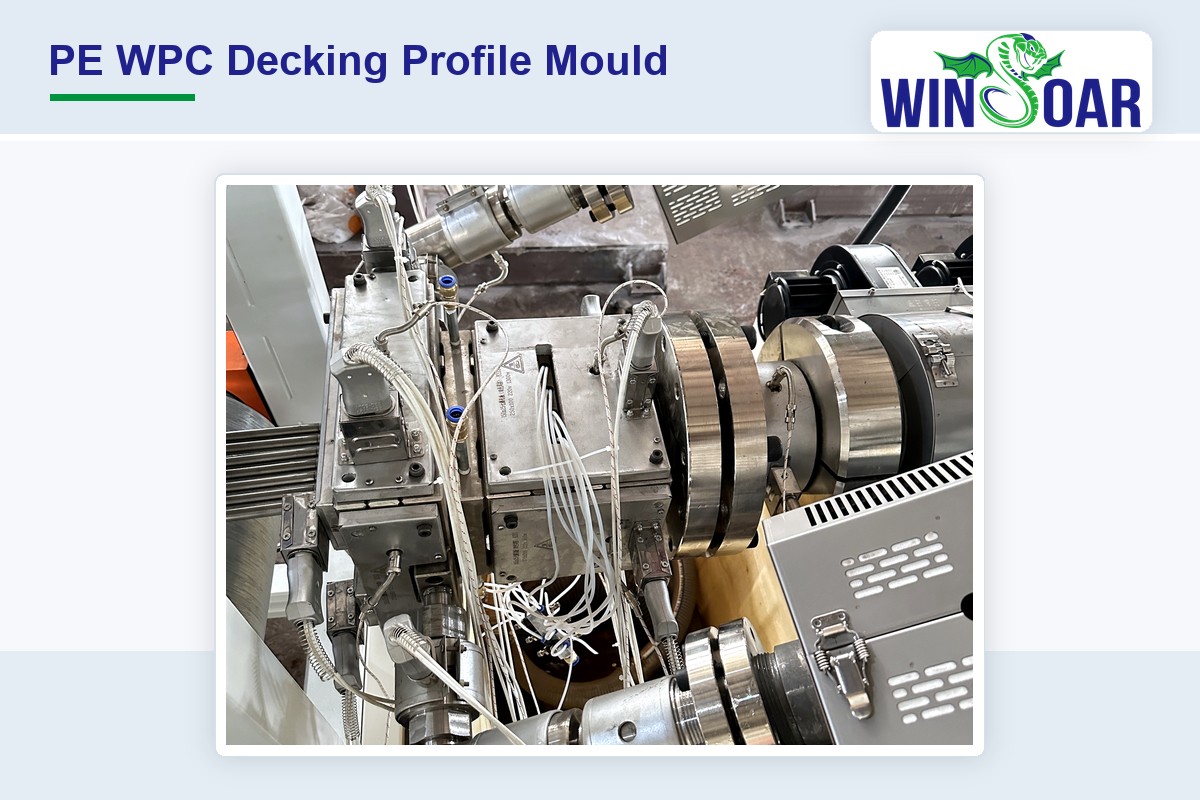
PE WPC Decking Profile Mould
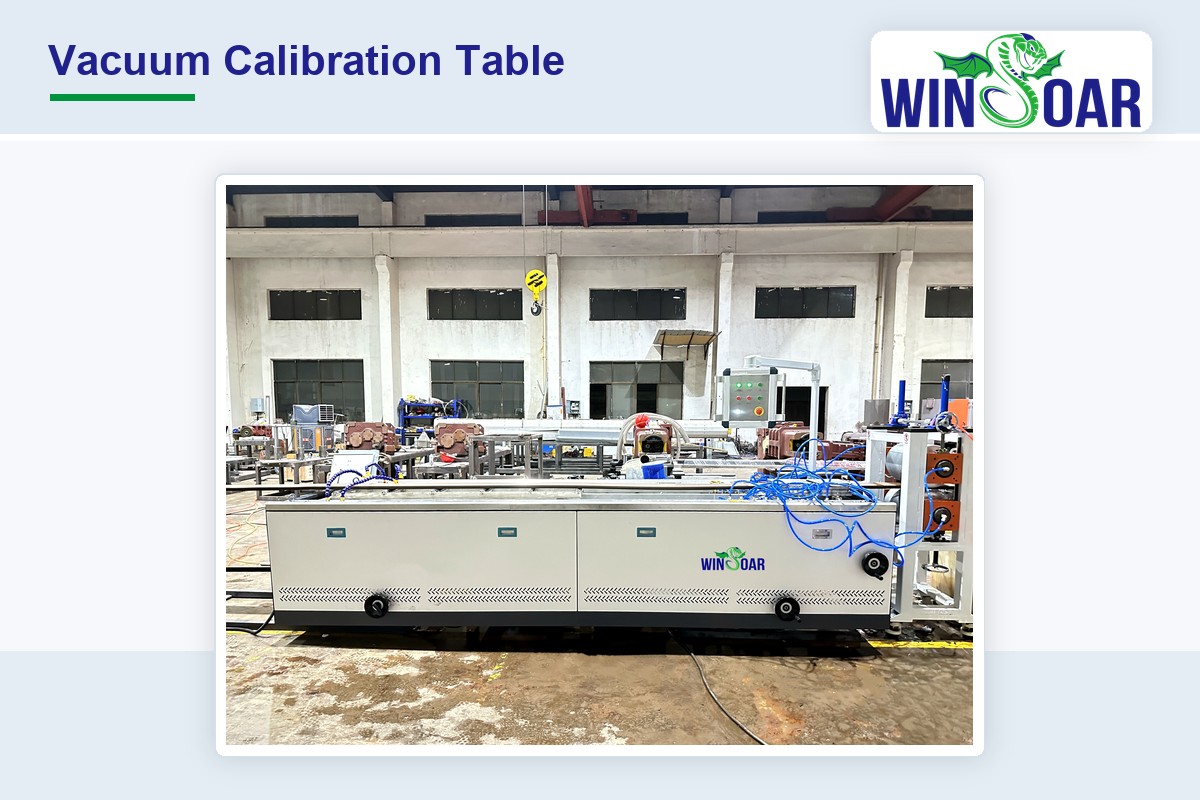
Vacuum Calibration Table for WPC Decking
Configuration note: For long outdoor decking boards, mould design and calibration length are often more important than simply increasing extruder size. Poor cooling or unstable calibration can cause deformation, uneven size or difficult installation.
Outdoor decking normally needs a wood grain surface or anti-slip texture. Online embossing is common when the buyer wants a visible wood grain pattern. Sanding or brushing can also be selected according to final market requirement.
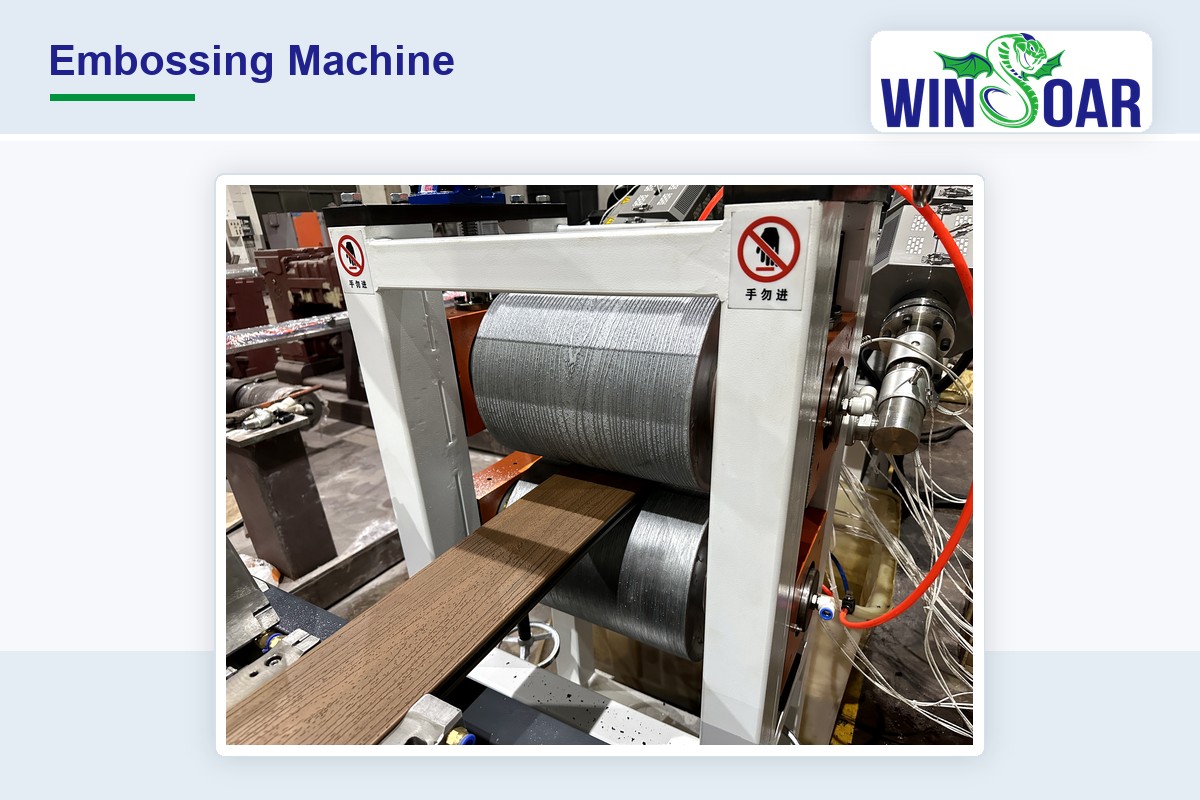
Embossing Machine for Wood Grain Decking Surface
Online embossing for wood grain appearance.
Surface texture selection based on outdoor use and market demand.
Texture equipment should be matched with line speed and board temperature.
After calibration and surface treatment, the PE WPC decking board is cut to fixed length and collected by a stacker. Cutting length and stacker layout should be confirmed by finished board size, packing method and factory space.
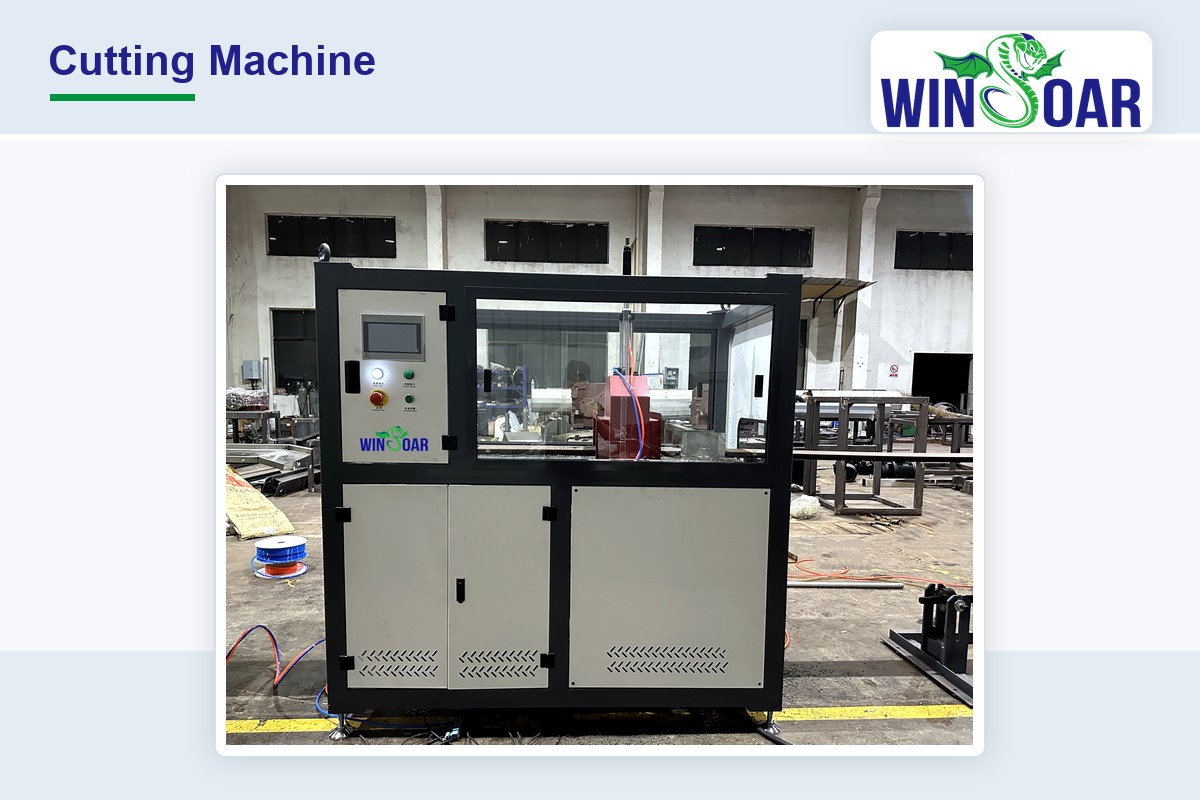
Cutting Machine for PE WPC Decking Board
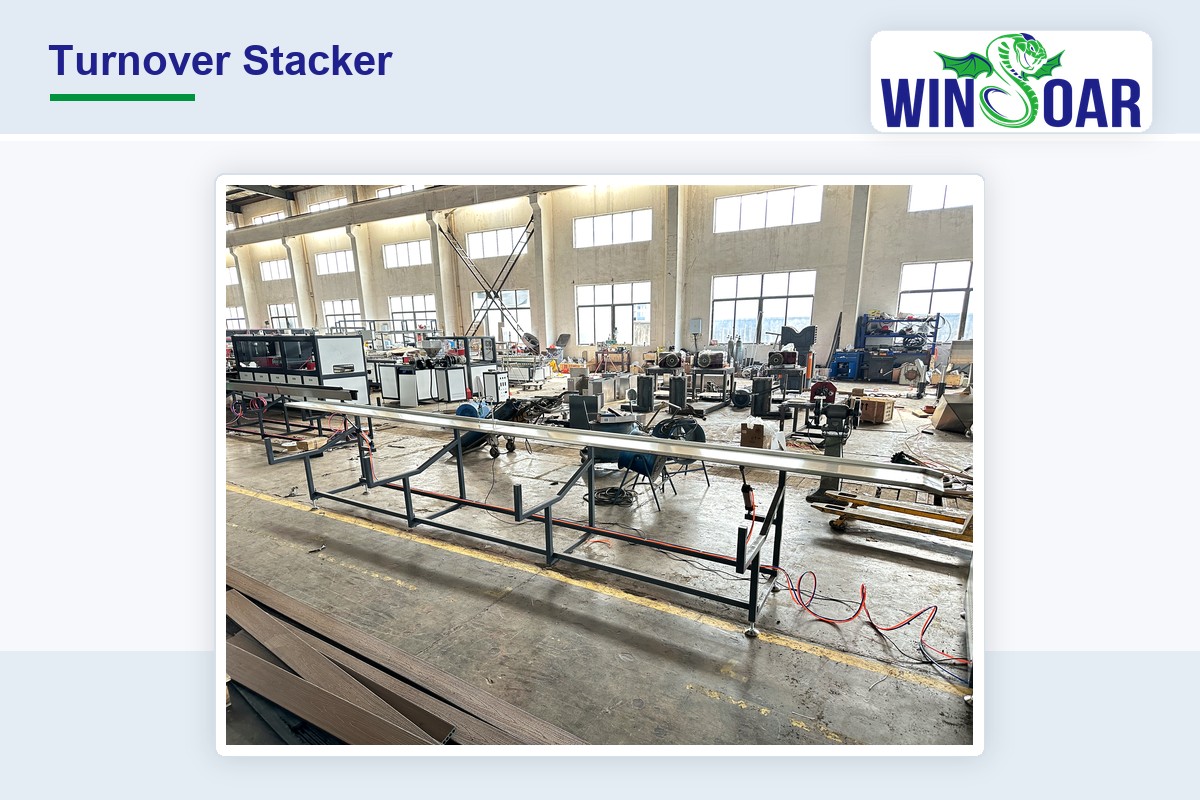
Turnover Stacker for Finished PE WPC Decking Boards
Decking is one application of a broader WPC profile extrusion line. The same extrusion concept can be adapted for WPC cladding, fence board, landscape profile, handrail profile and decorative outdoor profile by changing mould, calibration tooling and downstream surface treatment.
Application | Typical Product | Configuration Focus |
|---|---|---|
PE WPC decking | Hollow or solid outdoor floor board | Profile mould, calibration, embossing, cutting length and stacking. |
WPC cladding | Wall cladding and outdoor decorative profile | Surface appearance, profile straightness and installation groove. |
WPC fence or landscape profile | Fence board, railing, pergola or garden profile | Profile strength, weathering surface and stable output. |
To recommend a correct PE WPC decking production line, Winsoar needs project data rather than only a target output number. The most useful information includes:
Decking profile drawing or sample photo.
Board width, thickness, hollow or solid structure and weight per meter.
PE resin grade, wood powder ratio and additive requirement if available.
Target output, line speed and daily production plan.
Surface requirement: embossing, sanding, brushing or optional co-extrusion.
Finished board length, packing method and stacker layout.
Voltage, workshop layout and delivery destination.
For the complete machine page, visit PE WPC Decking Production Line. For broader equipment categories, see Plastic Profile and Board Production Line, Profile Production Line and PVC and WPC Profile Production Line.
Related auxiliary equipment includes Plastic Mixer, Twin Screw Extruder and Conical Twin Screw Extruder, depending on whether the project uses direct extrusion, pelletizing or a two-step compounding process.
No. PE WPC decking uses PE resin and wood powder as the main composite base. PVC WPC uses PVC as the polymer base. The material behavior, formula, processing temperature and machine selection points are different.
Yes, but different profiles normally require different moulds and calibration tooling. The downstream machine should also match the widest board, longest board and required cutting length.
Co-extrusion is optional. It is used when the buyer requires a surface layer, improved color layer or special outdoor surface. Standard PE WPC decking can also be produced without co-extrusion if the product design does not require it.
Output depends on formula, wood powder ratio, board weight per meter, extruder capacity, mould design, cooling length, surface treatment and cutting workflow. A practical quotation should consider the whole line, not only the extruder model.
Send Winsoar your decking profile drawing, PE and wood powder formula, target output, surface texture requirement, voltage and workshop layout. We will recommend a suitable WPC extrusion line configuration for your decking or WPC profile project.