Tel : +86-13812850975 E-mail : info@winsoarst.com

Views: 0 Author: Site Editor Publish Time: 2026-08-24 Origin: Winsoar


Direct answer: A complete PVC pipe production line normally includes a material mixer, feeding system, conical twin screw extruder, PVC pipe die head and mould, vacuum calibration tank, cooling system, haul-off machine and cutter. Depending on the finished pipe, the line may also include a belling machine, co-extruder for color stripes, automatic stacker, coiler, online measuring system and auxiliary utilities. The exact equipment list should be matched to pipe diameter, wall thickness, output, PVC formulation, pipe length and socket requirement.
PVC pipe production starts with a stable compound. A hot and cold mixer or another suitable mixing system blends PVC resin, calcium carbonate, stabilizer, lubricant, pigment and processing additives. The feeding system then transfers the prepared compound to the extruder at a controlled rate.
Uniform mixing affects plasticizing stability, pipe surface quality, melt pressure and dimensional consistency. Mixer capacity should be matched to the extruder output and the factory's production schedule.
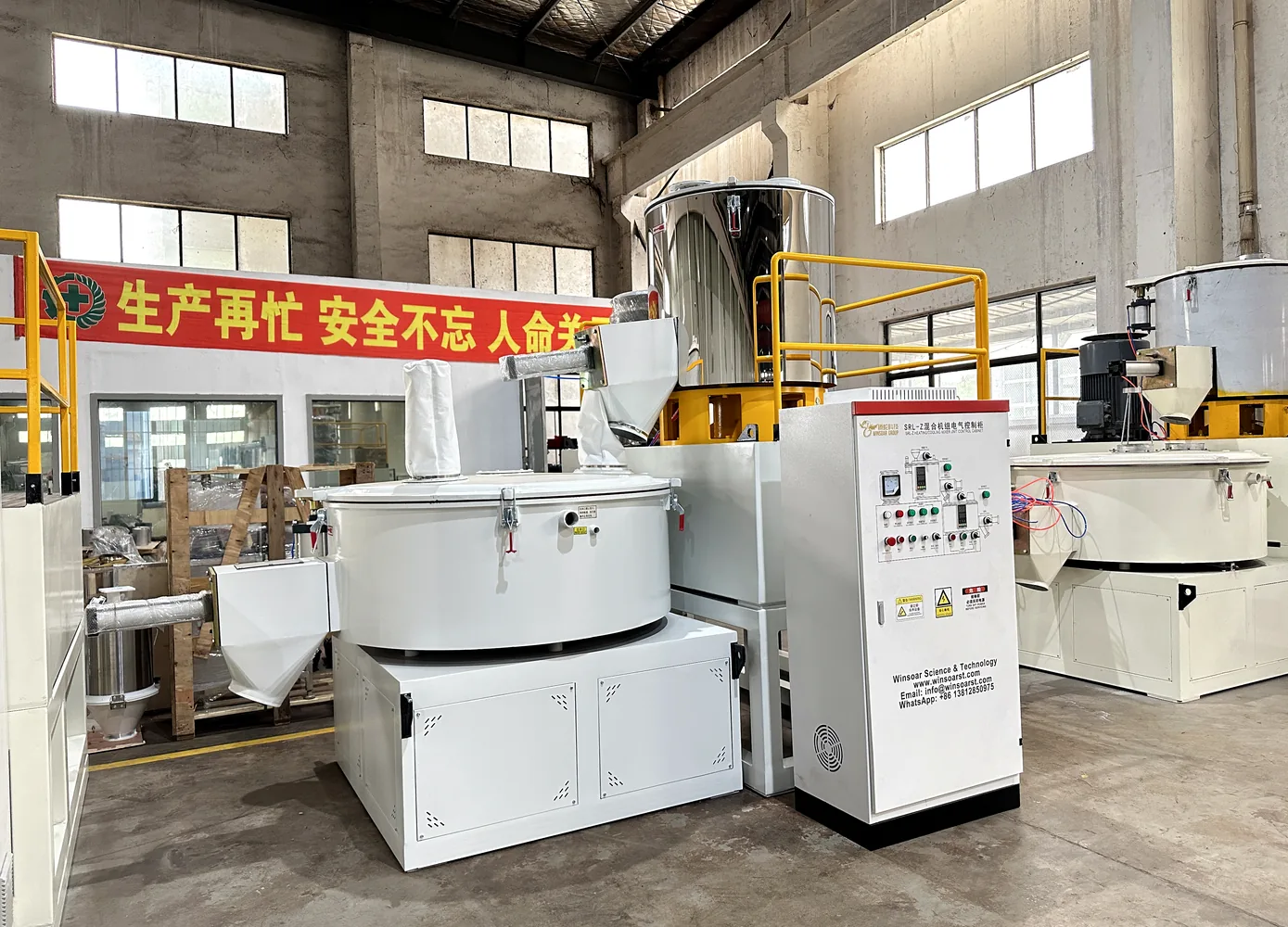
PVC material mixing system for a pipe production line.
The conical twin screw extruder plasticizes the PVC compound and pushes the melt toward the die head. It is a common main machine for rigid PVC pipe because its screw design supports controlled PVC processing and stable melt pressure.
Pipe diameter and wall thickness
PVC formulation and filler ratio
Target output in kg/h
Single-output or multi-output production
Screw diameter, motor power and torque
Local voltage and control requirements
Motor power alone is not enough to compare two quotations. Confirm the practical output, screw design, barrel temperature control and included feeding equipment.
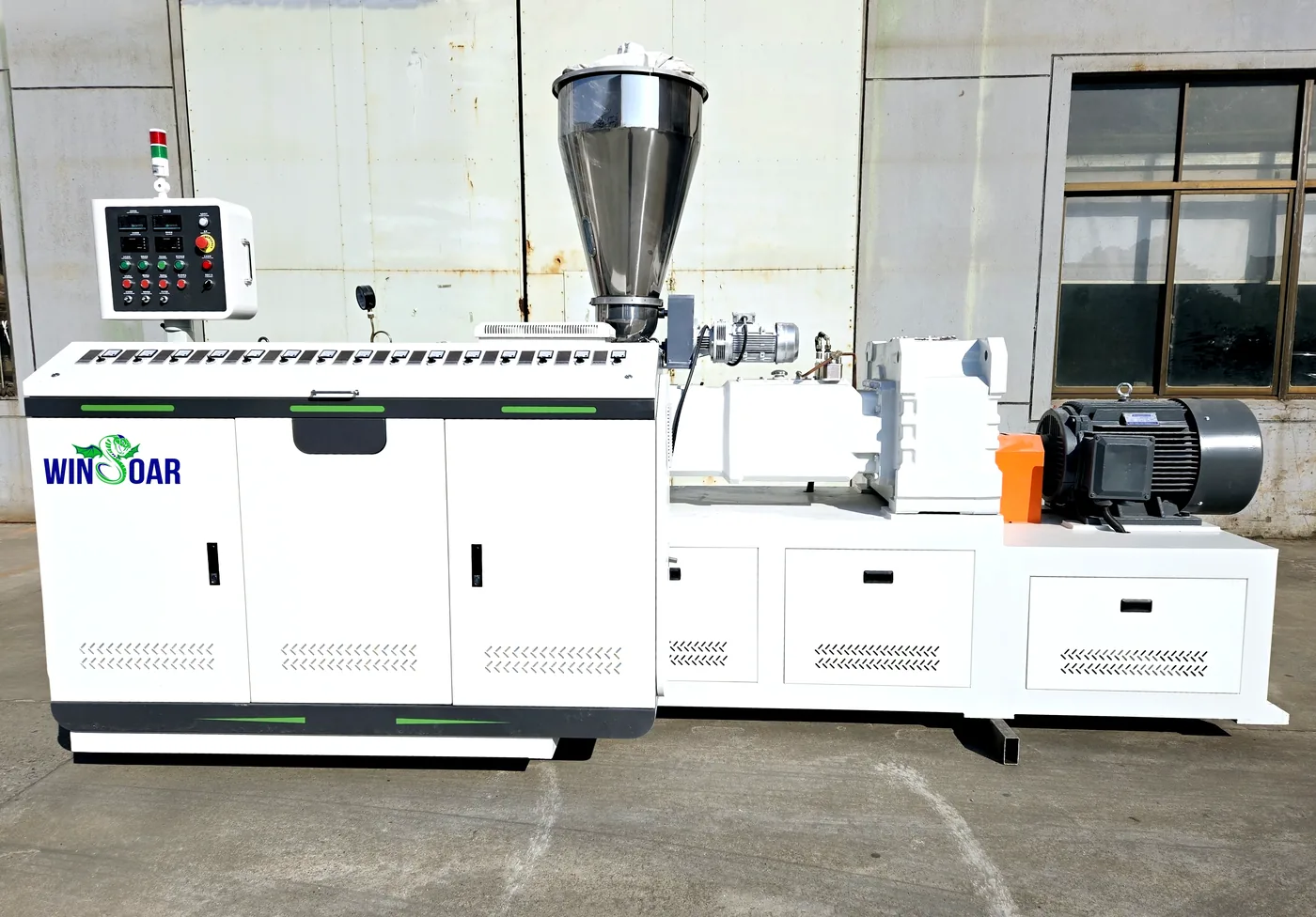
Conical twin screw extruder for PVC pipe plasticizing and extrusion.
The die head forms the hot PVC pipe section, while the sizing mould controls the outside diameter and wall profile. A production line may use a single-cavity die head, two-cavity die head or another multi-output design for small pipe sizes.
The quotation should specify included diameter moulds, die head material, flow design, interchangeable tooling and optional color stripe or co-extrusion equipment.
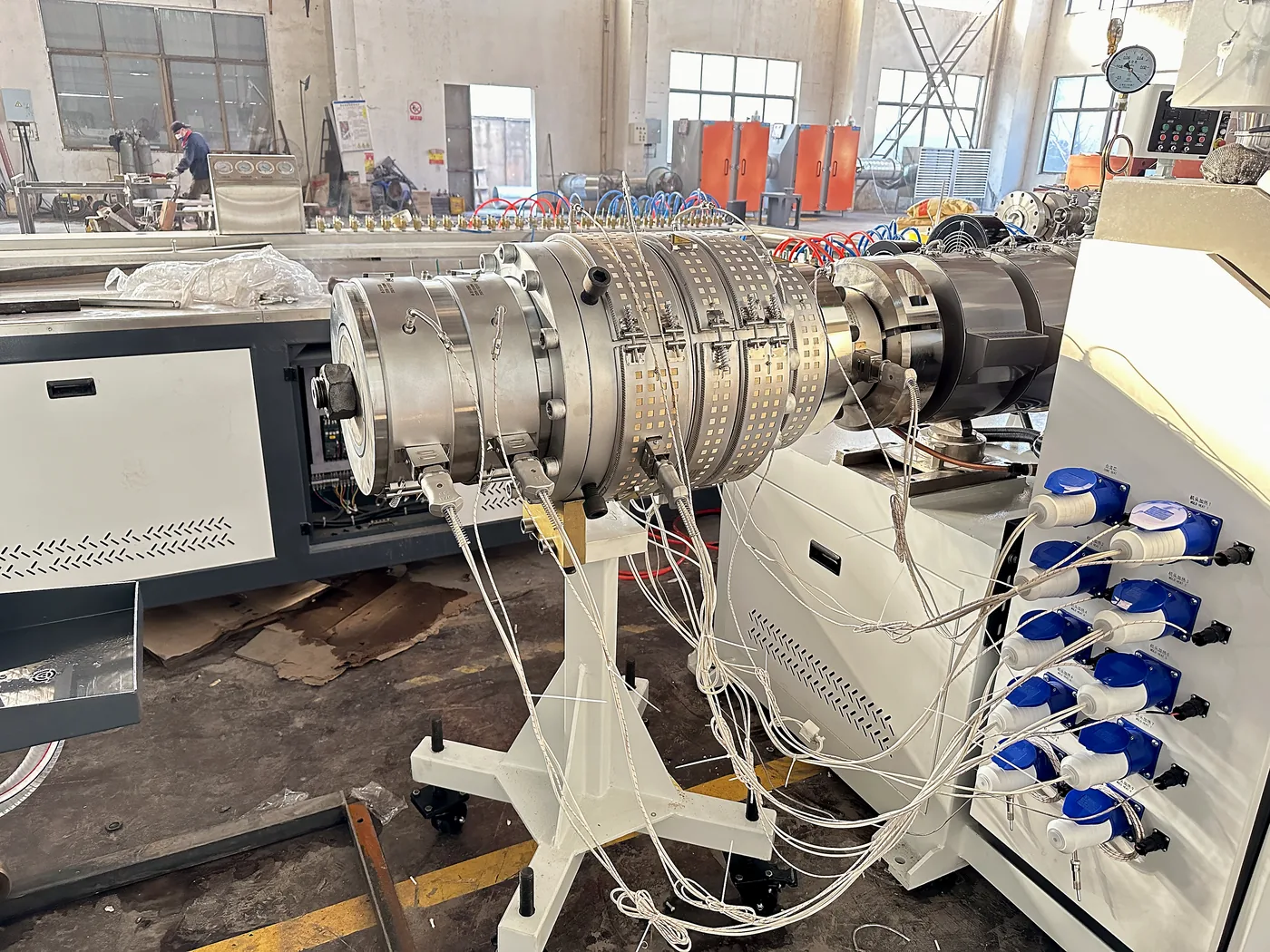
Die head and mould selection determines the pipe section and diameter range.
The vacuum calibration tank shapes and stabilizes the pipe immediately after it leaves the die head. Vacuum pressure and sizing sleeves help control outside diameter, roundness, wall position and surface quality.
Tank length and configuration depend on pipe diameter, wall thickness, line speed and cooling demand. Larger or thick-wall PVC pipe normally needs a longer calibration and cooling section.
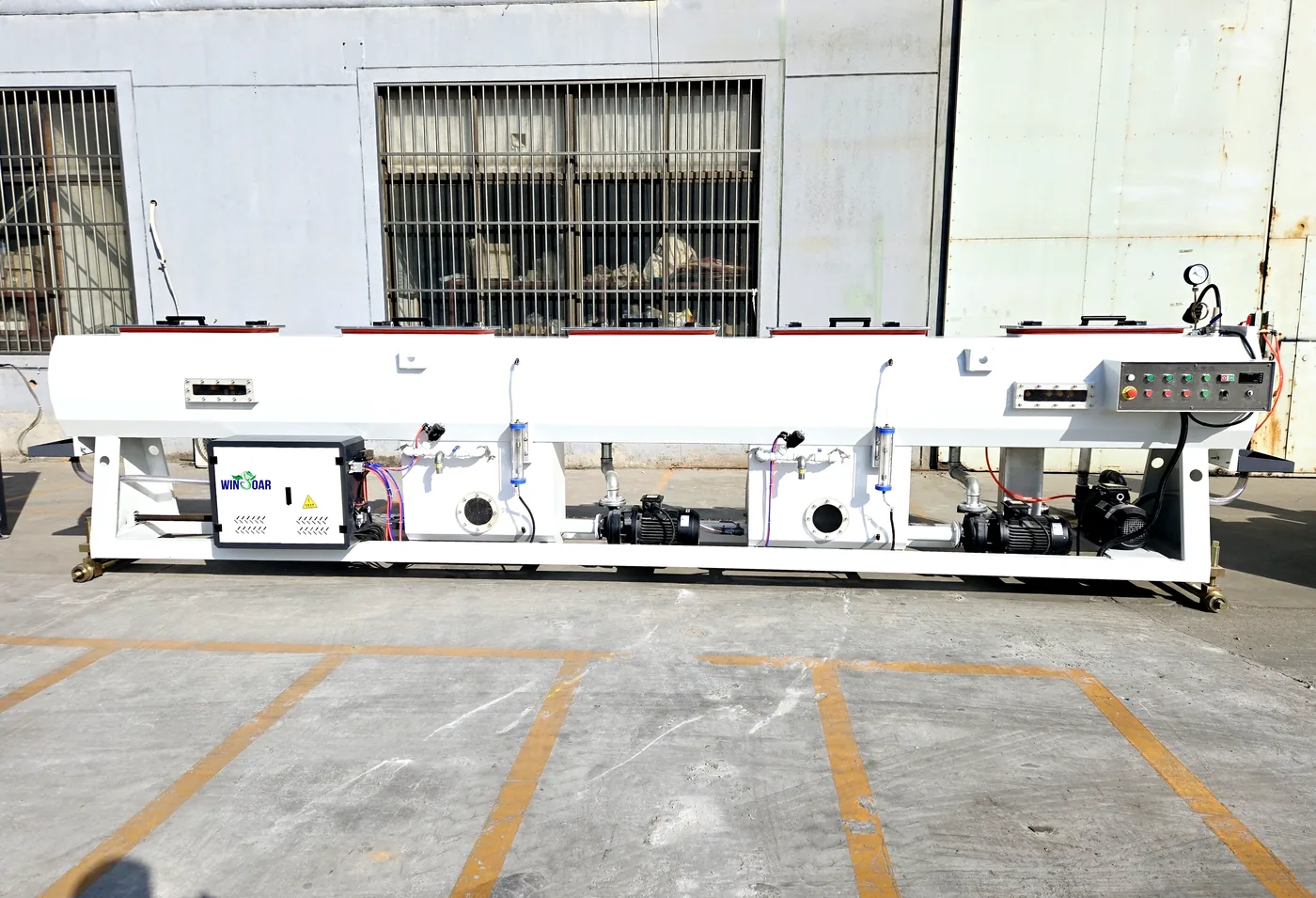
Vacuum calibration and cooling stabilize the pipe dimensions.
Cooling removes heat from the pipe before haul-off and cutting. It may be integrated into the vacuum tank and extended through spray cooling sections or a separate cooling tank. The system normally includes water circulation, vacuum pumps, filters, valves and water-level control.
The haul-off machine pulls the calibrated pipe through downstream equipment at a stable speed. Belts or caterpillar tracks must provide enough traction without marking or crushing the pipe surface. For a dual-output small-diameter PVC line, both pipe tracks must remain synchronized.
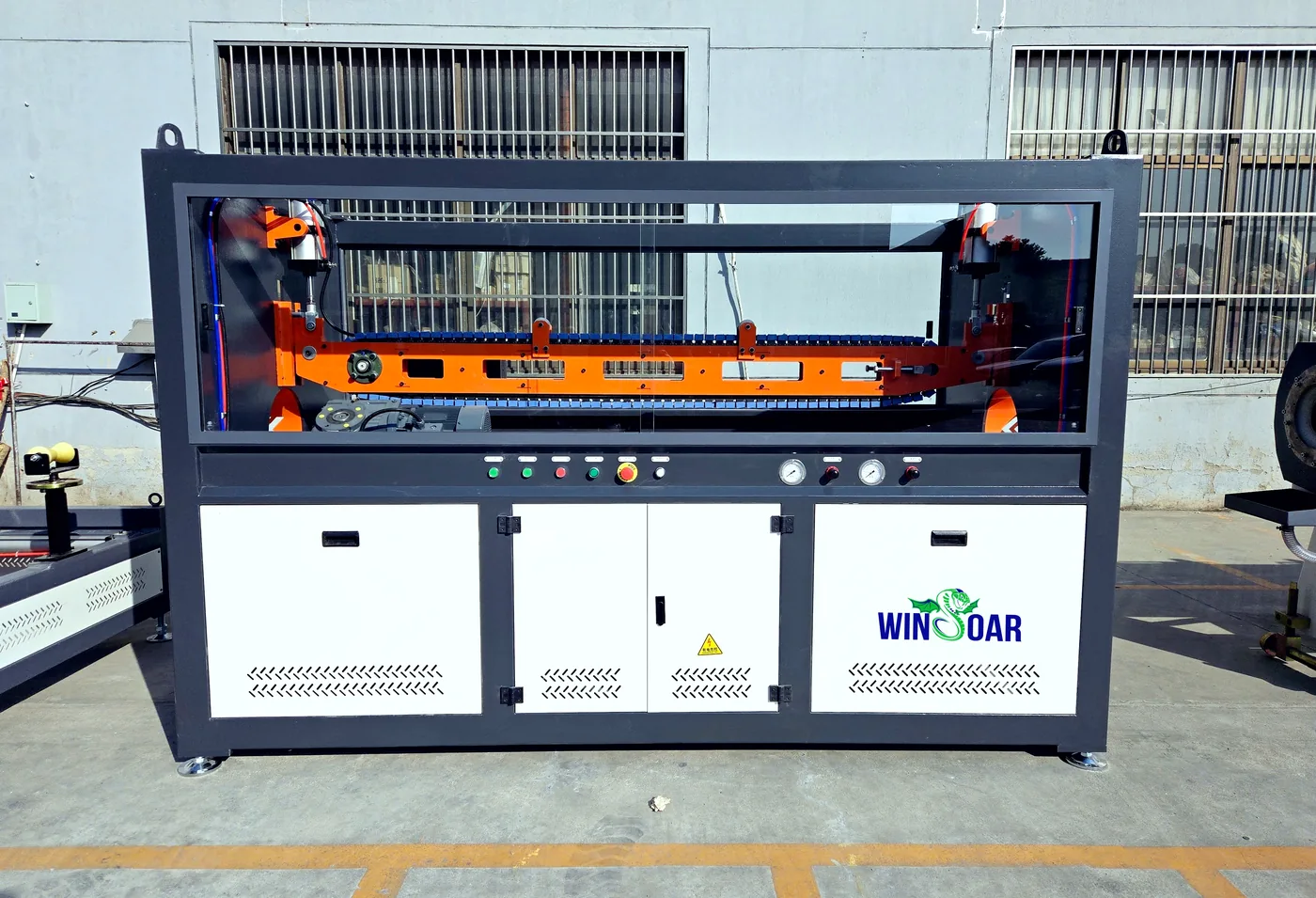
Stable haul-off keeps line speed and pipe dimensions consistent.
The cutter produces the required finished pipe length. Cutting method depends on pipe diameter, wall thickness, line speed, pipe rigidity and whether chip-free cutting is required. Confirm cutting range, fixed-length control, dust handling and synchronization in the quotation.
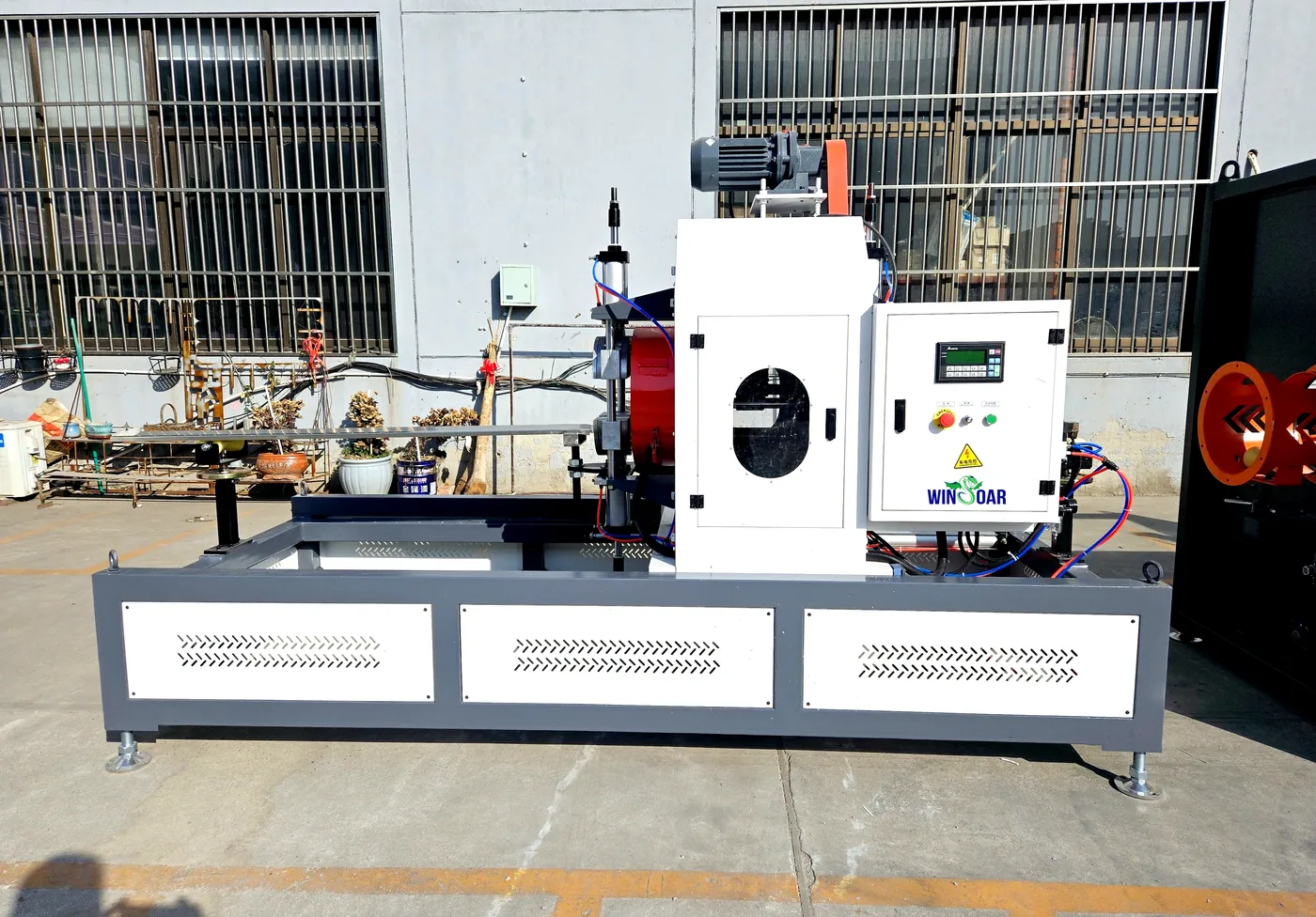
Cutting equipment must match pipe size, length and production speed.
Not every PVC pipe project needs sockets. A belling machine heats and forms one end of the pipe for socket or sealing-ring connection. It is commonly considered for water supply, drainage and sewer pipe applications.
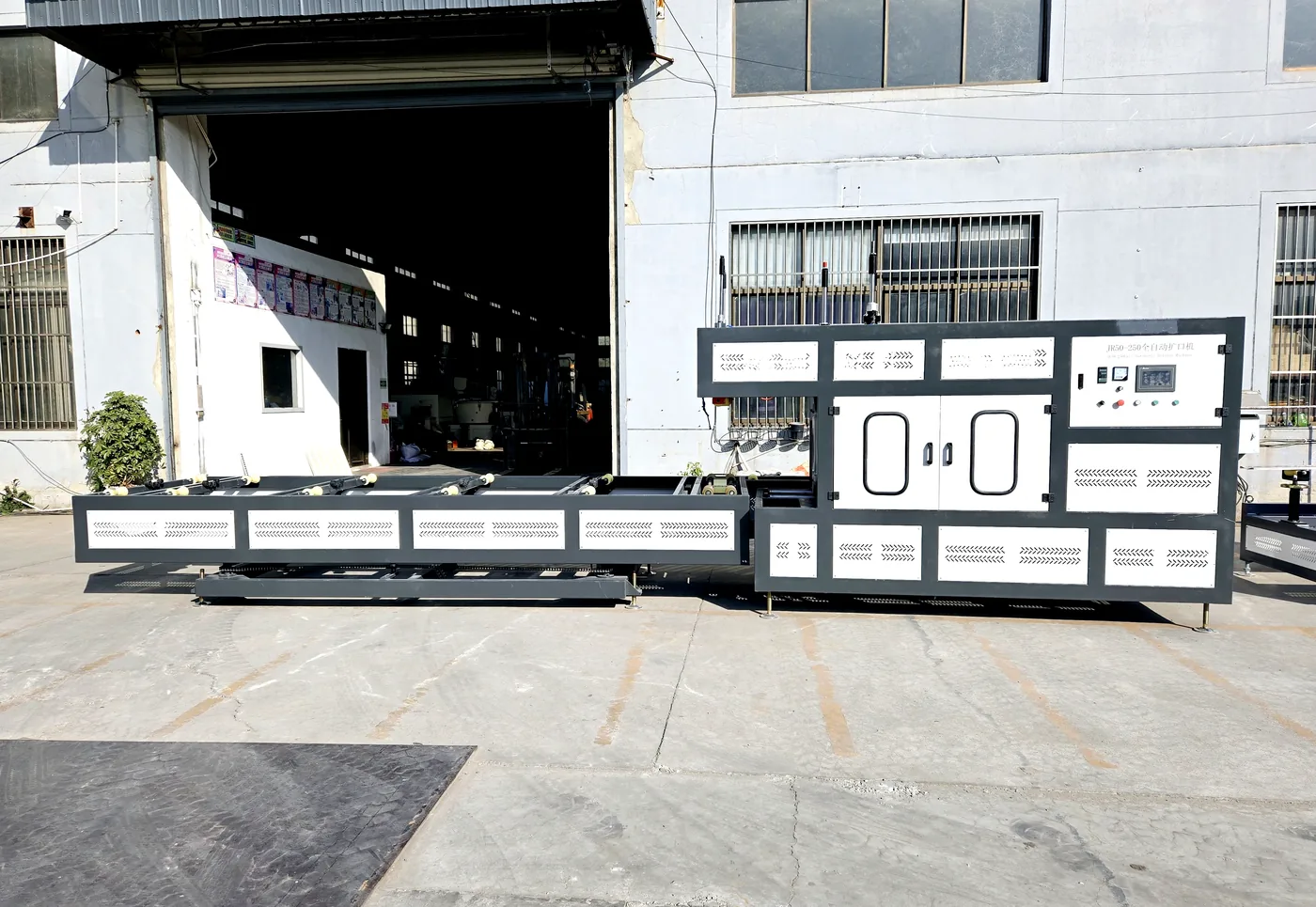
Belling is an optional downstream process for socketed PVC pipe.
Some PVC pipes require a color stripe, identification line or a different material layer. A small co-extruder and marking die can be added when the pipe drawing requires it. This equipment is optional for standard single-color, single-layer pipe.
Straight rigid PVC pipes are commonly collected on a stacker or receiving table after cutting. Flexible or smaller products may use a coiler when the product design allows coiling. Handling equipment affects labor, floor space and packing efficiency.
Equipment | Main function | Usually required |
|---|---|---|
Mixer and feeder | Prepare and feed PVC compound | Yes |
Conical twin screw extruder | Plasticize and convey PVC melt | Yes |
Die head and mould | Form the pipe section | Yes |
Vacuum calibration tank | Control diameter and roundness | Yes |
Cooling and water circulation | Remove heat and stabilize dimensions | Yes |
Haul-off machine | Pull the pipe at stable speed | Yes |
Cutter | Cut fixed-length pipes | Yes |
Belling machine | Form sockets | Optional |
Co-extruder | Add color stripe or extra layer | Optional |
Stacker or receiving table | Collect straight pipes | Usually |
Coiler | Coil suitable products | Optional |
Online measuring system | Monitor diameter or wall thickness | Optional |
PVC resin and additives are mixed.
The compound is fed to the conical twin screw extruder.
The extruder plasticizes the material and sends it through the die head.
The hot pipe is shaped in the vacuum calibration tank.
Cooling water stabilizes the pipe dimensions.
The haul-off pulls the pipe at a controlled speed.
The cutter produces the specified length.
The belling machine, stacker or coiler completes finishing and handling when required.
The line must be synchronized as one system. Increasing extruder output without matching calibration, cooling, haul-off and cutting capacity can reduce product quality rather than improve production.
Small-diameter 16-63mm lines often use a compact conical twin screw extruder, two-cavity die head, dual calibration tracks, synchronized haul-off and cutter. This configuration is useful for conduit and cable protection pipe.
Medium-diameter 63-160mm lines generally need more cooling capacity, stronger haul-off and flexible mould changes for water, drainage and utility pipe.
Medium and large 50-250mm or 200-450mm projects require larger tooling, longer calibration and cooling, heavier downstream handling and a clearer factory layout. Belling is more likely when the finished pipe uses sockets.
Pipe diameter range and wall thickness
Pipe drawing, standard and application
PVC formula or material information
Target output and line speed
Required pipe length
Socket, belling, coiling or stacking requirement
Single-layer, color stripe or multi-layer requirement
Local voltage, workshop length and cooling-water conditions
Installation, training, spare parts and warranty expectations
The conical twin screw extruder is the main plasticizing machine, but it must work with the die head, mould, vacuum calibration, cooling, haul-off and cutter as one complete line.
No. Belling is added when the finished pipe requires a socket for connection. Straight conduit and some other products may only need cutting and stacking.
It controls the pipe outside diameter, roundness and surface quality while the hot PVC section is shaped and cooled.
Yes, when the extruder capacity, die head, mould sets, calibration sleeves, haul-off and cutter are designed for the required diameter range.
The main factors are pipe diameter, wall thickness, PVC formulation, output, pipe length, socket requirement, automation level, local utilities and factory layout.
Send the pipe drawing, diameter range, wall thickness, formula, output target, finished length, socket requirement and local voltage. Winsoar can match the mixer, extruder, die head, calibration, cooling and downstream equipment to the actual project.