Tel : +86-13812850975 E-mail : info@winsoarst.com

 |


| Quantity: | |
|---|---|
50-250mm PVC Pipe Extrusion Line
Winsoar
WSP-PVC-50-250
Product Overview & Applications
Winsoar 50-250mm PVC pipe extrusion line is designed for manufacturing rigid PVC, UPVC and CPVC pipes used in water supply, drainage, electrical conduit, irrigation and industrial piping systems. The production line can be customized according to pipe diameter, wall thickness, PVC formulation, output capacity, automation level and factory layout.
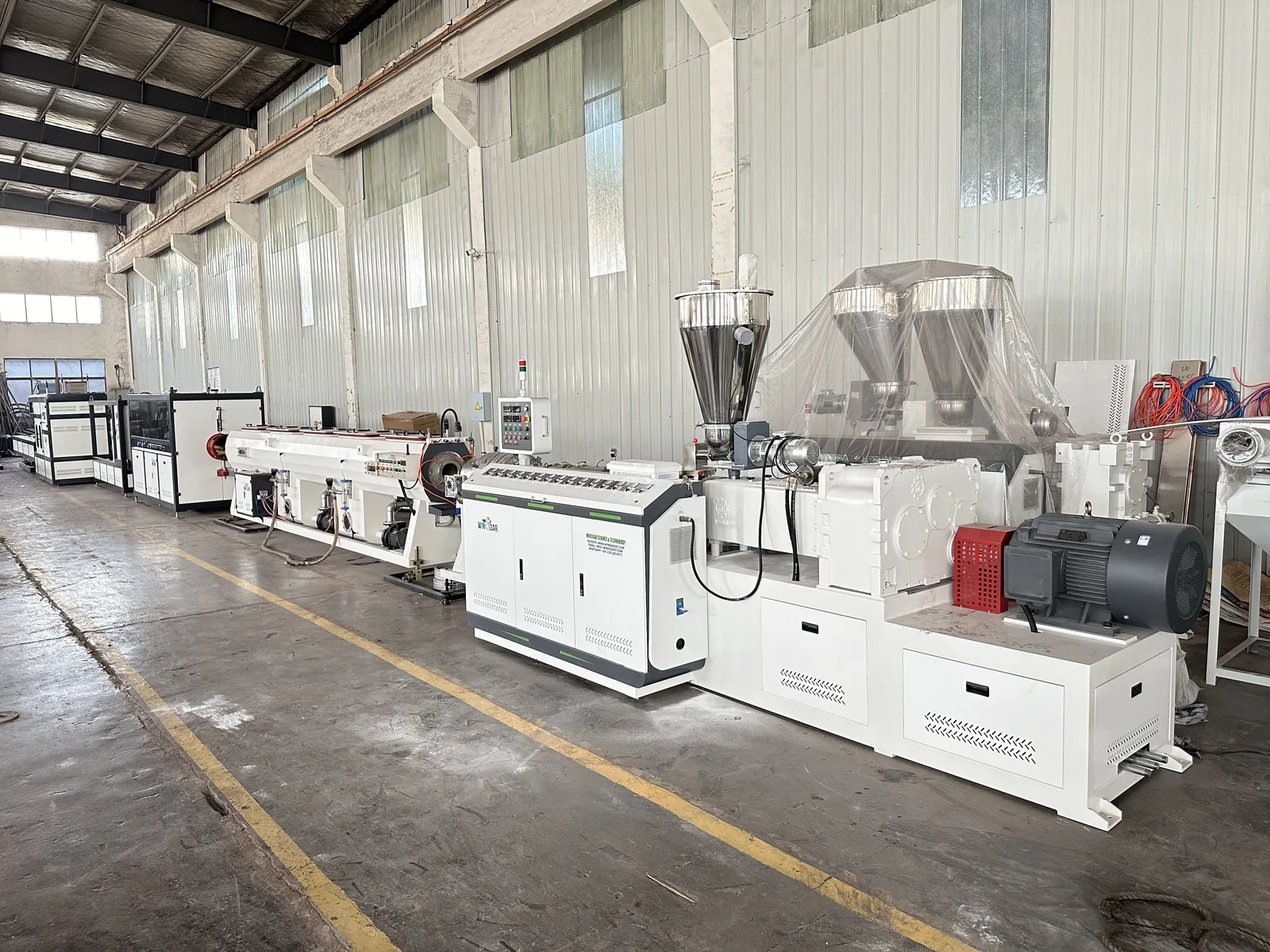
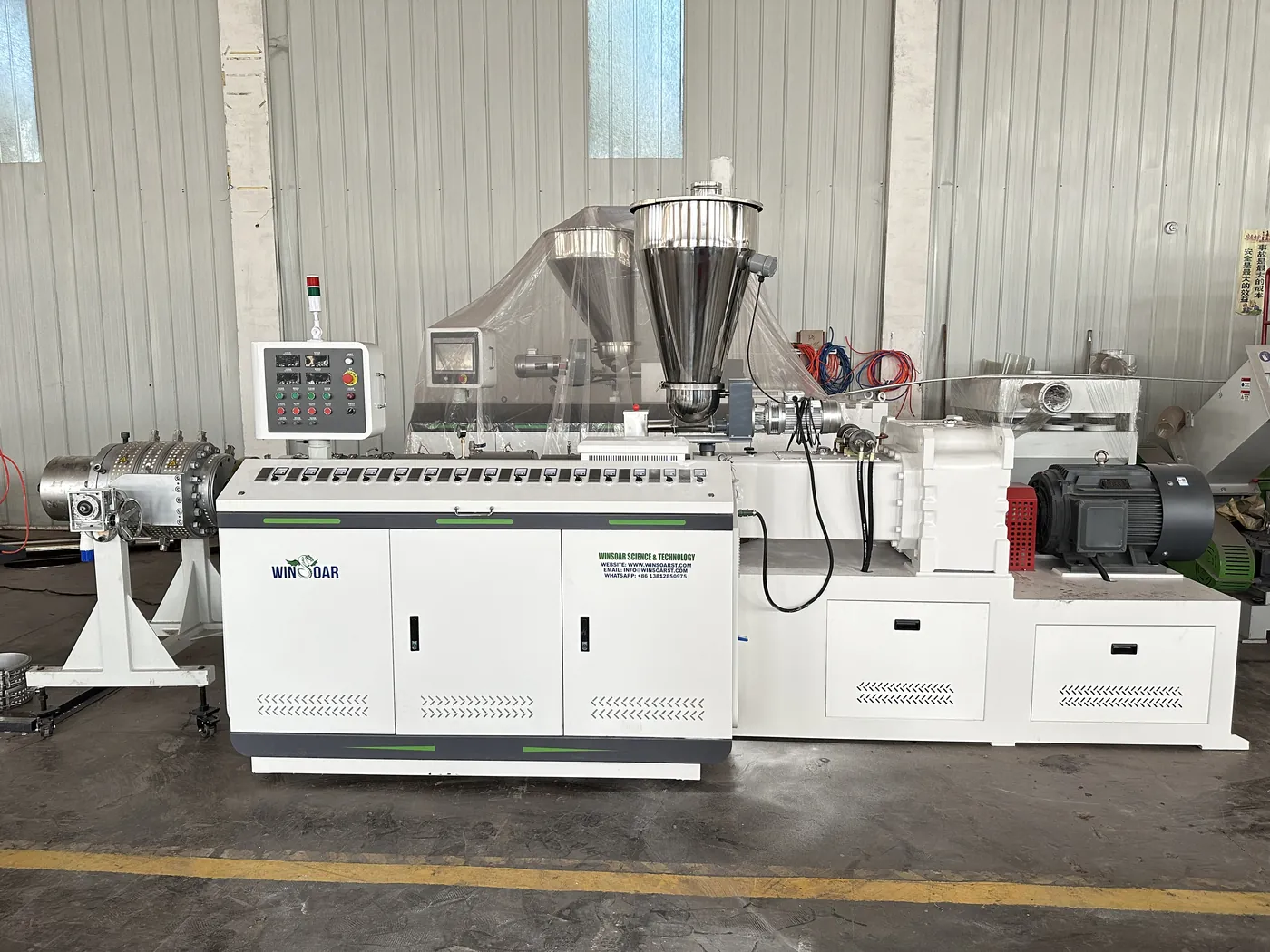
A standard PVC pipe production line includes a conical twin screw extruder, pipe extrusion die head, vacuum calibration tank, spray cooling tank, haul-off machine, automatic cutter, stacker and optional PVC pipe belling machine. Auxiliary equipment such as PVC hot and cold mixer, screw loader, printer, crusher and automatic loading system can also be supplied as a complete project.
Direct answer: A PVC pipe extrusion line is a complete production system used to manufacture rigid PVC pipes from PVC compound. A typical 50-250mm PVC pipe production line includes a conical twin screw extruder, pipe mould, vacuum calibration tank, cooling system, haul-off machine, cutter and stacker.
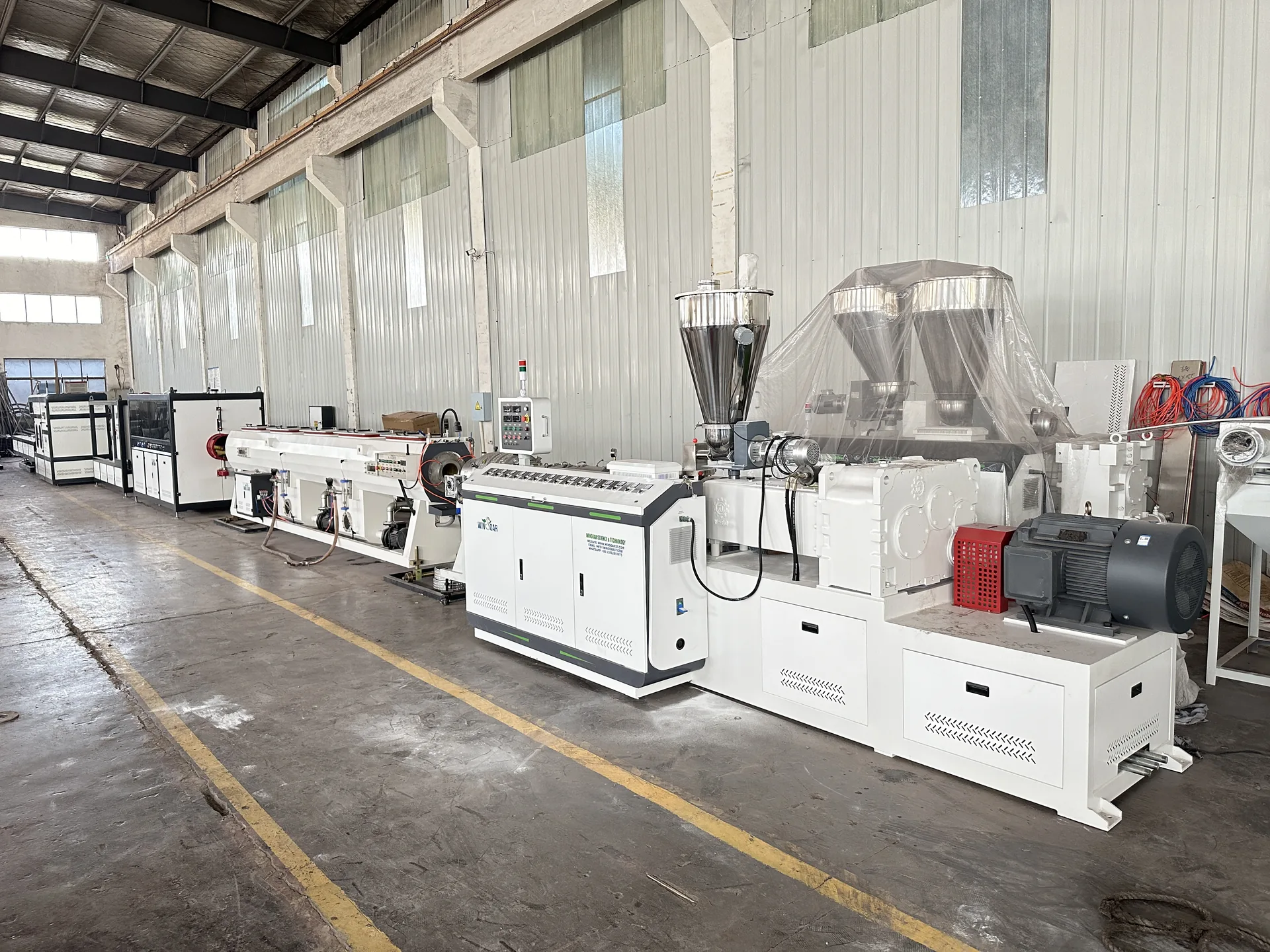
Complete PVC Pipe Production Line for 50-250mm Pipes
This line is suitable for customers who need a complete PVC pipe making machine from material preparation to cutting and optional socket forming. Winsoar recommends the final configuration according to pipe standard, wall thickness, output target, voltage and workshop layout.
Material: PVC, UPVC and CPVC compounds
Diameter range: 50-250mm, customizable
Applications: water supply, drainage, conduit, irrigation and industrial pipe
Product name | 50-250mm PVC Pipe Extrusion Line |
Applicable material | PVC, UPVC, CPVC compounds |
Pipe diameter range | 50-250mm, customizable |
Pipe applications | Water supply pipe, drainage pipe, electrical conduit pipe, industrial pipe and irrigation pipe |
Main extruder | Conical twin screw extruder |
Downstream equipment | Vacuum calibration tank, spray cooling tank, haul-off machine, automatic cutter and stacker |
Optional equipment | PVC mixer, printer, crusher, belling machine and automatic loading system |
This PVC pipe making machine can produce rigid PVC pipes for building water supply, sewage drainage, electrical conduit, agricultural irrigation, cable protection and general industrial fluid transportation. For buyers, the most important selection factors are pipe diameter, wall thickness, pipe standard, output capacity, socket requirement and available factory space.
The same production concept can be adapted for different markets by changing moulds, calibration sleeves, haul-off structure and optional belling equipment. Winsoar helps confirm the line layout before quotation so the machine matches the buyer's real production plan.
PVC water supply pipe
PVC drainage pipe and sewage pipe
PVC electrical conduit and cable protection pipe
PVC irrigation and industrial pipe
Typical PVC Pipe Applications
PVC resin and additives > hot and cold mixing > screw loading > conical twin screw extrusion > pipe die head and mould > vacuum calibration > spray cooling > haul-off > cutting > stacking or belling.
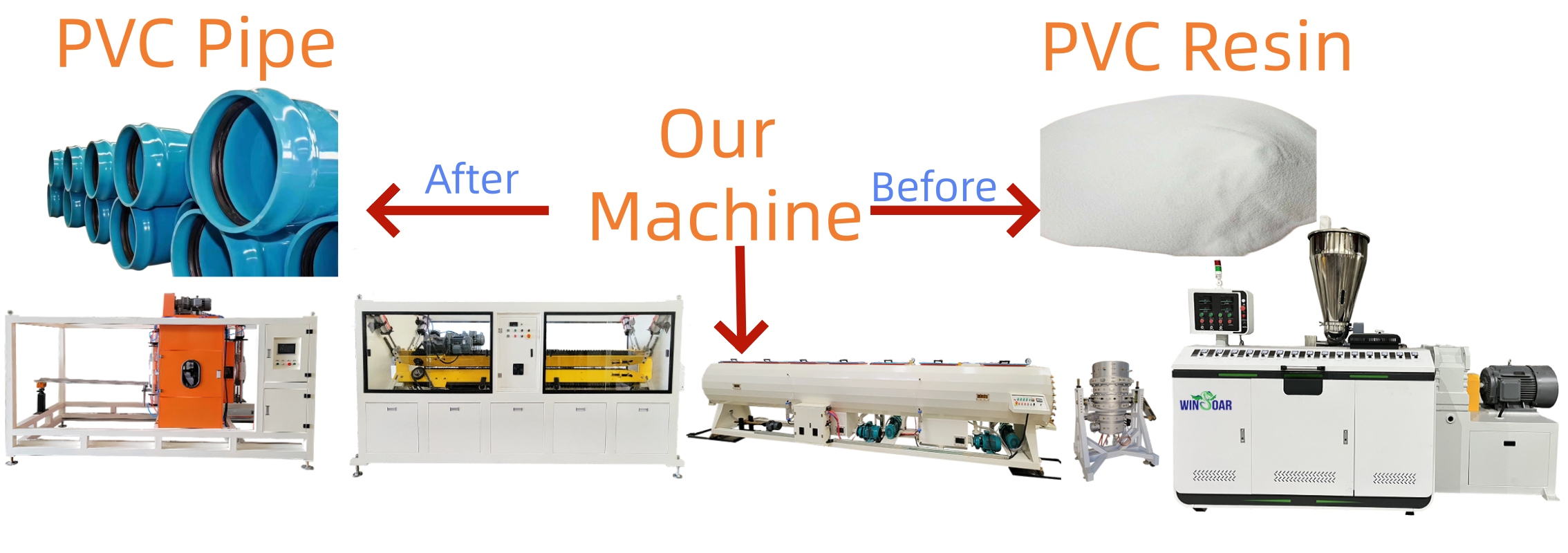
PVC pipe production process
The 50-250mm range is a broad PVC and UPVC pipe extrusion solution for buyers who need more coverage than a small-diameter line and may produce both medium and larger rigid pipes. Typical applications include water supply, drainage, conduit, irrigation and general utility piping. Because the range spans several product sizes, the main production diameter and largest required pipe must be confirmed before selecting the extruder, die tools, cooling section and downstream handling.
Application | Configuration focus |
|---|---|
PVC water supply pipe | Pipe standard, wall thickness, dimensional stability, cooling and optional socketing. |
PVC drainage and wastewater pipe | Output continuity, fixed cutting length, surface quality and belling requirement. |
Electrical conduit and cable protection | Diameter coverage, wall thickness, printing, cutting and production changeover. |
Irrigation and utility pipe | Material formula, output target, die coverage and receiving or stacking layout. |
A wide headline range does not mean that every size runs at the same output or speed. The die head, calibration sleeves, cooling length, haul-off and cutter should be planned around the buyer's most frequently produced sizes and the largest pipe diameter.
50-90mm: suitable for conduit, cable protection, small water and drainage pipe; confirm whether the project is better served by a two-cavity small-pipe line.
90-160mm: a common range for water, drainage and utility pipe; focus on stable sizing, cooling and fixed-length cutting.
160-250mm: requires more cooling, stronger haul-off and more downstream space, especially for thick-wall or pressure pipe.
Multiple sizes: confirm the regular production mix, mould changeover frequency and complete calibration tool set before quotation.
Choose 16-63mm when the project is mainly small conduit or small-diameter PVC pipe and two-cavity output is valuable. Choose 63-160mm when the regular products are medium-diameter pipes and the buyer wants a more focused configuration. Choose 50-250mm when the project needs broader coverage extending toward 200-250mm and the line will be planned around the largest required pipe.
Rigid PVC pipe production normally starts with a consistent dry blend prepared by a hot and cold mixer or feeding system. The conical twin screw extruder plasticizes and conveys the PVC compound to the pipe die head. Formula, filler ratio, stabilizer system, product standard and target output affect screw selection, melt pressure and downstream sizing.
When the line runs toward 160-250mm, cooling demand and pipe weight increase. The vacuum calibration and spray cooling sections must stabilize the pipe before the haul-off and automatic cutter. The quotation should include wall thickness, production speed and fixed pipe length so the cooling capacity, traction and cutting arrangement are not undersized.
An optional belling machine is useful when finished PVC pipe needs a socketed end for installation. Plain-ended conduit and some utility pipe projects may not need belling. Confirm socket dimensions, pipe length, wall thickness and required speed before adding the unit to the line.
Buyer data | Why it affects the 50-250mm line |
|---|---|
Diameter and wall thickness | Determines die tooling, calibration sleeves, cooling length and haul-off force. |
PVC formula and filler ratio | Influences plasticizing, melt pressure, surface quality and extruder selection. |
Target output and line speed | Helps match the extruder, cooling, haul-off and cutter capacity. |
Plain end or socketed pipe | Determines whether belling equipment and additional handling are required. |
List the complete pipe diameter range and the main production sizes.
Provide wall thickness, pipe standard and final application.
Confirm PVC formula, filler ratio and mixer requirements.
Set the target output and preferred production speed.
State fixed pipe length, cutting method and printing requirements.
Confirm plain-ended or socketed pipe and provide belling dimensions if required.
Provide local voltage, cooling-water conditions and available workshop space.
With these details, Winsoar can match the mixer, conical twin screw extruder, pipe die head, vacuum calibration and cooling, haul-off, automatic cutter, stacker and optional belling machine to the actual PVC pipe project.
A wide nominal range is valuable only when the tooling and downstream sections match the actual product mix. Buyers should identify the main production sizes, the largest regular pipe, the highest wall thickness and the desired fixed length before selecting the extruder, calibration sleeves, cooling length and haul-off.
Commercial product mix | Line-planning implication |
|---|---|
50-90mm conduit and utility pipe | Prioritize changeover speed, accurate calibration and efficient fixed-length cutting. |
90-160mm water and drainage pipe | Balance output, cooling, traction, printing and optional socket forming. |
160-250mm thick-wall pipe | Allow for longer cooling, stronger haul-off, larger tooling and heavier receiving support. |
The die head and calibration sleeves define the practical size coverage, while the cooling and haul-off determine whether the largest pipe can run at the required speed. If several sizes are sold every week, list the complete tool set and the expected changeover frequency. If most output is concentrated in one size, the configuration can be optimized for that size instead of paying for unused range.
Plain-ended conduit and utility pipe normally require clean cutting and receiving. Water or drainage products may require belling, socket dimensions and a defined cycle time. Printing can include size, standard, material, pressure class and manufacturer information. These downstream requirements should be confirmed together because they affect line speed, buffer space and packing.
This page is intentionally positioned between the focused 63-160mm line and a large-diameter 200-450mm project. For a quotation, provide the real size mix so the line is designed for useful output rather than a nominal range alone.
Video & Technical Parameters
The video below shows a 50-250mm PVC pipe extrusion line test running before delivery. The YouTube link is included so buyers can check the line operation, machine layout and production process before requesting a quotation.
Watch this PVC pipe extrusion line test running video on YouTube.
The following model table helps buyers compare suitable extruder models, extrusion power, maximum capacity and haul-off speed for different PVC pipe diameter ranges. The final configuration should be confirmed according to pipe diameter, wall thickness, formulation, output requirement and application.
| Diameter Range | Extruder Model | Extrusion Power | Max. Capacity | Max. Haul-off Speed |
| 16-40mm dual output | SJZ51/105 | 18.5 kW AC | 120 kg/h | 10 m/min |
| 20-63mm dual output | SJZ65/132 | 37 kW AC | 250 kg/h | 15 m/min |
| 20-63mm | SJZ51/105 | 18.5 kW AC | 120 kg/h | 15 m/min |
| 50-160mm | SJZ65/132 | 37 kW AC | 250 kg/h | 8 m/min |
| 75-160mm dual output | SJZ80/156 | 55 kW AC | 450 kg/h | 6 m/min |
| 63-200mm | SJZ65/132 | 37 kW AC | 250 kg/h | 3.5 m/min |
| 110-315mm | SJZ80/156 | 55 kW AC | 450 kg/h | 3 m/min |
| 315-630mm | SJZ92/188 | 110 kW AC | 800 kg/h | 1.2 m/min |
| 710-1000mm | WSP130/26 | 160 kW AC | 1100 kg/h | 1.3 m/min |
| Pipe diameter range | Minimum and maximum pipe outside diameter |
| Pipe wall thickness and pipe standard | Required pressure rating or local pipe standard |
| Pipe application | Water supply, drainage, conduit, irrigation or industrial pipe |
| Expected output | Target kg/h or meters per hour |
| Factory power supply | Voltage, phase and frequency |
| Optional equipment | Mixer, printer, crusher, belling machine, socket type and automation level |
For this 50-250mm PVC Pipe Extrusion Line, review the matching running video solution and related PVC pipe extrusion line guides before confirming configuration.
Matching video solution: 50-250mm PVC Pipe Extrusion Line running video solution
Useful PVC pipe line guides: PVC Pipe Production Line Process, How to Choose a PVC Pipe Extrusion Line, PVC Pipe Extrusion Line Output Capacity Per Hour and the PVC Pipe Production Line category.
| PVC product page | Typical project focus |
| 16-63mm PVC Pipe Machine | Small PVC conduit, UPVC water pipe and dual-output small pipe production. |
| 63-160mm PVC Pipe Machine | Medium PVC water supply, drainage, conduit and industrial pipe projects. |
| 50-250mm PVC Pipe Extrusion Line | Broader medium PVC pipe range for water supply, drainage and conduit projects. |
| 200-450mm PVC Pipe Extrusion Line | Large PVC drainage, water supply, municipal and industrial pipe projects. |
Machine Configuration
A complete 50-250mm PVC pipe extrusion line can be configured according to pipe diameter, wall thickness, pipe application, output capacity and factory layout. The following equipment sections help buyers understand the main production process before requesting a quotation.
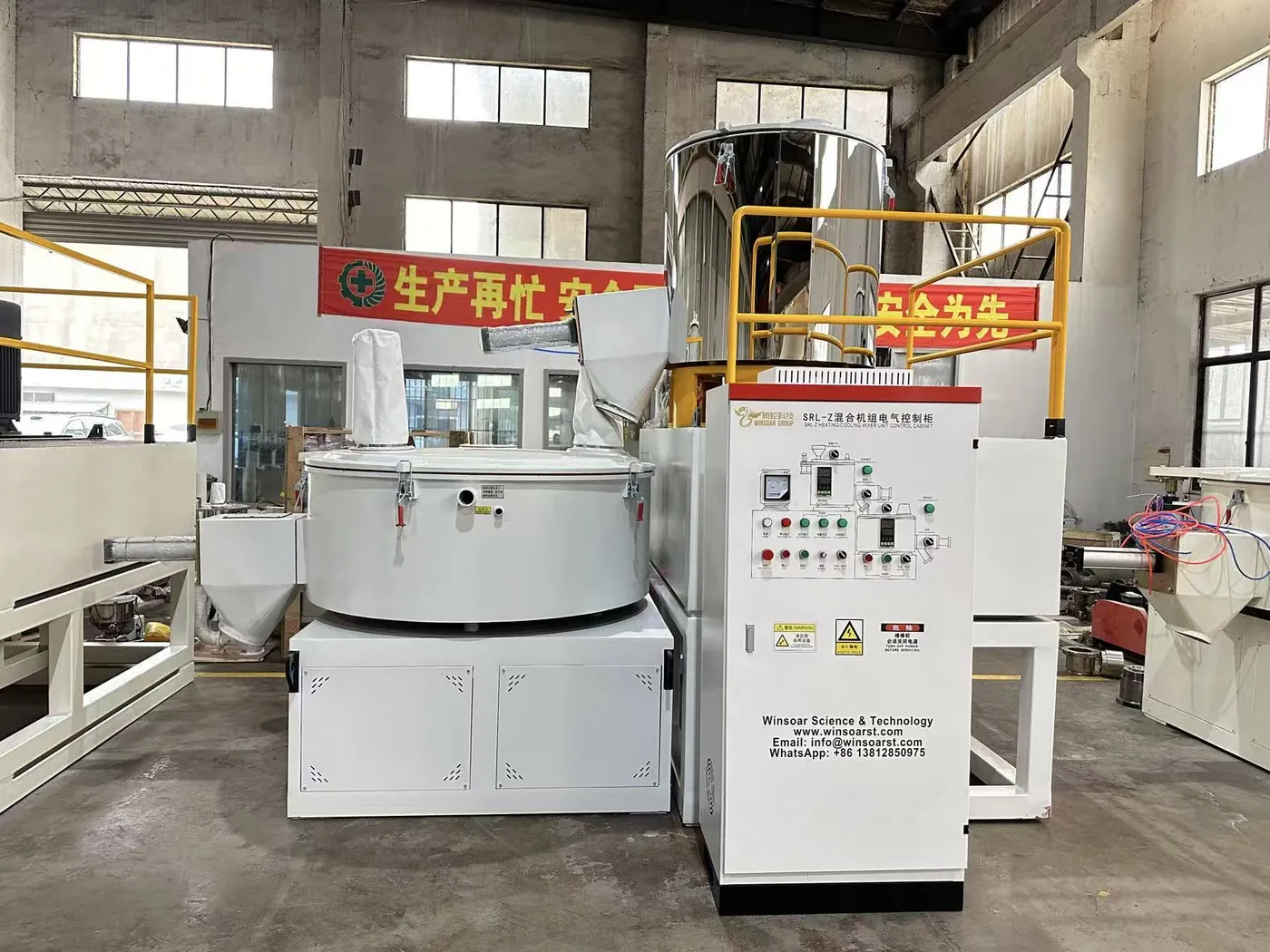
The PVC mixer prepares PVC resin, stabilizer, calcium carbonate, lubricant, pigment and other additives before extrusion. Stable material mixing helps improve extrusion stability, pipe surface quality and final pipe performance.
The conical twin screw extruder is the main machine for PVC powder processing. It provides stable plasticizing, pressure and output for rigid PVC pipe production. Winsoar recommends the extruder model according to pipe diameter range, formulation and production capacity.
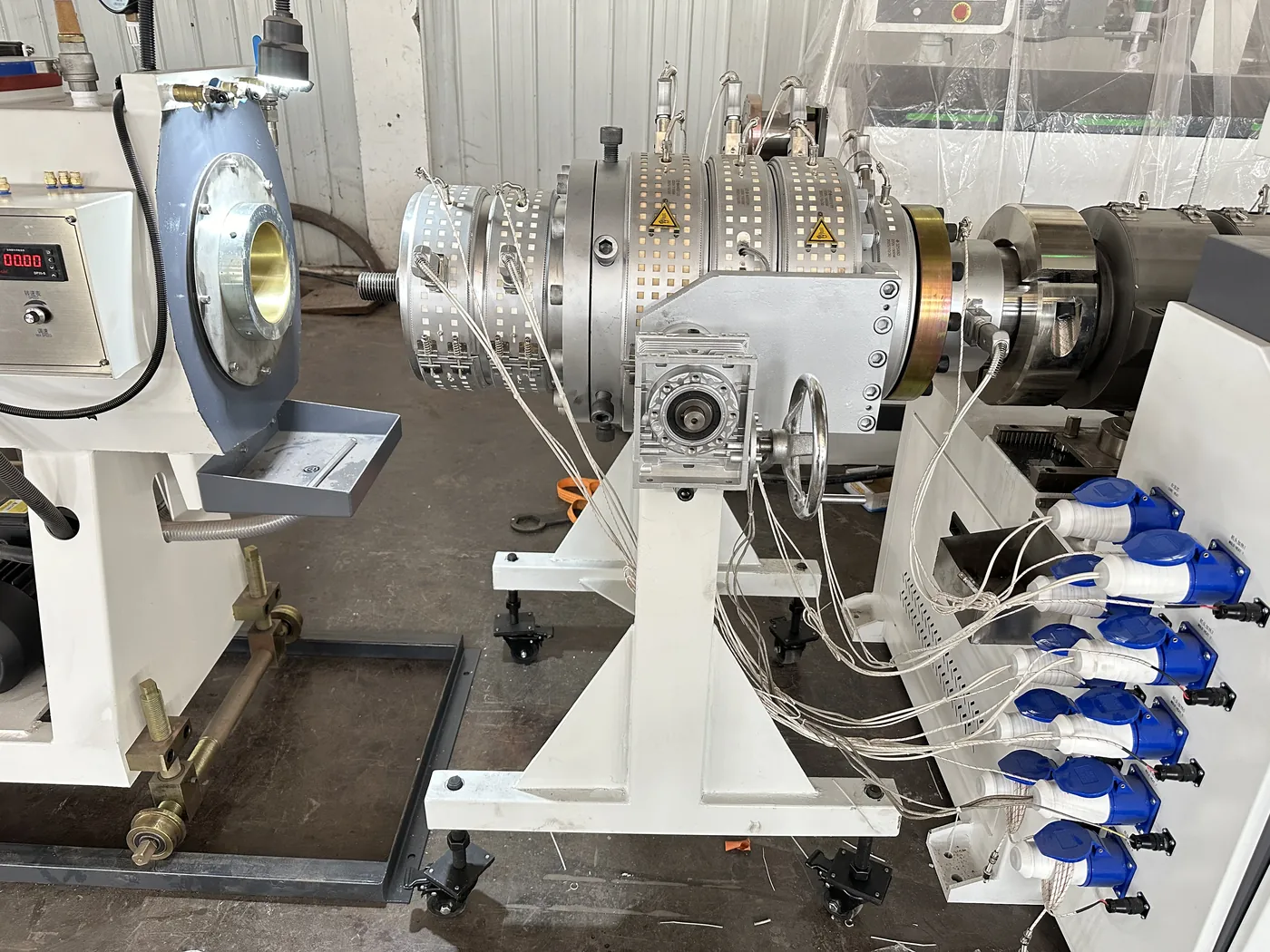
The pipe die head forms melted PVC material into the required pipe size. Mould design affects wall thickness control, pipe roundness, surface quality and dimensional stability.
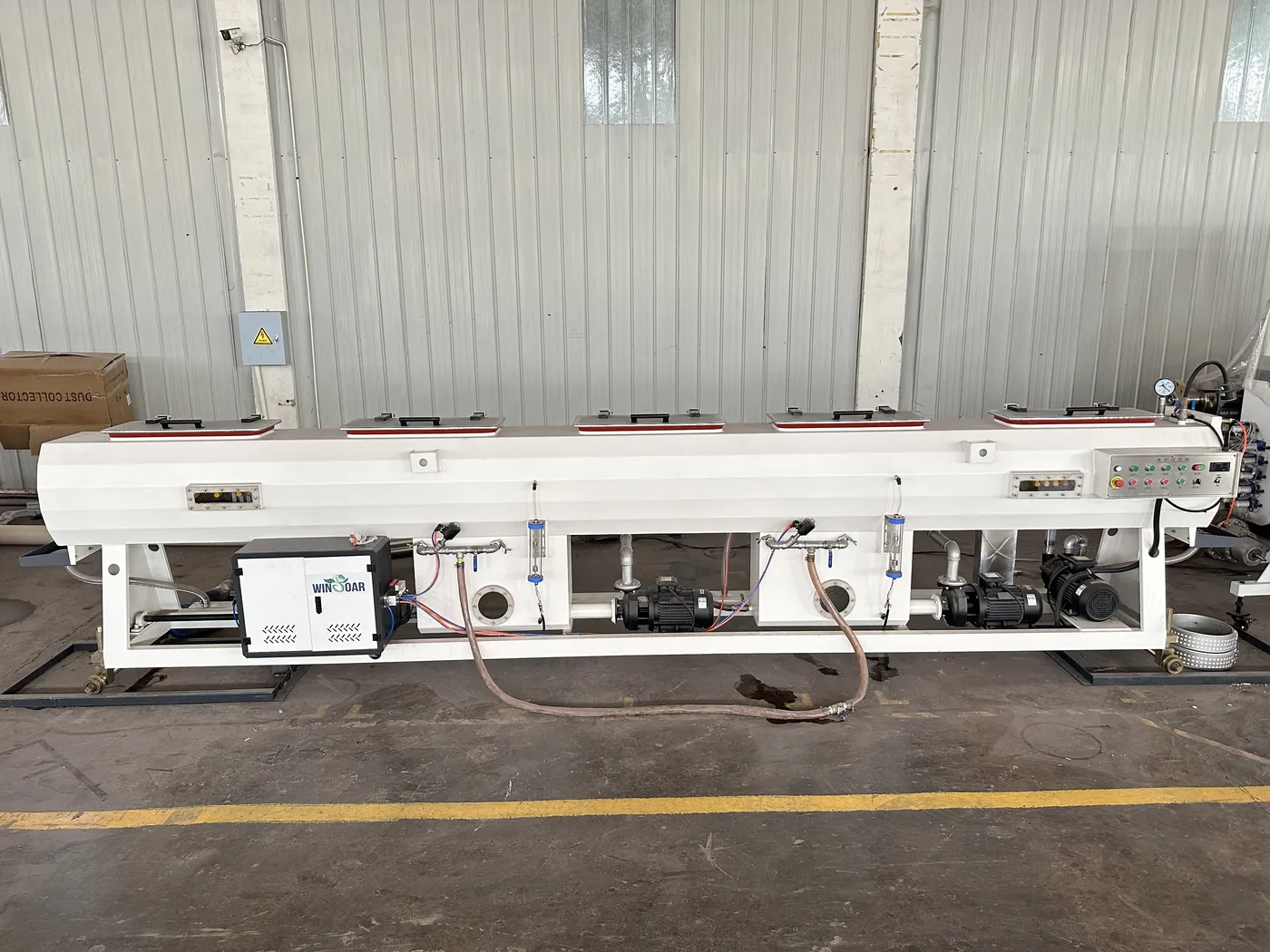
The vacuum calibration tank shapes and cools the pipe after extrusion. Vacuum calibration helps maintain accurate outside diameter and stable pipe shape. Tank length and cooling arrangement can be customized according to line speed.
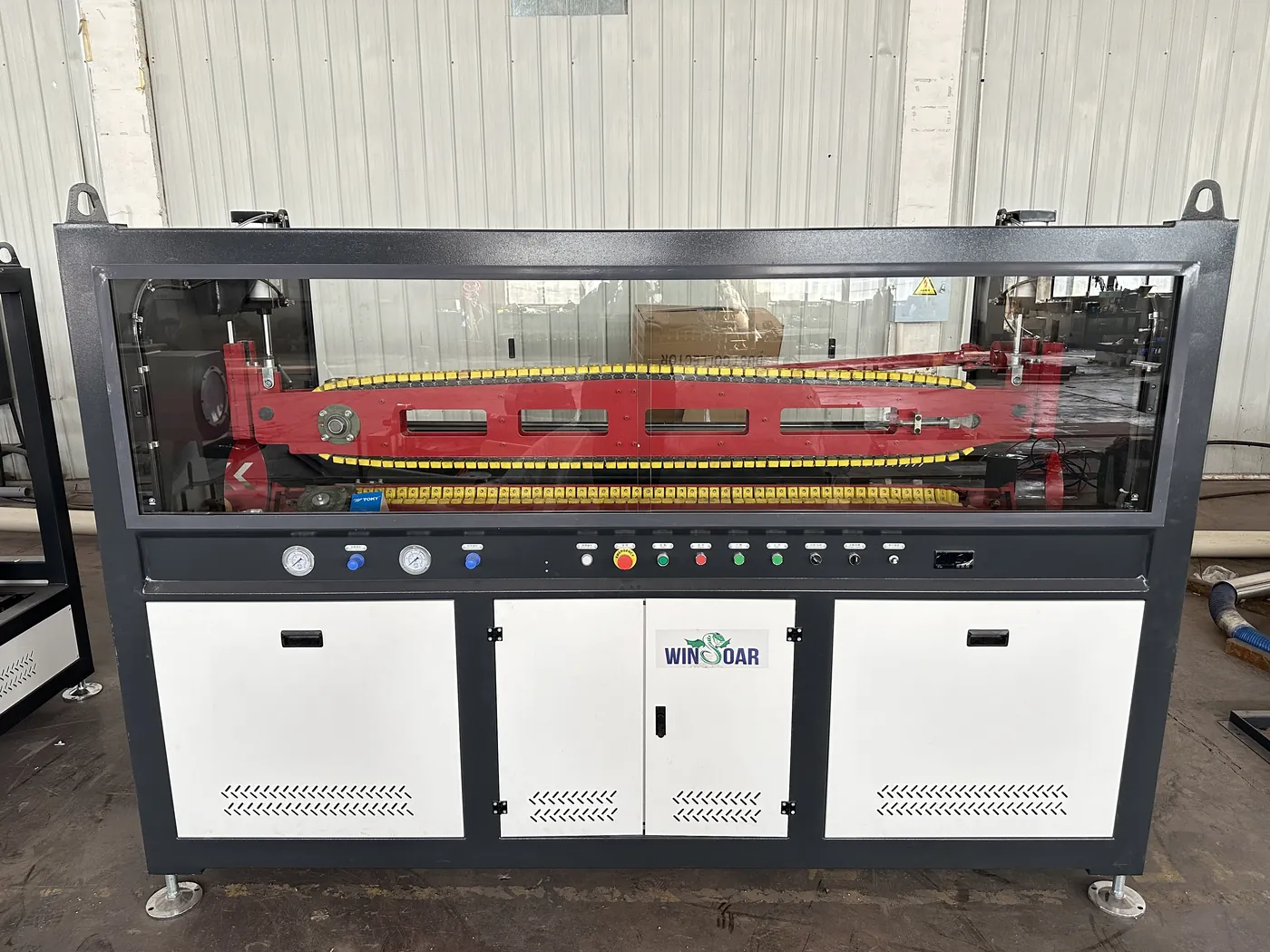
The haul-off machine pulls the PVC pipe at a stable speed. Stable pulling is important for pipe wall thickness control and continuous production. The structure and clamping force should match the pipe diameter and weight.
The cutter cuts the PVC pipe to the required length. Depending on pipe diameter and customer requirement, the production line can use automatic length measurement, dust collection and synchronized cutting control.
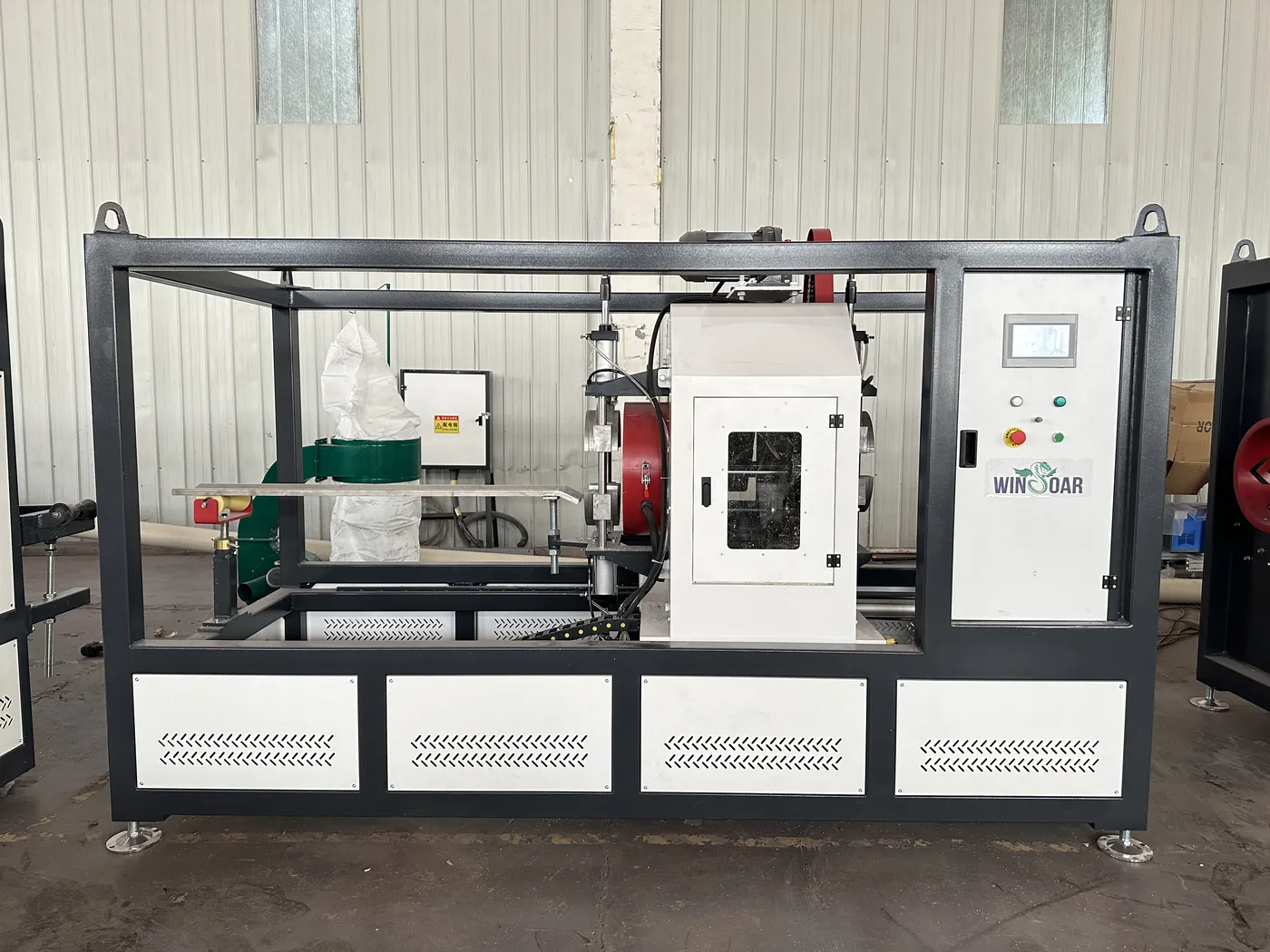
Factory, Packaging & Exhibition
Winsoar supports overseas PVC pipe production projects with machine manufacturing, assembly, factory test running, export packaging, installation guidance and long-term spare parts support. This section helps buyers evaluate real factory capability, project delivery and international communication before sending an inquiry.
Factory workshop photos help buyers evaluate Winsoar's machinery manufacturing environment and project capacity. For a PVC pipe extrusion line, workshop assembly and test running are important before overseas delivery.
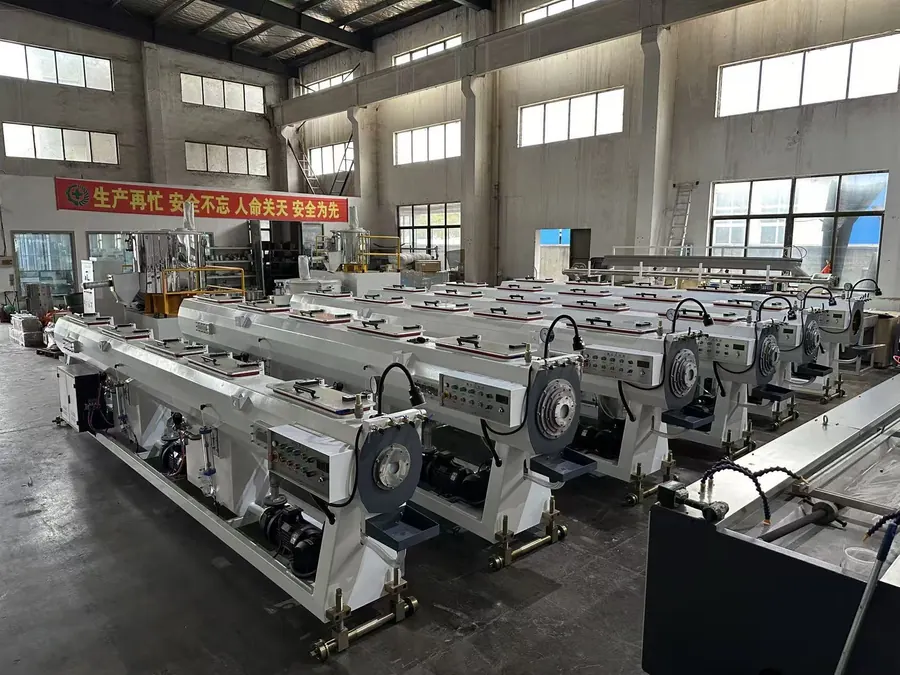
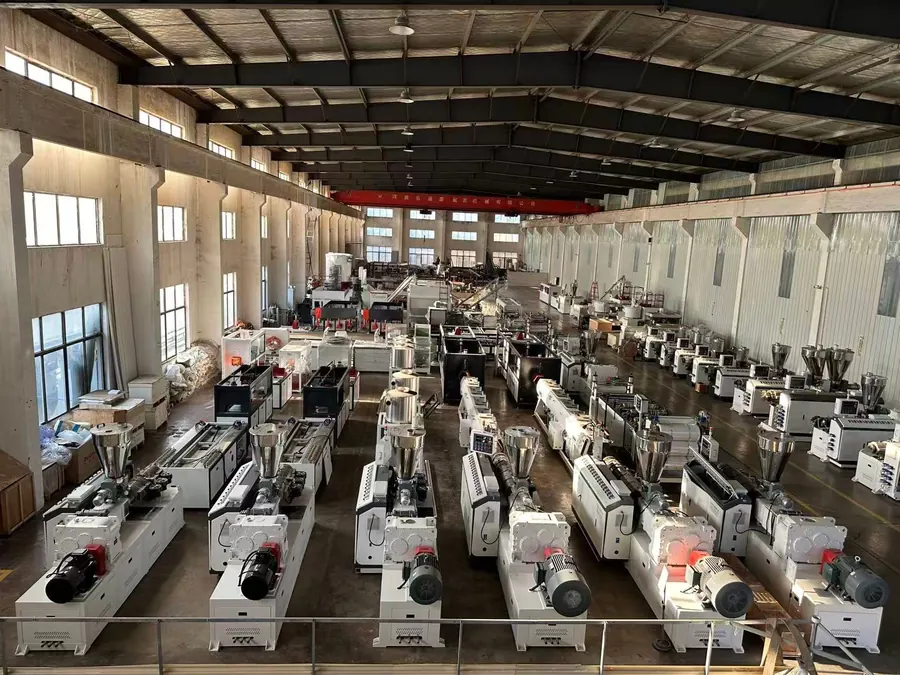
Before shipment, machine parts, control cabinets, downstream equipment and auxiliary systems can be checked in the workshop. This reduces installation risk and helps confirm the buyer's production requirements.
Winsoar prepares export packaging according to machine size and transportation requirements. Protective wrapping and wooden cases help reduce transportation risk for moulds, electrical parts and auxiliary equipment.
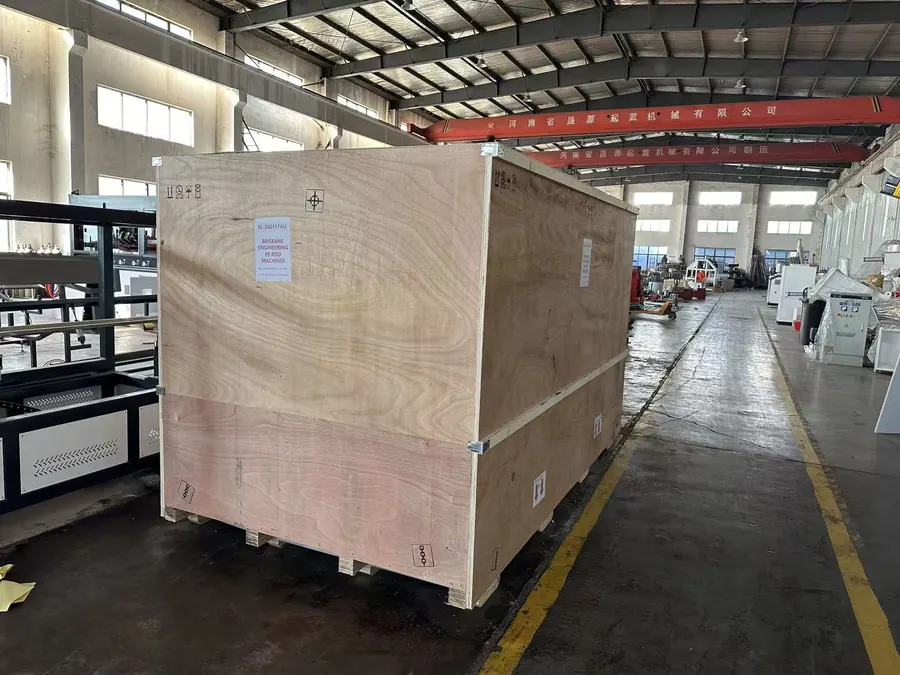
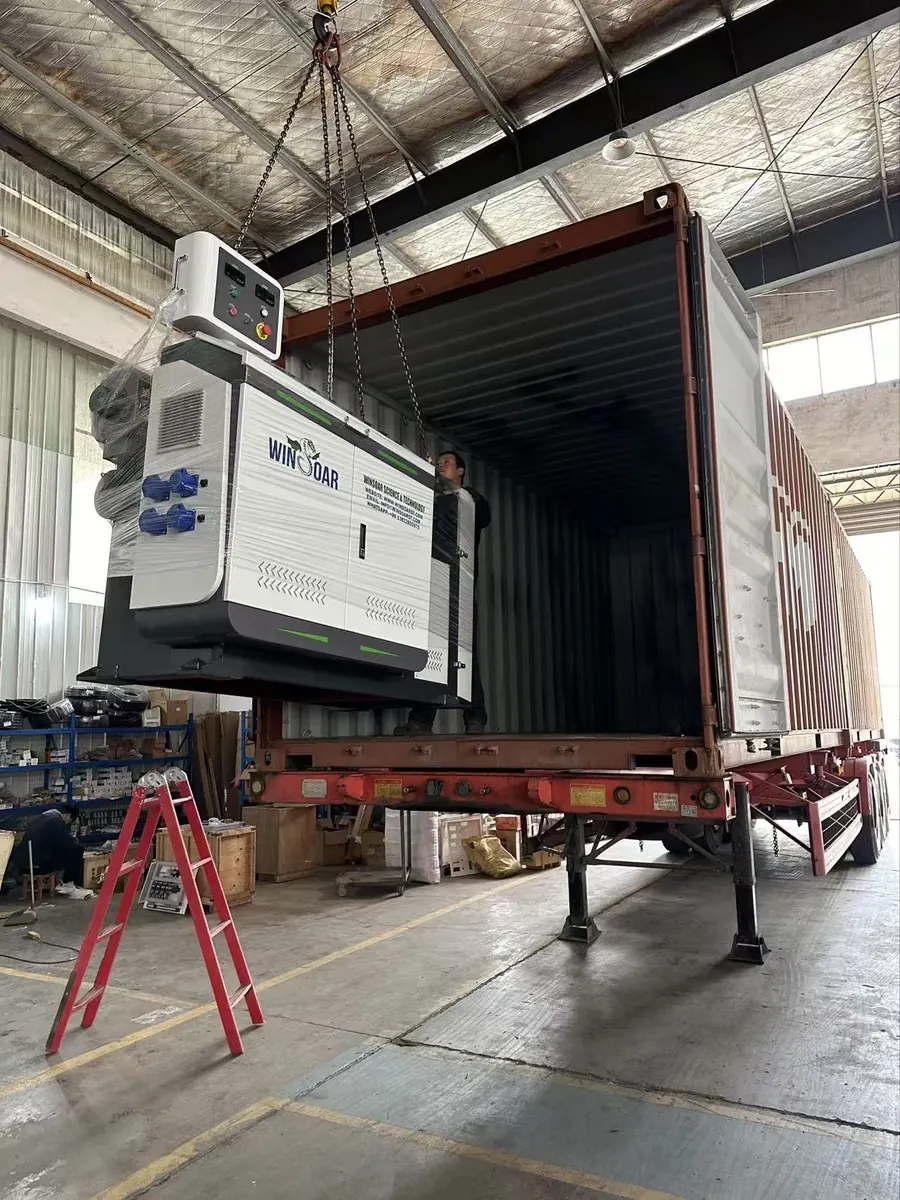
Container loading photos help buyers confirm shipment preparation and machine delivery status. Winsoar can arrange loading plans according to equipment dimensions, quantity and destination port requirements.
Winsoar communicates with international customers at exhibitions and project meetings to understand pipe applications, factory conditions and equipment requirements. This helps confirm suitable line configuration, pipe samples, quotation details and after-sales support.
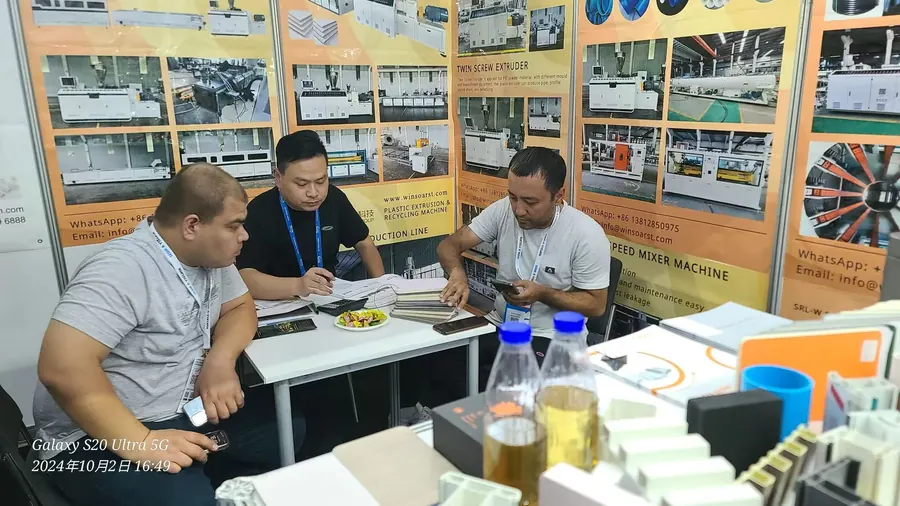
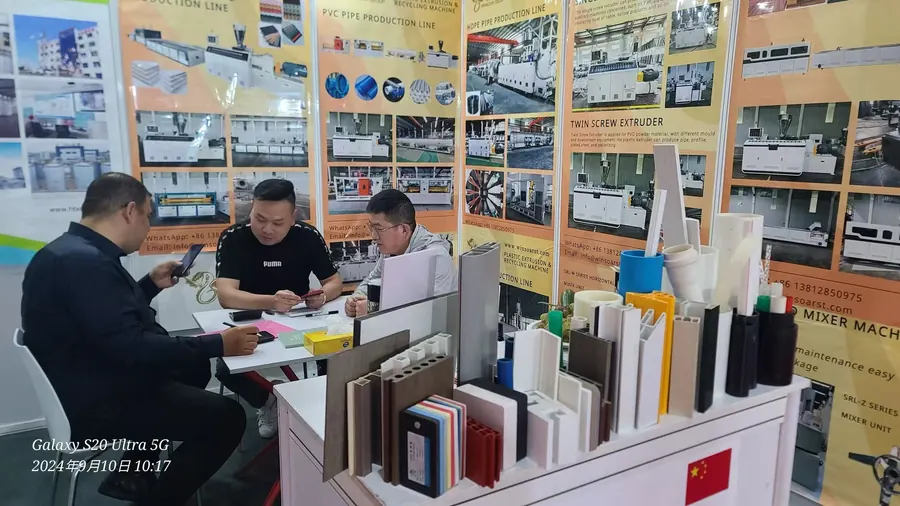
Product samples and exhibition displays help buyers compare machine applications and evaluate whether the extrusion line matches their target products. Winsoar can also discuss related pipe, profile and board extrusion projects.
A PVC pipe extrusion line is a complete machine system used to produce rigid PVC pipes from PVC compound. It usually includes a twin screw extruder, pipe die, vacuum calibration tank, cooling tank, haul-off machine, cutter and stacker.
Yes. The line can be configured with suitable moulds and downstream equipment for different diameter ranges. Some diameter changes require mould and calibration sleeve replacement.
A PVC pipe belling machine is recommended when socket pipe ends are required for water supply, drainage, conduit or irrigation pipe installation.
Yes. Winsoar can customize diameter range, output, voltage, layout, automation level, socket type and auxiliary equipment according to project requirements.
Tell us your PVC pipe diameter, wall thickness, output requirement and factory voltage. Winsoar will recommend a suitable PVC pipe extrusion line configuration for your project.