Tel : +86-13812850975 E-mail : info@winsoarst.com

Views: 0 Author: Site Editor Publish Time: 2026-08-26 Origin: Winsoar


Direct answer: A PVC pipe belling machine, also called a PVC pipe socketing machine, heats and forms one pipe end into a socket so the next pipe or fitting can be connected reliably. The correct machine is selected by pipe outside diameter, socket type, pipe length, required output, PVC formulation, heating and cooling method, and the layout of the upstream PVC pipe extrusion line.
A belling machine is a downstream auxiliary machine installed after pipe cutting in a PVC pipe production line. It creates the enlarged socket end required for many PVC drainage, water-supply, conduit and cable-protection pipes. The formed end can be made in U, R or square styles according to the applicable pipe standard and connection design.
The equipment normally receives a cut pipe, positions it, heats the end until the PVC becomes formable, expands it with a mould or mandrel, cools it under control and discharges the finished pipe. Belling should be treated as part of the full production configuration, not as an isolated purchase. Pipe diameter stability, cut length, wall thickness and line speed all influence the final socket quality.
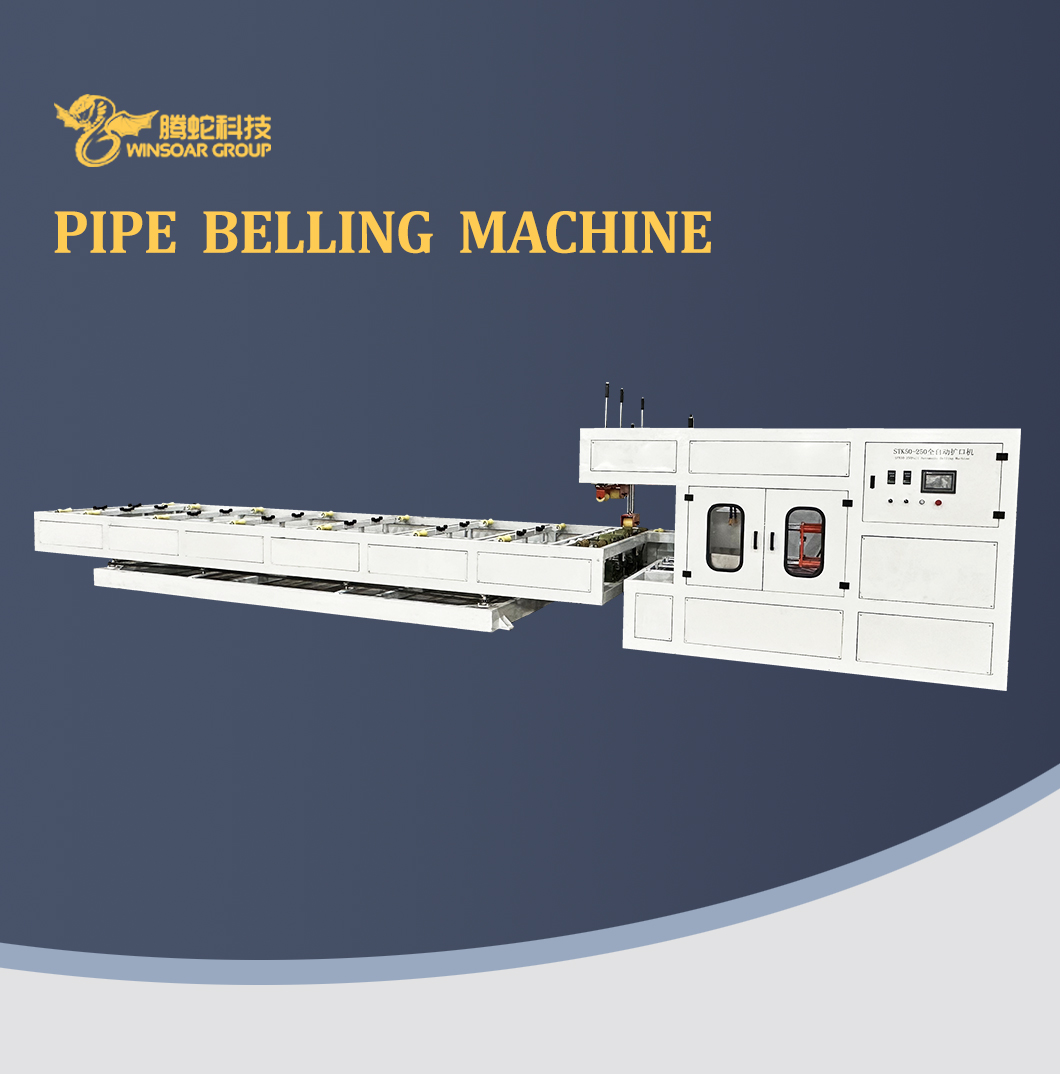
An automatic belling station forms a socket end after the pipe has been cut to length.
Pipe feeding and alignment: The machine receives a cut pipe and holds it in the correct position. Consistent cut length and a clean pipe end make this step more stable.
Controlled heating: The socket end is heated until the PVC becomes suitable for forming. Heating time must match the pipe diameter, wall thickness, compound and factory temperature.
Socket forming: A forming tool creates the required U, R or square socket shape. Tooling must match the pipe OD and required joint standard.
Cooling and dimensional stabilization: Cooling fixes the formed geometry before discharge. Larger pipes and thicker walls generally require more cooling capacity and cycle time.
Discharge and inspection: The completed pipe is released for visual checks, dimensional checks and packing or stacking.
For the complete upstream sequence, see PVC Pipe Production Line Process: From Mixing to Extrusion, Cooling, Cutting and Belling. The belling machine must receive pipe at a stable temperature and dimensions from the cooling, haul-off and cutting sections.
Heating and forming are matched to the PVC material and the required socket profile.
Socket type | Typical use | Selection note |
|---|---|---|
U socket | Common PVC conduit and smaller pipe applications | Confirm pipe OD, socket depth and the matching connection or fitting requirement. |
R socket | Water-supply or drainage pipe designs that use a rounded socket profile | Confirm the mould profile and the required sealing or connection design before ordering. |
Square socket | Selected drainage and connection standards | Check the applicable market standard and the finished pipe tolerance. |
The socket type should never be chosen only from a photo. Send a pipe sample, drawing or standard reference together with the pipe dimensions. This prevents a mismatch between the belling mould, socket depth and the buyer's joint requirement.
The following table shows common belling ranges used with PVC pipe lines. Actual configuration, cycle time and included tooling should be confirmed in the final technical offer.
Typical model range | Pipe diameter range | Socket styles | Cooling | Typical output |
|---|---|---|---|---|
Small diameter | 16-50 mm | U | Air cooling | About 200-400 pcs/h |
Medium diameter | 50-160 mm | U, R or square | Water cooling | About 30-50 pcs/h |
Medium-large diameter | 110-250 mm | U, R or square | Water cooling | About 18-30 pcs/h |
Large diameter | 200-315 mm | U, R or square | Water cooling | About 12-20 pcs/h |
Large diameter | 200-400 mm | U, R or square | Water cooling | About 10-15 pcs/h |
Large diameter | 315-630 mm | U or R | Water cooling | About 6-12 pcs/h |
Output figures are cycle-based references rather than a promise for every formula and product. Pipe wall thickness, socket shape, heating time, cooling time, operator handling and the production schedule affect the practical result.
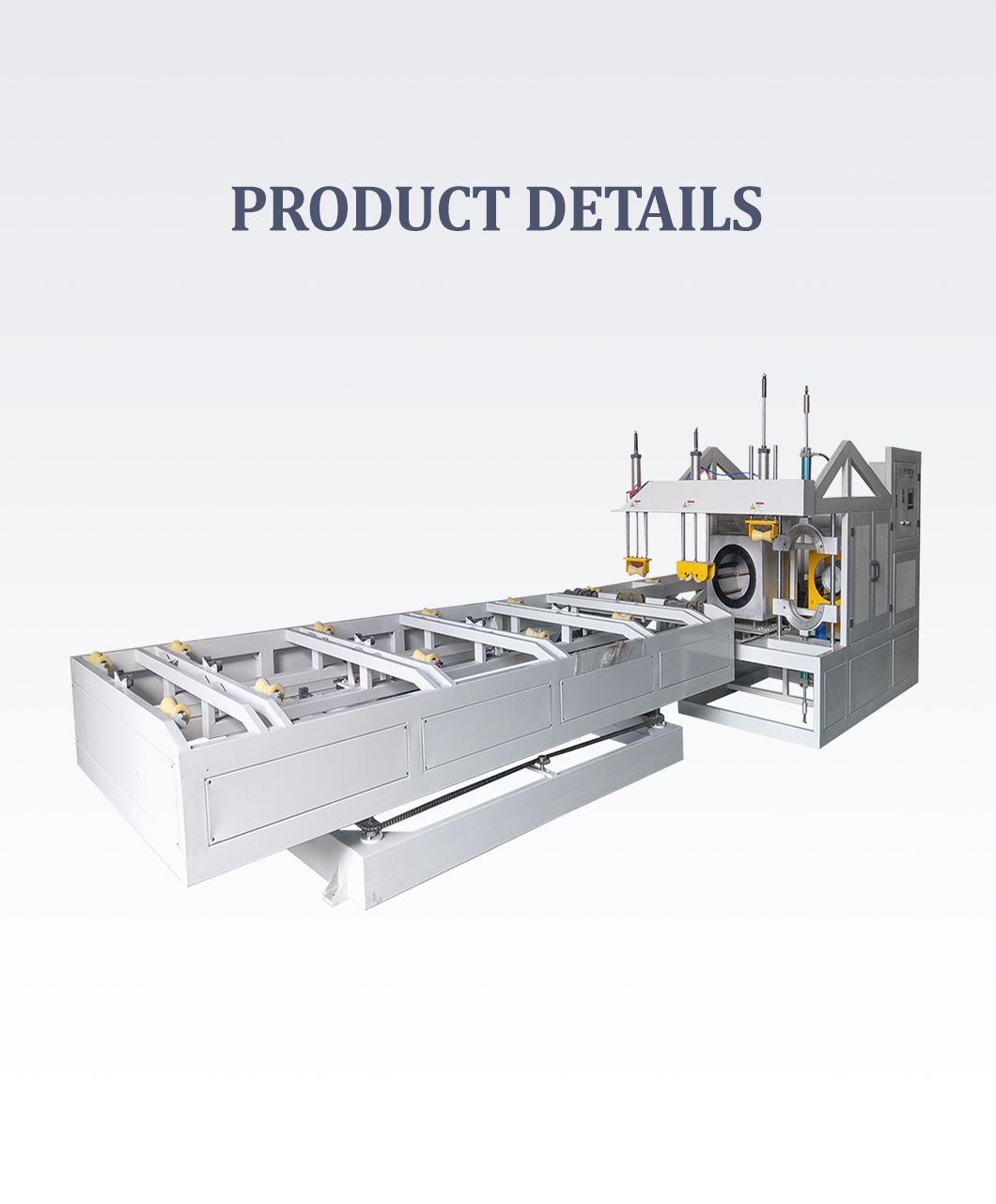
Machine size and forming tooling are selected around the pipe diameter range and socket style.
Specify every pipe diameter that requires belling, the wall-thickness range and cut length. A 16-63 mm PVC pipe line, a 63-160 mm line and a 200-450 mm line have different downstream handling, heating and cycle requirements.
16-63mm PVC Pipe Machine for small-diameter pipe applications.
63-160mm PVC Pipe Machine for medium-diameter production.
50-250mm PVC Pipe Extrusion Line for a broader municipal, drainage and water-pipe range.
200-450mm PVC Pipe Extrusion Line for larger pipe configurations.
Provide the target U, R or square socket profile, socket depth, finished OD requirements and any fitting or sealing details. The belling machine mould and mandrel must be engineered for the actual finished pipe, not just for a nominal diameter.
The belling unit must keep up with the number of cut pipes produced by the line. A machine that is too slow creates a downstream bottleneck; a machine selected only for high speed can add unnecessary investment. Compare target pipe pieces per hour with real heating and cooling cycle conditions. The wider line-selection context is covered in How to Choose a PVC Pipe Extrusion Line for Different Pipe Diameter Ranges.
Confirm whether air cooling or water cooling is suitable, along with local voltage, installed power, compressed-air requirement, water circulation and space for pipe handling. Large-diameter belling usually needs more thermal control and handling capacity than small-diameter conduit pipe.
For continuous production, clarify pipe transfer, automatic loading, discharge, marking, inspection and stacking. PLC control helps coordinate heating time and forming conditions, but the system still needs the correct moulds and practical setup for the PVC formulation.
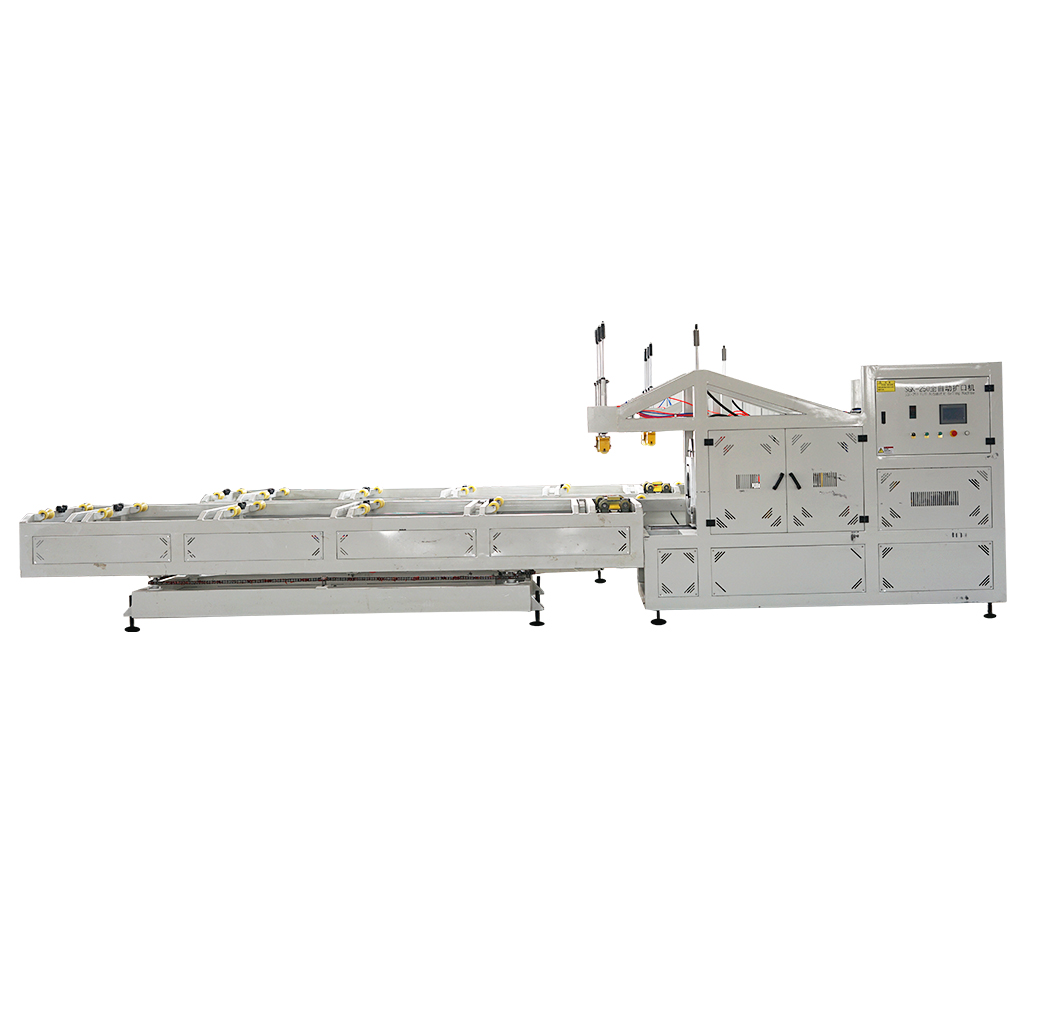
Automatic feeding, controlled forming and discharge should match the output of the upstream pipe line.
Issue | Likely cause | Practical check |
|---|---|---|
Socket is not fully formed | Insufficient heating, incorrect tooling or unstable pipe positioning | Check heating time, pipe alignment and mould/mandrel dimensions. |
Socket surface is rough or burnt | Heating condition is not matched to the compound or wall thickness | Review oven temperature, heating time and pipe formulation. |
Socket is out of round | Uneven heating, incorrect support or inadequate cooling | Inspect the forming support, cooling cycle and pipe dimensional stability. |
Socket cracks after cooling | Over-forming, unsuitable thermal cycle or material inconsistency | Confirm the socket profile, heating/cooling settings and incoming pipe quality. |
Cycle rate is below plan | Heating, cooling or handling time is longer than expected | Measure each cycle step and compare it with the extrusion line's cut-pipe output. |
A stable belling result begins earlier in the process. Review pipe wall-thickness consistency, cooling quality and cutting accuracy with the whole line. The equipment list in What Machines Are Included in a PVC Pipe Production Line? helps buyers check the upstream equipment that affects downstream belling.
Pipe material and formulation, such as rigid PVC or UPVC.
Pipe OD range, wall-thickness range and cut length.
Required socket type: U, R or square.
Pipe standard, drawing, sample or fitting details.
Required pieces per hour and number of production shifts.
Whether the machine will connect to a new or existing extrusion line.
Local voltage, water-cooling availability, compressed air and factory layout.
Required mould sizes, spare parts and commissioning scope.
For overall investment planning, read PVC Pipe Extrusion Line Price Factors: What Determines the Cost?. The belling station, mould quantity and automation level are part of the total downstream configuration. To compare upstream line output with the belling cycle, see How Much Output Can a PVC Pipe Extrusion Line Produce Per Hour?.

Confirm pipe handling, cooling and discharge requirements as part of the belling-machine quotation.
In PVC pipe production, the terms are commonly used for the same downstream function: forming an enlarged socket or bell end so pipes can be joined.
Yes, within its designed range, but each diameter requires the correct tooling and process settings. Confirm the full diameter list before ordering.
No. It is needed when the finished pipe requires a socket end. Lines producing plain-end pipe, coiled pipe or another connection format may use a different downstream arrangement.
Start with the pipe dimensions and socket standard, then match the machine cycle time to the output of the full PVC pipe extrusion line.
See the PVC Pipe Belling Machine product page for the available equipment category and then provide your pipe details for a configuration review.