Tel : +86-13812850975 E-mail : info@winsoarst.com

Views: 0 Author: Site Editor Publish Time: 2026-08-26 Origin: Winsoar


Direct answer: UPVC pipe is rigid, unplasticized PVC pipe. In most pipe projects, a PVC and UPVC pipe production line uses the same core equipment: mixer, conical twin screw extruder, die head, vacuum tank, cooling, haul-off and cutter. The practical differences are not a completely different machine layout, but the PVC formulation, processing window, pipe application, socket requirement, tooling and quality-control targets.
PVC is a broad term for polyvinyl chloride materials. It can refer to rigid PVC compounds as well as plasticized PVC materials used for flexible products. UPVC means unplasticized PVC, commonly used for rigid water-supply, drainage, conduit and cable-protection pipes. These applications are covered by the PVC Pipe Production Line equipment category.
For pipe manufacturing, buyers often use the phrases PVC pipe production line and UPVC pipe production line for the same general rigid-pipe equipment category. The machine should be configured around the finished pipe specification rather than the label alone: pipe OD, wall thickness, pressure class, socket style, output target and compound all matter.
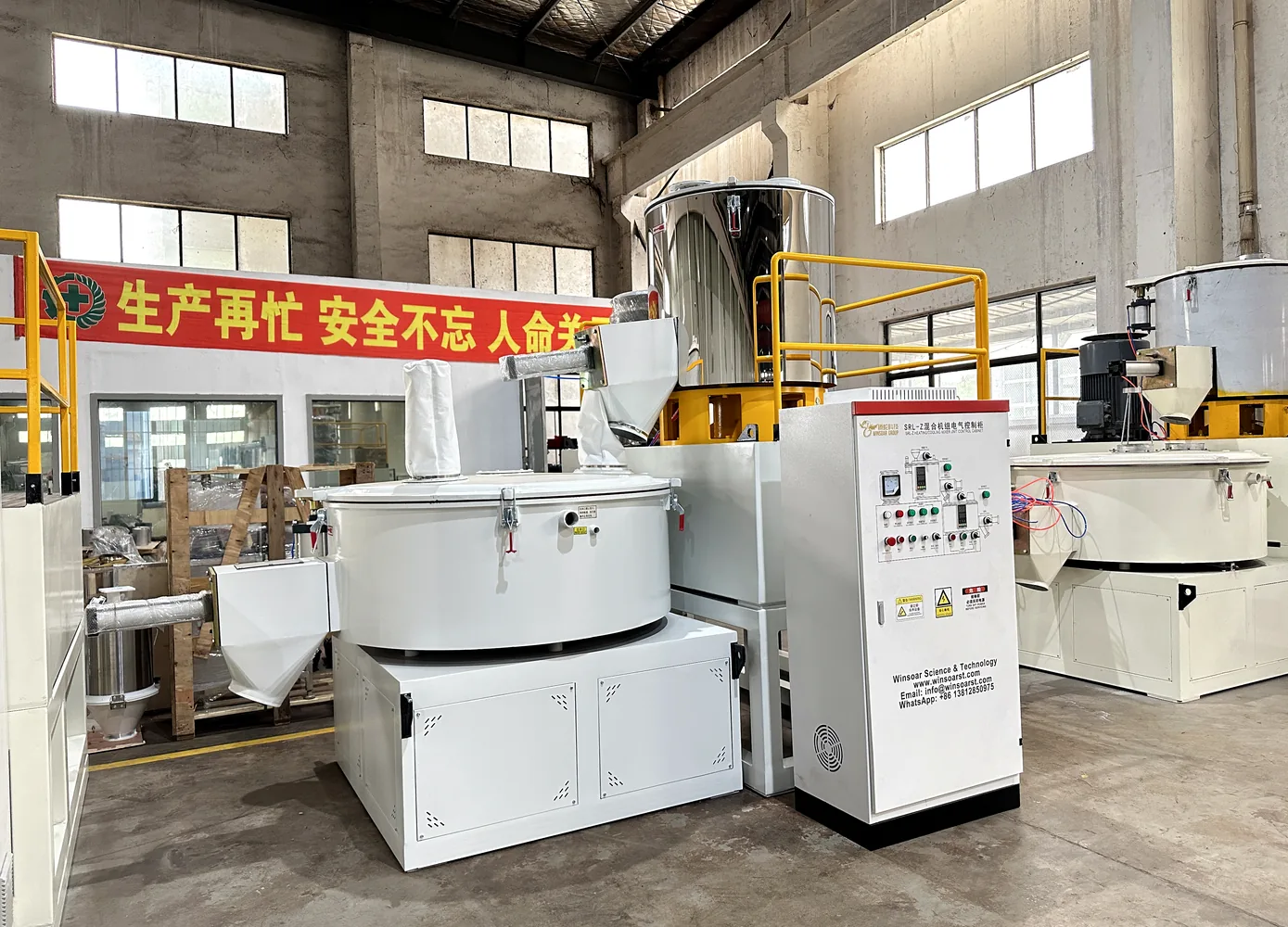
Stable compound preparation is the first requirement for rigid PVC and UPVC pipe extrusion.
Usually, no. A typical rigid PVC or UPVC pipe line includes a material mixer and feeding system, a conical twin screw extruder, a pipe die head and mould, vacuum calibration, cooling, haul-off, cutting and optional belling or stacking equipment. See What Machines Are Included in a PVC Pipe Production Line? for the full equipment sequence.
Equipment section | Rigid PVC / UPVC role | What must be confirmed |
|---|---|---|
Mixer and feeder | Blends and transfers the PVC compound | Formula, batch capacity, filler level, color and feeding stability. |
Conical twin screw extruder | Plasticizes and conveys the rigid PVC melt | Practical output, torque, screw design, temperature control and powder feeding. |
Die head and mould | Forms pipe OD and wall profile | Diameter range, wall thickness, pressure requirement and included tooling. |
Vacuum and cooling | Stabilizes pipe dimensions and surface | Tank length, cooling capacity, water circulation and pipe size. |
Haul-off and cutter | Controls line speed and cut length | Pipe traction, cutting method, length tolerance and automation. |
Belling machine | Forms a socket end where required | Socket type, pipe length, forming cycle and mould sizes. |
The core architecture is shared, but a quotation should never assume that one standard configuration will suit every rigid PVC or UPVC pipe. For example, a small conduit line and a large drainage-pipe line need different moulds, calibration, cooling, downstream support and belling capacity.
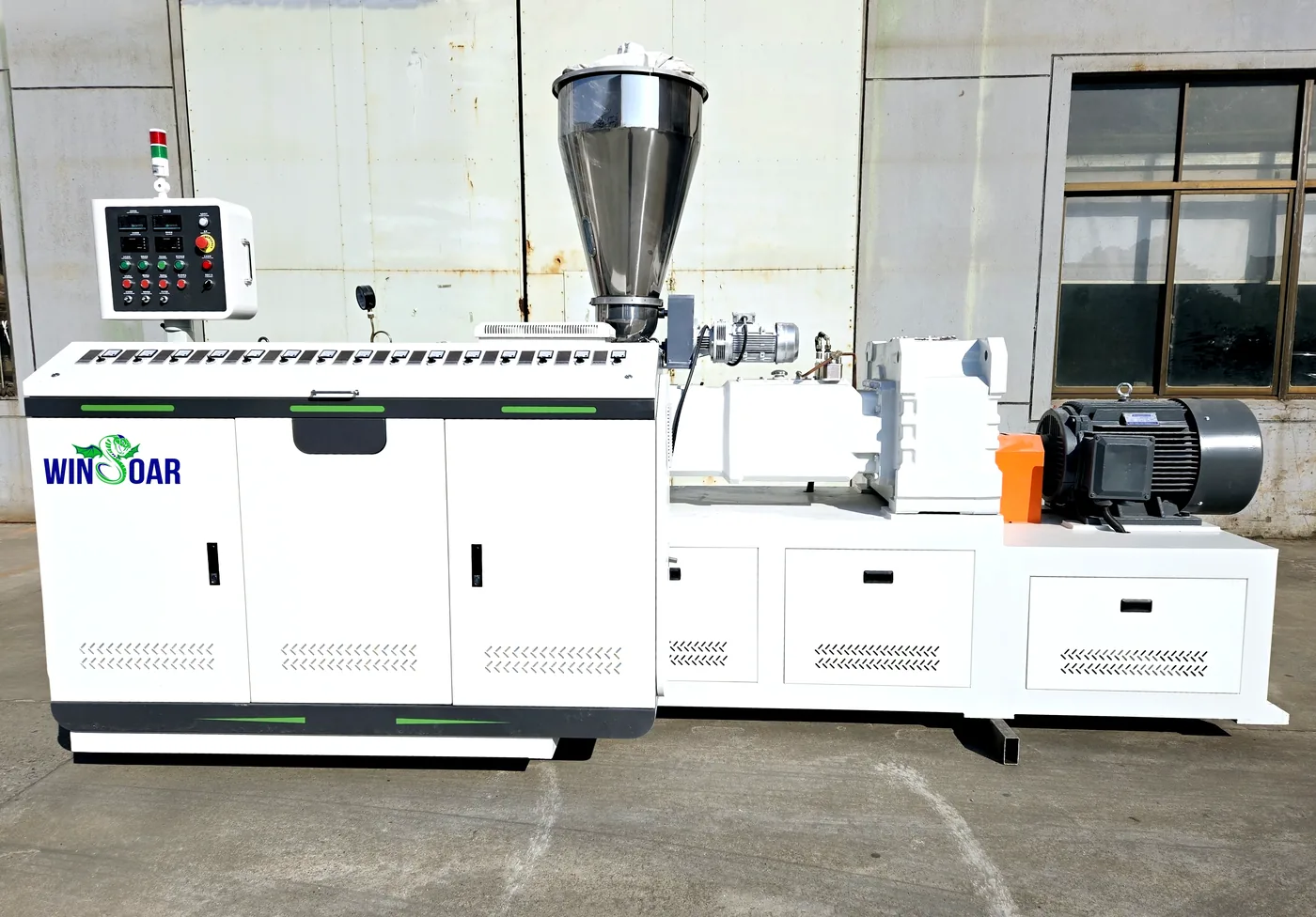
A conical twin screw extruder is commonly used for rigid PVC and UPVC pipe processing.
Rigid PVC and UPVC pipe performance depends on a controlled compound. PVC resin, stabilizer, lubricant, processing aid, filler, pigment and other approved additives must be balanced for the pipe application. The exact formulation is a material decision, but it affects mixer operation, plasticizing behavior, melt pressure, surface appearance and final pipe properties.
Rigid PVC has a narrower practical processing window than many polyolefin materials. The extrusion setup should maintain stable temperature zones, melt pressure and screw load. Comparing only motor power is not enough; confirm screw design, gearbox capability, heating control and expected kg/h for the selected compound.
Pipe diameter, wall thickness and pressure or drainage application determine die-head and calibration selection. The vacuum tank and cooling section must stabilize the pipe before haul-off. When a pipe becomes larger or thicker, the line generally requires longer or stronger downstream cooling and more stable traction.
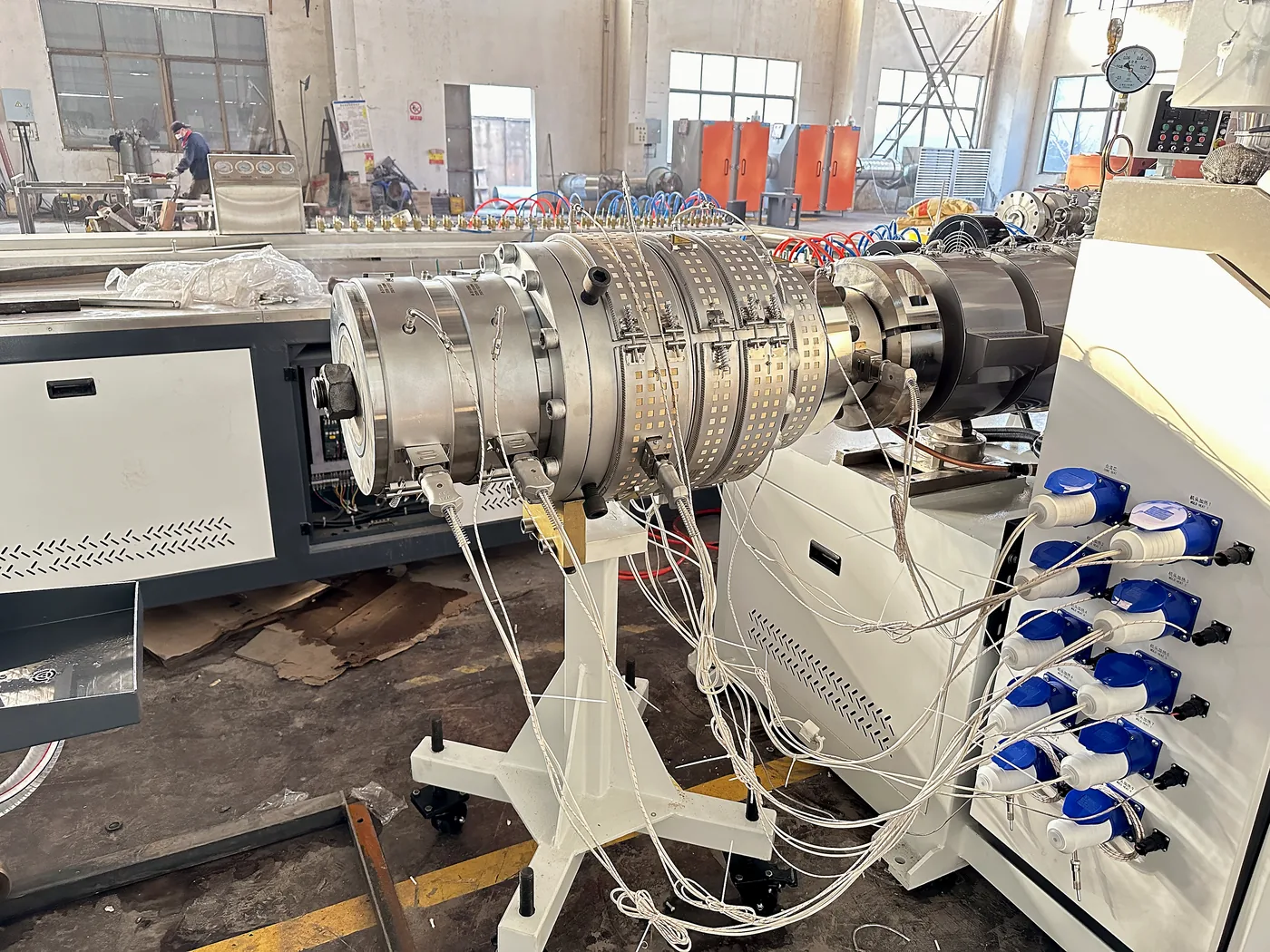
Tooling and calibration are selected by the finished pipe dimensions and application requirements.
Many rigid PVC and UPVC drainage, water-supply and conduit pipes need a socket end. In that case, the line may include a PVC Pipe Belling Machine after cutting. The belling machine is selected by pipe diameter, U/R/square socket style, pipe length, heating and cooling cycle, and target pieces per hour.
Read the PVC Pipe Belling Machine Guide for the downstream selection details. Plain-end pipe may use a stacker or another receiving arrangement instead.
Typical pipe range | Configuration focus | Related line |
|---|---|---|
16-63 mm | Small-pipe output, multi-cavity tooling where needed, conduit or socket configuration | |
63-160 mm | Medium-diameter sizing stability, water/drainage/conduit applications, suitable belling capacity | |
50-250 mm | Wider product mix, cooling length, haul-off force and cutter matching | |
200-450 mm | Large-pipe calibration, cooling, traction, cutting and downstream handling |
Use How to Choose a PVC Pipe Extrusion Line for Different Pipe Diameter Ranges to compare the production focus for different diameters. The final equipment list must still be based on the buyer's pipe standard, formula, output and factory conditions.
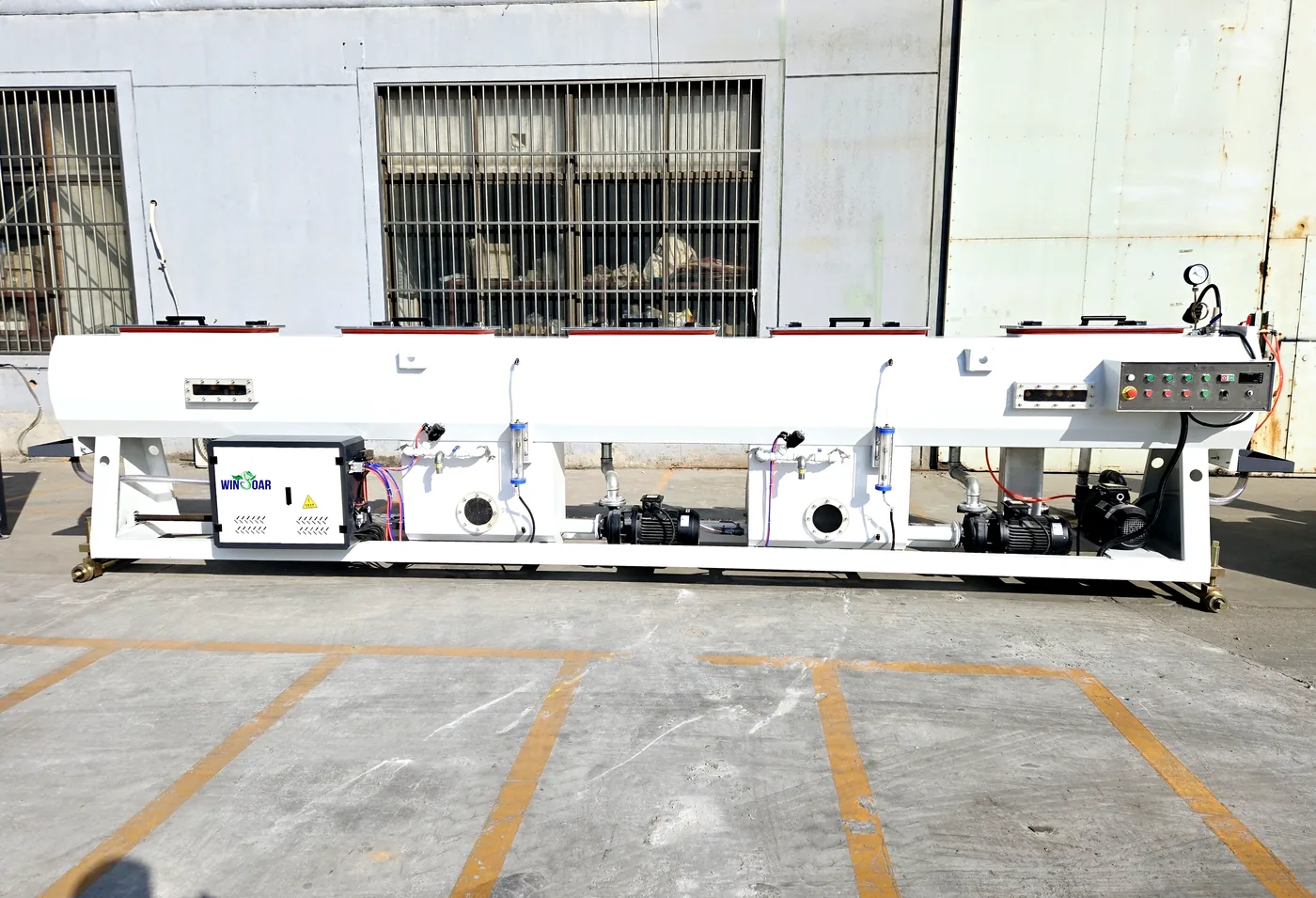
Vacuum calibration and cooling control the pipe dimensions before haul-off and cutting.
Outside diameter, wall thickness, ovality and length tolerance.
Pipe surface, color consistency and absence of visible processing defects.
Socket dimensions and fit where a belling machine is used.
Stable line speed, haul-off traction and cut quality.
Application-specific tests required by the buyer's market and pipe standard.
The process sequence from material preparation to finished pipe is explained in PVC Pipe Production Line Process: From Mixing to Extrusion, Cooling, Cutting and Belling. Output planning should also account for pipe size, wall thickness, cooling and downstream cycle time; see How Much Output Can a PVC Pipe Extrusion Line Produce Per Hour?.
Finished pipe application: drainage, water supply, conduit, cable protection or another use.
Pipe OD range, wall-thickness range, length and target output.
Required pipe standard, pressure class and test requirements.
Rigid PVC or UPVC compound information, color and filler ratio where available.
Required die-head and mould sizes, including single or multi-output tooling.
Socket requirement, belling type and belling-machine capacity where applicable.
Local voltage, water circulation, compressed air and factory layout.
Automation, online measurement, stacker/coiler and spare-part requirements.
For a full cost discussion, read PVC Pipe Extrusion Line Price Factors: What Determines the Cost?. Diameter range, extruder size, mould quantity, cooling, downstream equipment and automation all affect the final project investment.
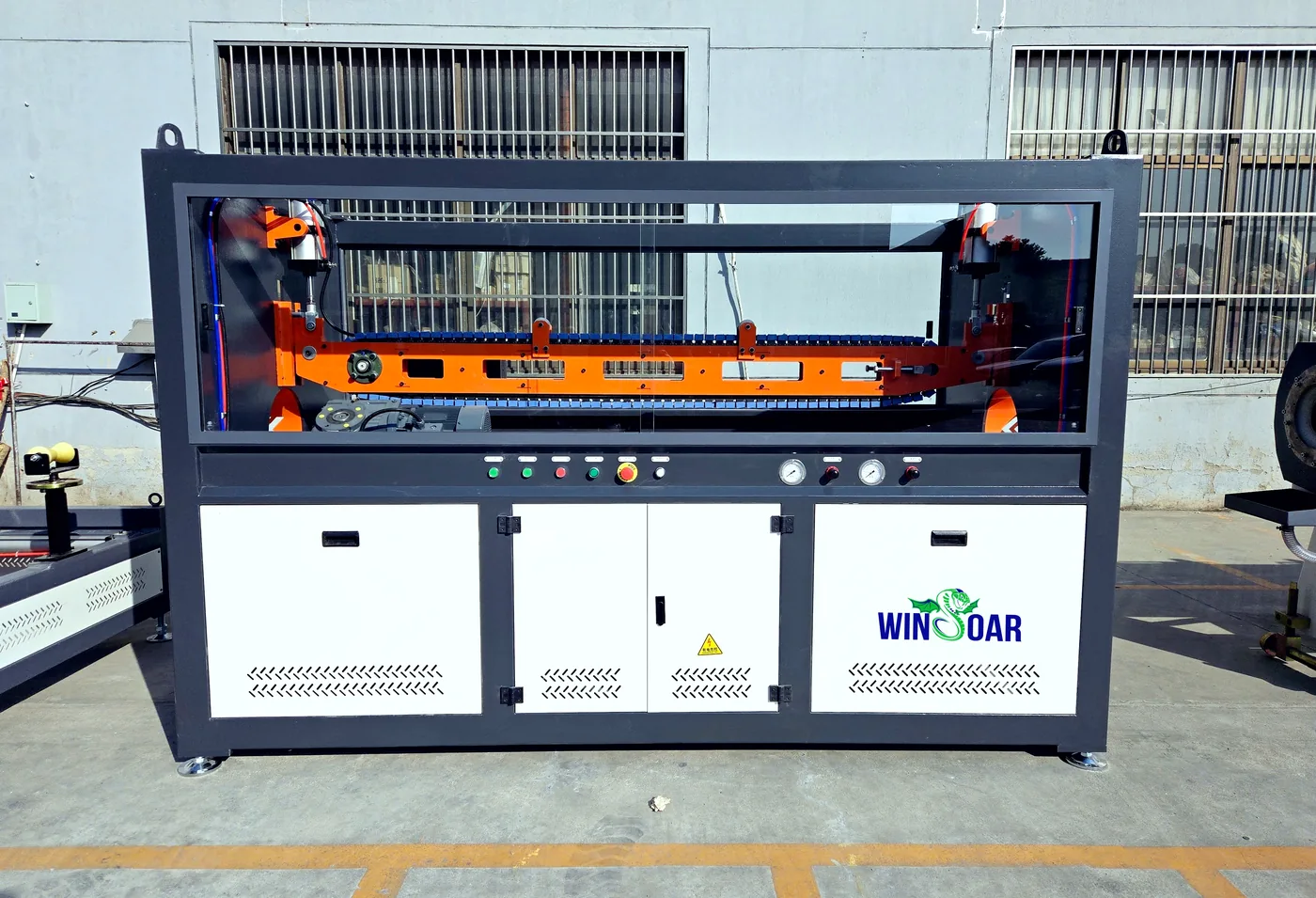
Stable haul-off is important for dimensional consistency in rigid PVC and UPVC pipe production.
UPVC is unplasticized, rigid PVC. PVC is the broader material term and can also refer to plasticized PVC used for flexible products.
Most rigid PVC and UPVC pipes use the same core line architecture. The machine configuration must be matched to the compound, pipe dimensions, application, output and required standards.
Yes, within the designed range, using the correct moulds, sizing tools and downstream settings. Confirm the full diameter list before specifying the extruder and auxiliary equipment.
A belling machine is needed when the finished pipe requires a socket end for joining. The socket profile and cycle time must match the pipe specification and line output.
Send the pipe drawing or standard, diameter and wall-thickness range, application, output target, material information, socket requirement and local utilities.