Tel : +86-13812850975 E-mail : info@winsoarst.com

 |




PVC hollow corrugated roofing sheet production line for continuous extrusion of lightweight hollow corrugated PVC roof panels, including mixing, extrusion, profile forming, vacuum calibration, haul-off, cutting and finished-sheet handling.
| Quantity: | |
|---|---|
Product Overview & Applications
PVC hollow corrugated roofing sheet production line is a complete extrusion solution for manufacturing lightweight PVC roof panels with a hollow corrugated structure. The line combines material preparation, plasticizing extrusion, profile forming, vacuum calibration, cooling, stable traction, fixed-length cutting and finished-sheet handling in one continuous process.
The complete line is engineered around the customer's profile drawing, sheet width, thickness, hollow chamber design, PVC formulation, target output and cutting length. This project-based approach helps match the extruder capacity, corrugated profile mould, calibration tooling and downstream handling equipment to the actual product rather than relying on a generic configuration.
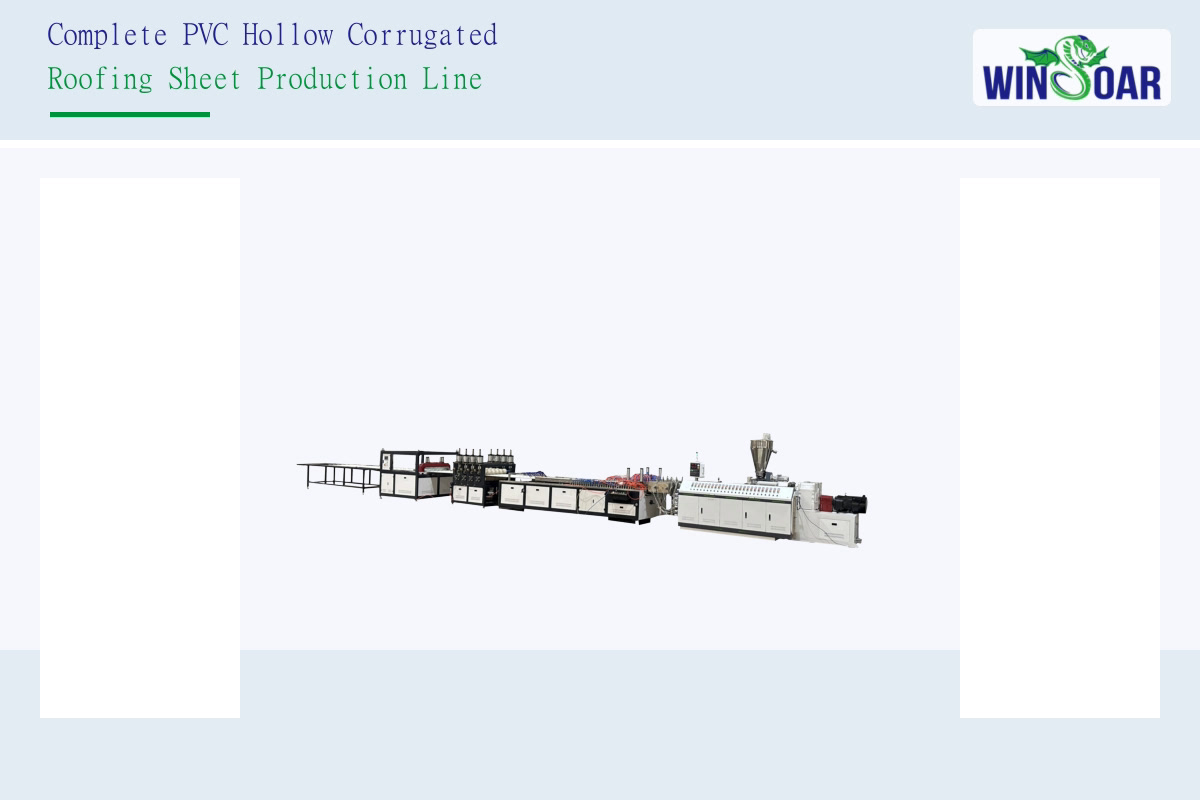
Complete PVC Hollow Corrugated Roofing Sheet Production Line
Complete PVC hollow corrugated roofing sheet extrusion line
Corrugated profile mould and vacuum calibration
Stable haul-off, fixed-length cutting and handling
Configured for width, thickness and hollow structure
PVC roof panel and lightweight covering applications
Quotation based on drawing, sample and output target
PVC hollow corrugated roofing sheet extrusion is a profile and board application. The same engineering logic can be adapted for PVC roof panels, PVC wall sheets and other lightweight plastic profile products by changing the mould, calibration tooling and downstream equipment.
For related equipment references, review Plastic Profile and Board Production Line, Profile Production Line and PVC and WPC Profile Production Line.
PVC hollow corrugated roof panels for industrial and agricultural buildings.
Lightweight PVC wall covering, partition protection and temporary structures.
Projects requiring corrosion-resistant plastic sheets with repeatable profile dimensions.
PVC hollow corrugated sheets are profile products in which the corrugation provides geometric stiffness while the hollow construction reduces material weight. Stable melt control, accurate tooling and sufficient cooling are important for maintaining the sheet section, surface quality and repeatable dimensions during continuous production.
Winsoar can configure the line for different panel widths, thicknesses, corrugation shapes and hollow structures. The final machine list and output should be confirmed using the customer's drawing or sample, formulation, power standard and workshop layout before quotation.
The finished panels can be used for lightweight roof and wall covering projects where corrosion resistance, easy handling and a profiled appearance are required. Typical applications include agricultural buildings, industrial sheds, temporary structures, partition protection and other projects that use plastic profile sheets.
Application suitability depends on local climate, structural design, wind and snow loads, fire requirements, fixing method and applicable building standards. The line configuration should be finalized together with the target product specification.
Video & Technical Parameters
The video shows the PVC hollow corrugated roofing sheet production line running in a factory environment. It helps buyers review the equipment layout before confirming the profile mould, output target and downstream configuration.
| Item | Information to confirm |
|---|---|
| Finished sheet | Working width, thickness, corrugation pitch, hollow chamber structure, surface and required sheet length. |
| Material formulation | PVC resin type, stabilizer system, filler or modifier content, pigment and target density or weight. |
| Output target | Required output per hour, operating schedule and acceptable production speed range. |
| Tooling | Profile drawing or physical sample, mould material preference and tooling change requirements. |
| Workshop and utilities | Available length and width, power supply, cooling water, compressed air, ventilation and material flow. |
Please send the finished sheet width and thickness, corrugation drawing or sample, hollow structure, PVC formulation, target output, cutting length, voltage, workshop layout and delivery destination. These details determine the extruder, mould, calibration table, haul-off and handling configuration.
Machine Configuration
PVC resin, stabilizers, pigments, fillers and processing aids are weighed and mixed to form a consistent compound.
The extruder feeds, plasticizes and homogenizes the PVC compound while controlling melt temperature and pressure.
The profile mould distributes the melt into the required hollow corrugated roofing sheet geometry.
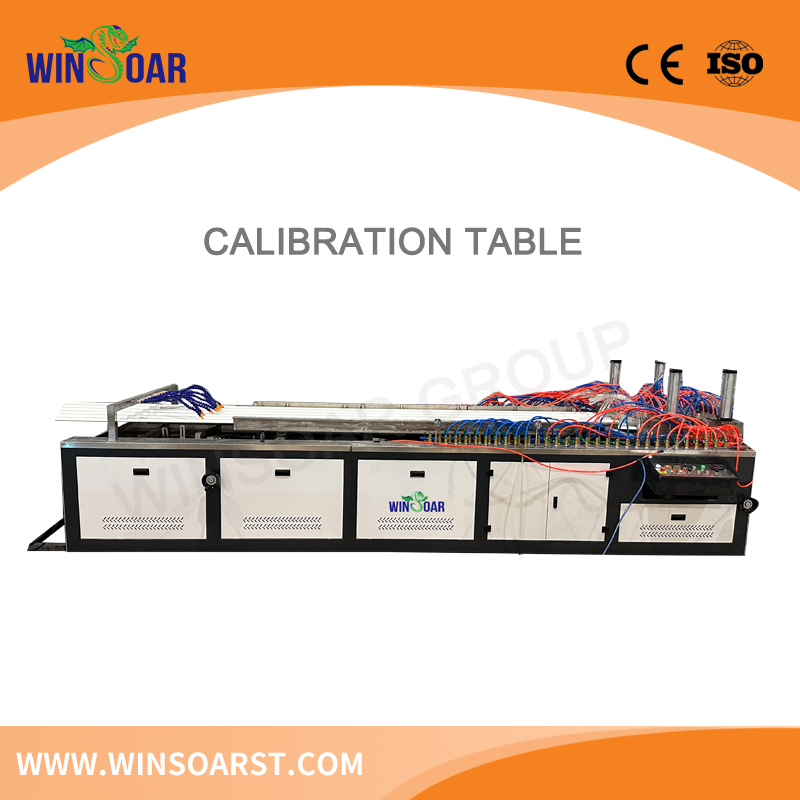
The vacuum calibration table sizes and cools the profile so the corrugation remains stable after leaving the tooling.
The roller haul-off provides synchronized traction and keeps the line speed steady without deforming the profile.
The cutting machine measures and cuts the continuous sheet to the required order length.
The turnover rack receives, turns and organizes finished sheets for inspection, packing and transport.
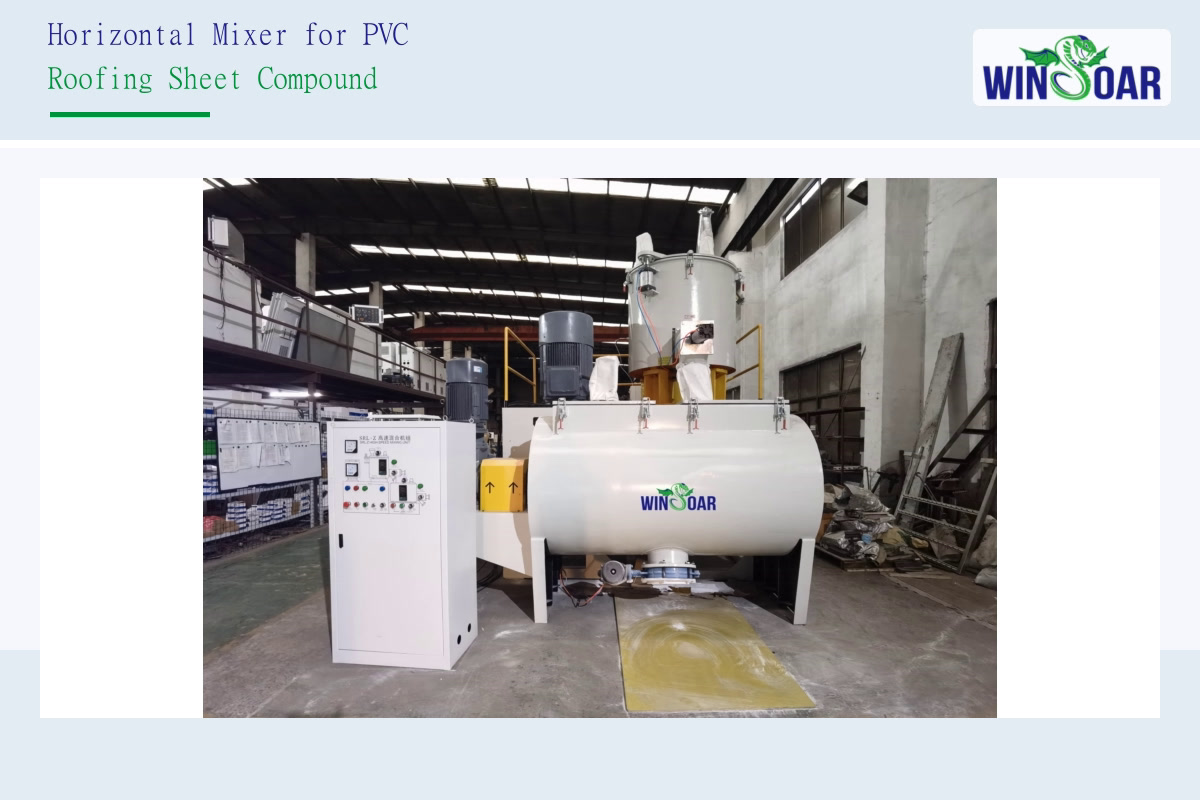
The horizontal mixer prepares a uniform PVC compound before extrusion. Consistent mixing helps distribute stabilizers, pigments, fillers and modifiers throughout the formulation, which supports stable plasticizing behavior and more consistent sheet color, surface and weight.
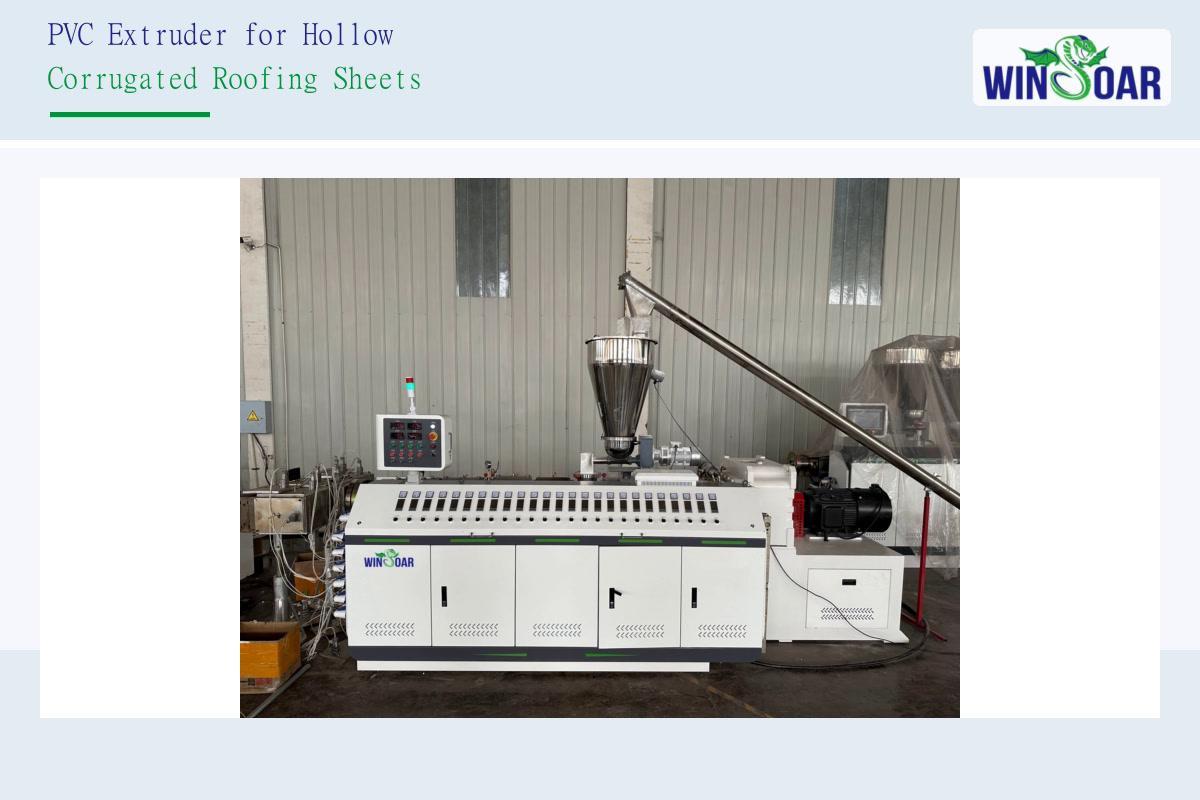
The main PVC extruder provides controlled feeding, melting, mixing and conveying of the compound. Screw structure, barrel heating, cooling zones and drive capacity are selected according to the formulation, sheet width, thickness, hollow structure and target throughput.
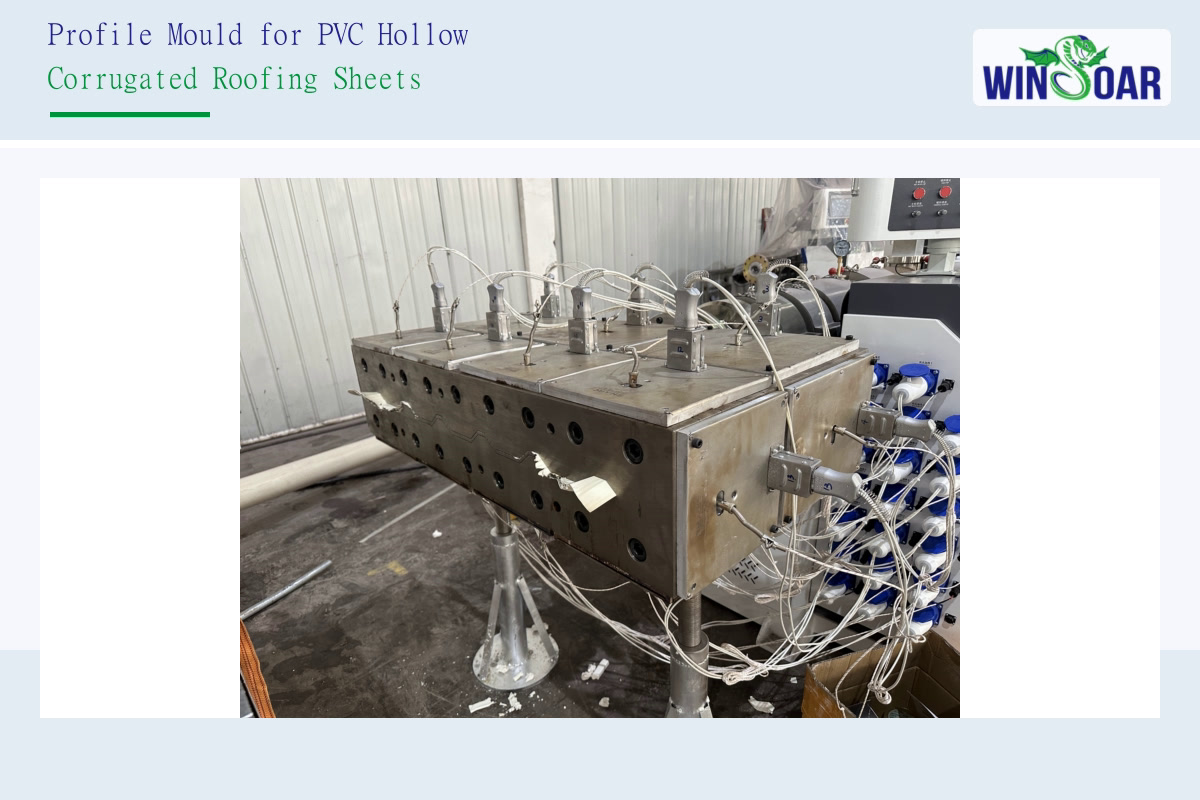
The profile mould forms the hollow corrugated cross-section. Tooling design must consider melt distribution, corrugation pitch, wall thickness, hollow chamber geometry, material flow balance and the connection with the vacuum calibration section.
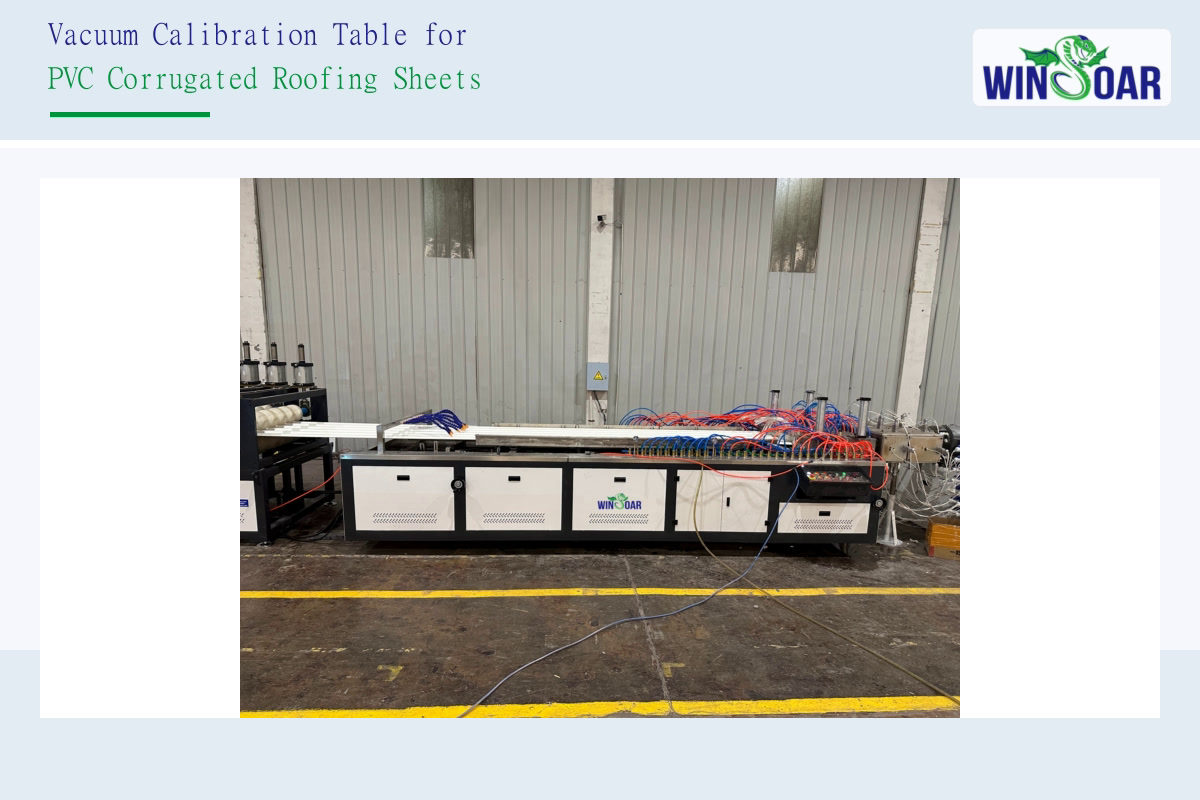
The vacuum calibration table stabilizes the hot profile after moulding. Vacuum sizing, cooling water circulation and table length affect dimensional accuracy, surface finish and the ability to keep the corrugated shape during continuous haul-off.
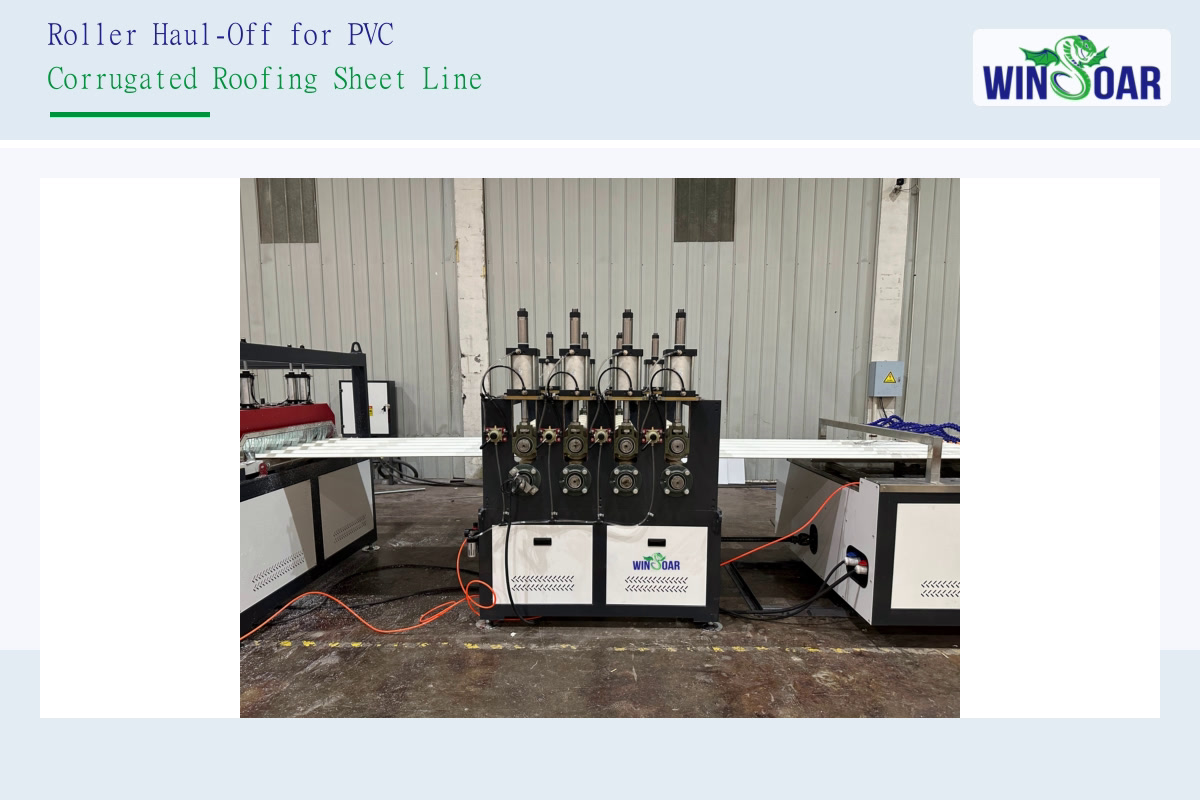
The roller haul-off synchronizes traction with the extrusion rate. Appropriate roller contact, pressure and speed help prevent stretching, surface marks or corrugation deformation while maintaining a steady feed to the cutting section.
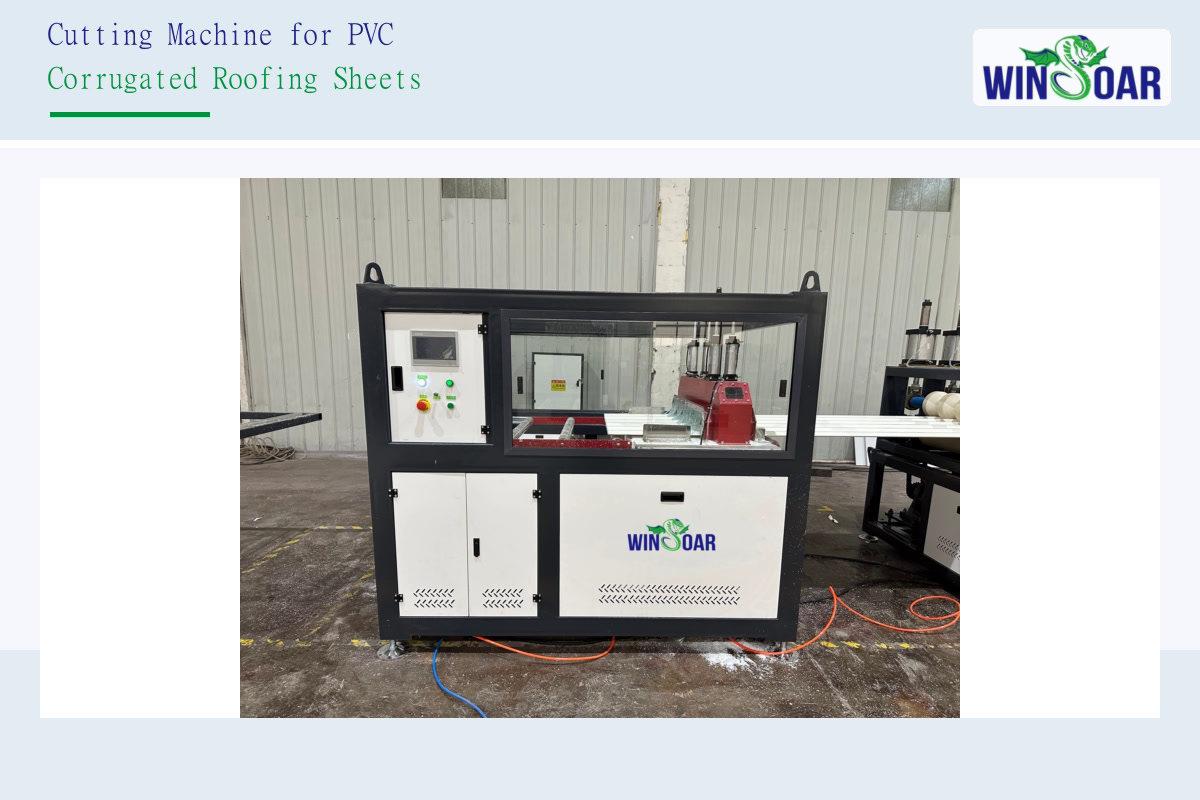
The cutting machine uses the line measurement signal to produce repeatable sheet lengths. Cutting parameters are matched to sheet thickness, profile shape and required tolerance, with attention to clean edges and safe transfer to the receiving section.
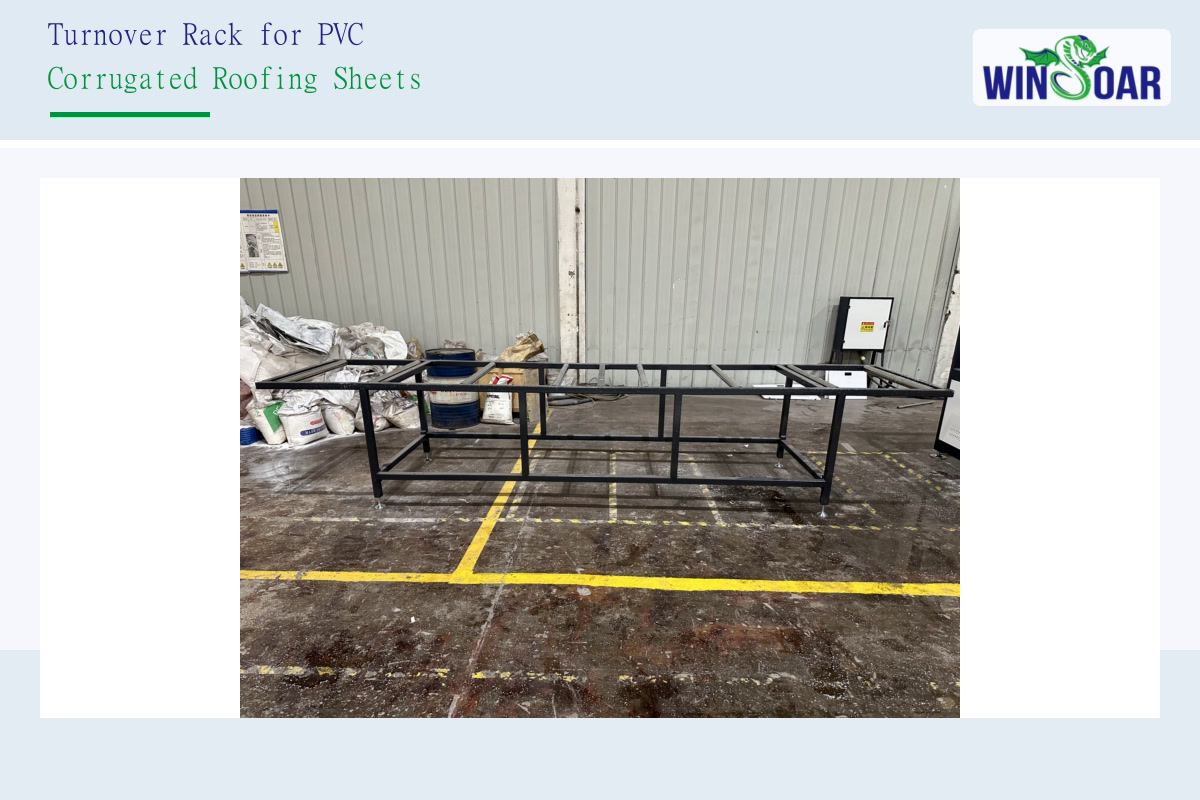
The turnover rack provides an organized receiving area for finished panels. It supports manual inspection, orderly stacking and smoother packing, especially when long or wide roofing sheets must be handled without scratching or bending.
Production parameters should be checked from the mixer through the final stack. Operators typically monitor compound uniformity, melt temperature, extrusion pressure, vacuum stability, cooling water condition, line speed, sheet width, thickness, corrugation geometry, cutting length and finished-surface condition.
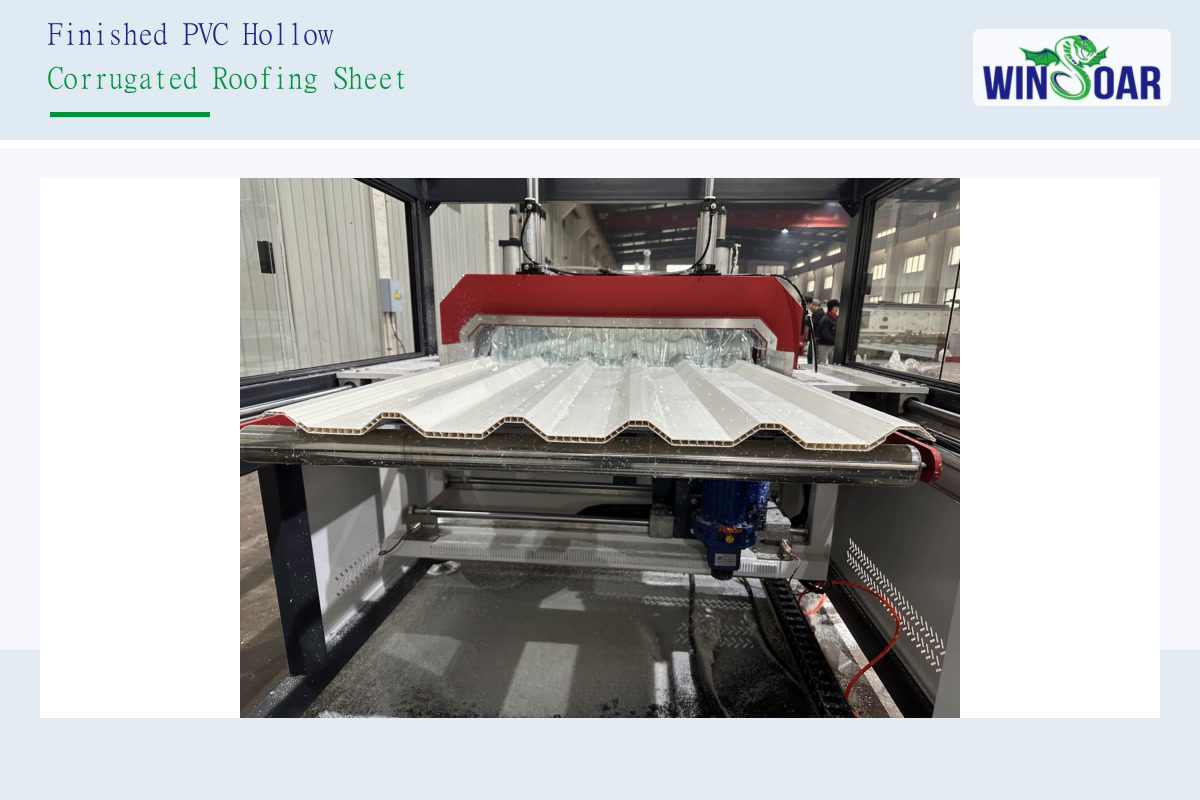
Finished PVC hollow corrugated roofing sheet from the extrusion line
Factory, Packaging & Exhibition
Winsoar supports PVC hollow corrugated roofing sheet production line projects from profile drawing review and machine configuration to workshop assembly, export packaging, container loading, shipping coordination and overseas customer communication.
The workshop is where extrusion lines are assembled, checked and prepared for delivery. Buyers can use this information to evaluate the supplier's production environment and project coordination capability.
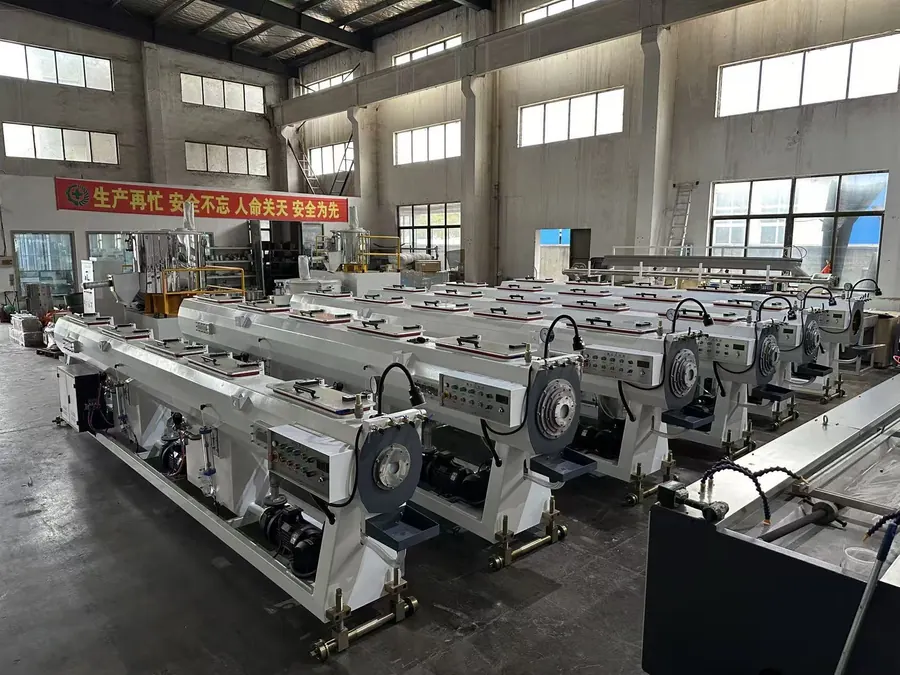
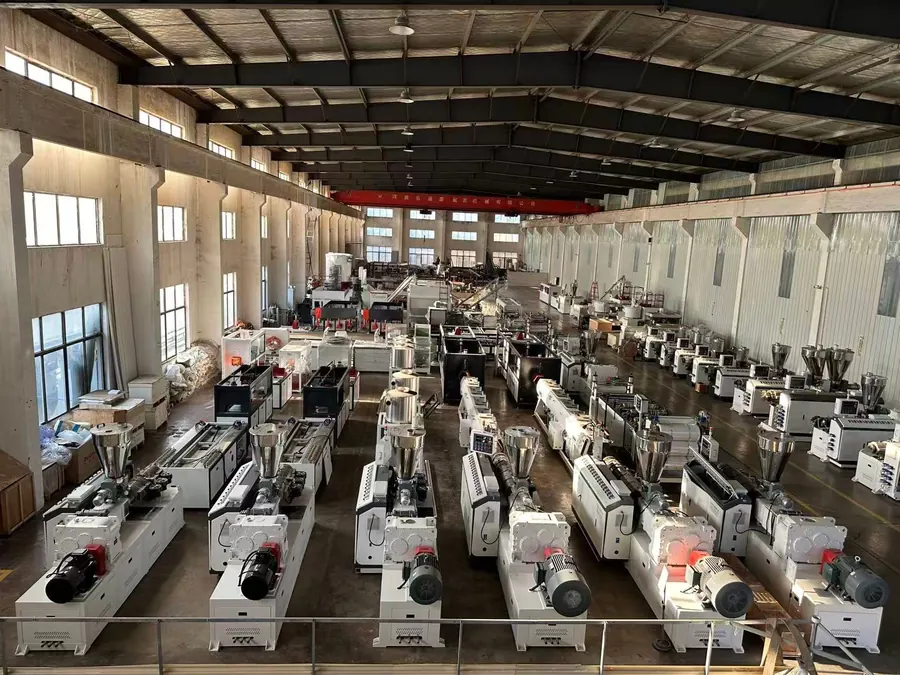
Mechanical sections, electrical control components, mould-related parts and downstream equipment are checked during assembly. This reduces installation risk after the line arrives at the customer's factory.
Packaging is planned according to machine dimensions, transport distance and unloading conditions. Protective wrapping and wooden cases help protect moulds, electrical parts, accessories and other line components.
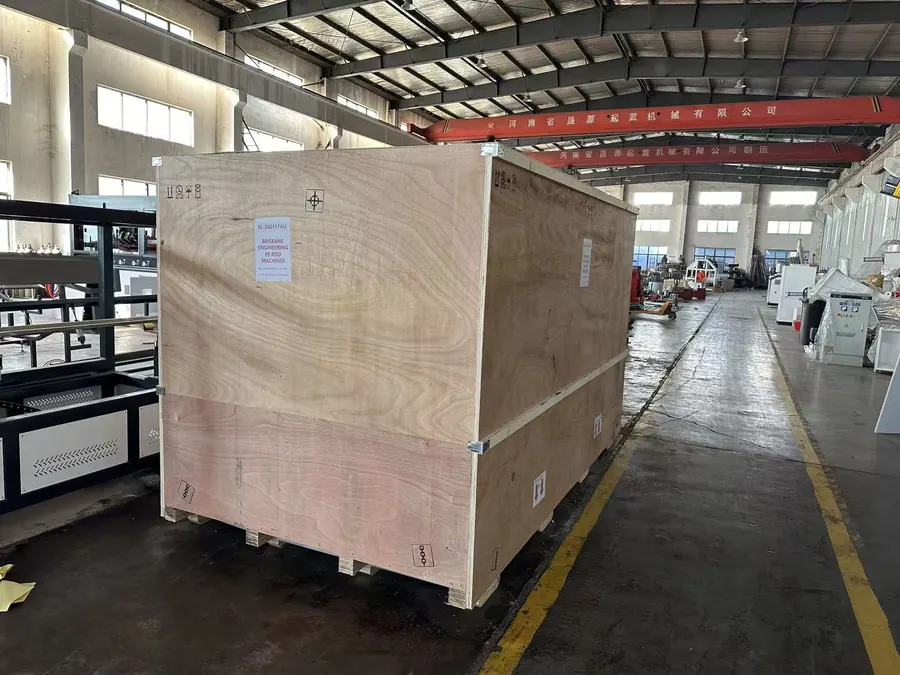
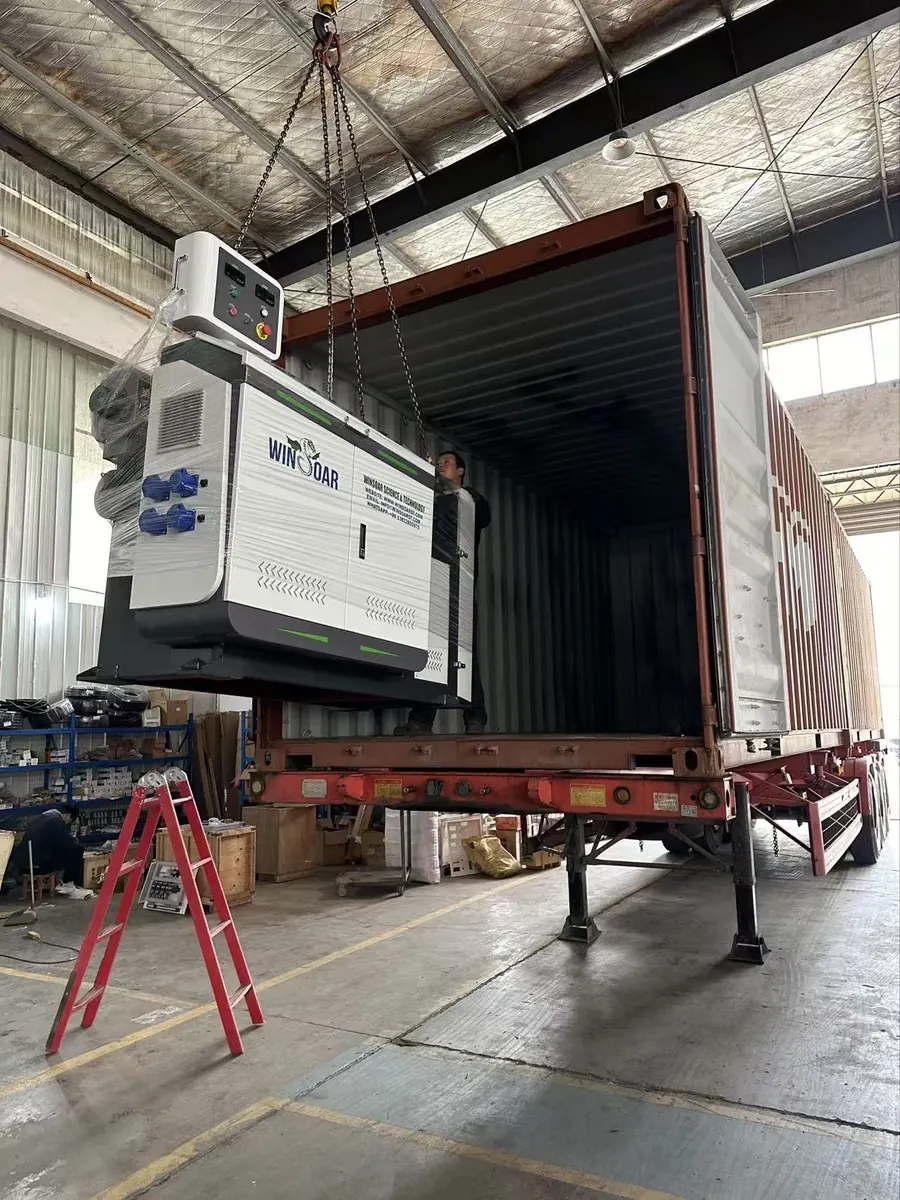
Container loading is organized around equipment size, protection requirements and destination port arrangements. Winsoar can coordinate loading plans, shipment documents and delivery communication for overseas projects.
Exhibitions and project meetings help Winsoar understand the customer's roofing sheet application, profile sample, production target and factory conditions before finalizing a line proposal.
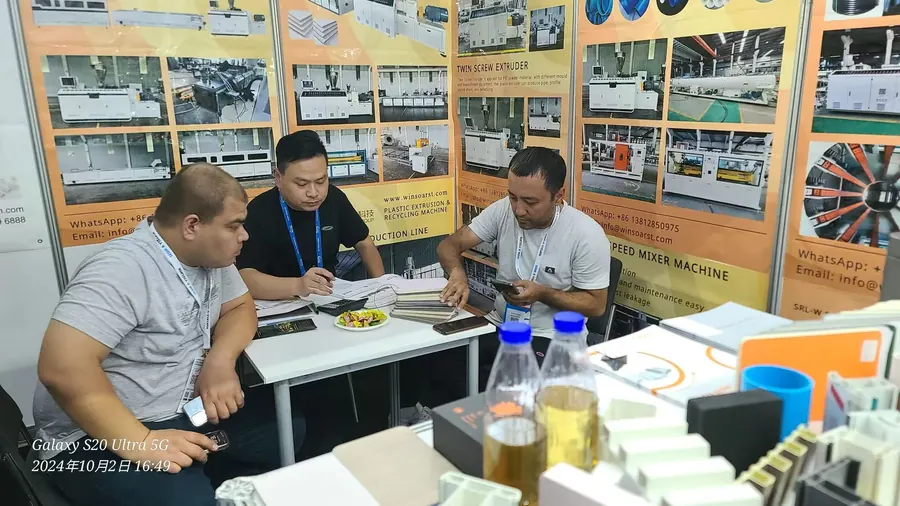
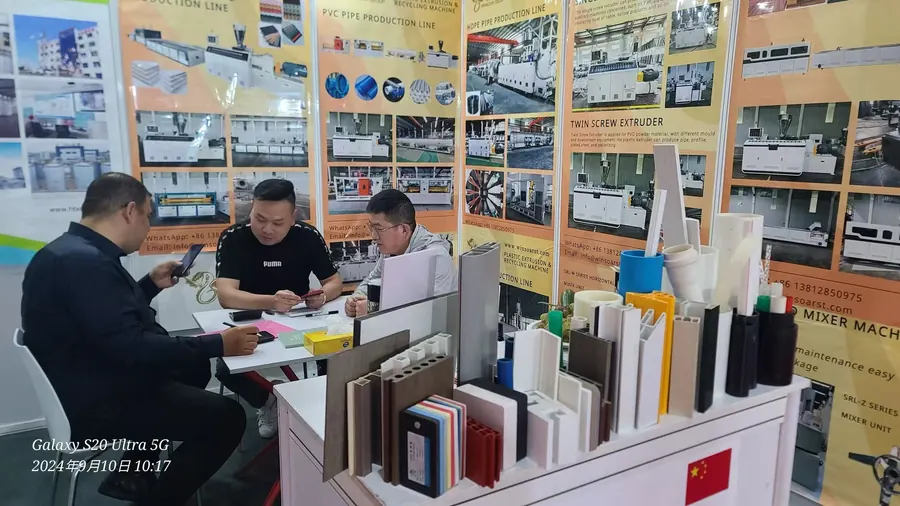
Samples allow buyers and engineers to discuss corrugation shape, hollow structure, surface requirements and possible product expansion. These discussions support a more accurate mould and downstream equipment proposal.
Send your profile drawing or sample, target sheet dimensions, formulation and output requirement. Winsoar can recommend a suitable PVC hollow corrugated roofing sheet production line with mould, calibration, haul-off, cutting, packaging and delivery planning.
Share the product drawing, output target and factory voltage for a project review.
FAQ
Yes. The profile mould and vacuum calibration tooling can be designed around a customer's section drawing or sample. A different profile may require a tooling change and new process settings.
Output depends on sheet width and thickness, PVC formulation, extruder capacity, profile geometry, line speed, cooling conditions and the required quality standard. A reliable estimate requires the finished-product specification.
The line is intended for PVC-based formulations. Resin grade, stabilizers, pigments, fillers, modifiers and processing aids should be selected according to the required strength, weatherability, color, weight and local requirements.
Please send the profile drawing or sample, finished width and thickness, hollow structure, target output, cutting length, formulation information, power standard and available workshop dimensions.
Send the profile drawing or sample together with your target dimensions, formulation and output requirement. Winsoar can then recommend the extrusion, mould, calibration, haul-off, cutting and handling configuration for your project.
Watch the production line video: PVC hollow corrugated roofing sheet production line running in a factory.