Tel : +86-13812850975 E-mail : info@winsoarst.com

 |


| Quantity: | |
|---|---|
20-110mm PE Pipe Production Line
Winsoar
WSP-PE-20-110
Product Overview & Applications
Winsoar 20-110mm PE pipe production line is a small-diameter HDPE pipe extrusion line for water supply pipe, gas pipe, irrigation pipe, drainage pipe and coiled PE pipe production.
Direct answer: A 20-110mm PE pipe production line is a complete HDPE pipe extrusion line used to produce small-diameter polyethylene pipes. A typical line includes single screw extrusion, optional color marking co-extrusion, pipe die head, vacuum calibration, spray cooling, haul-off, cutting and pipe coiling.
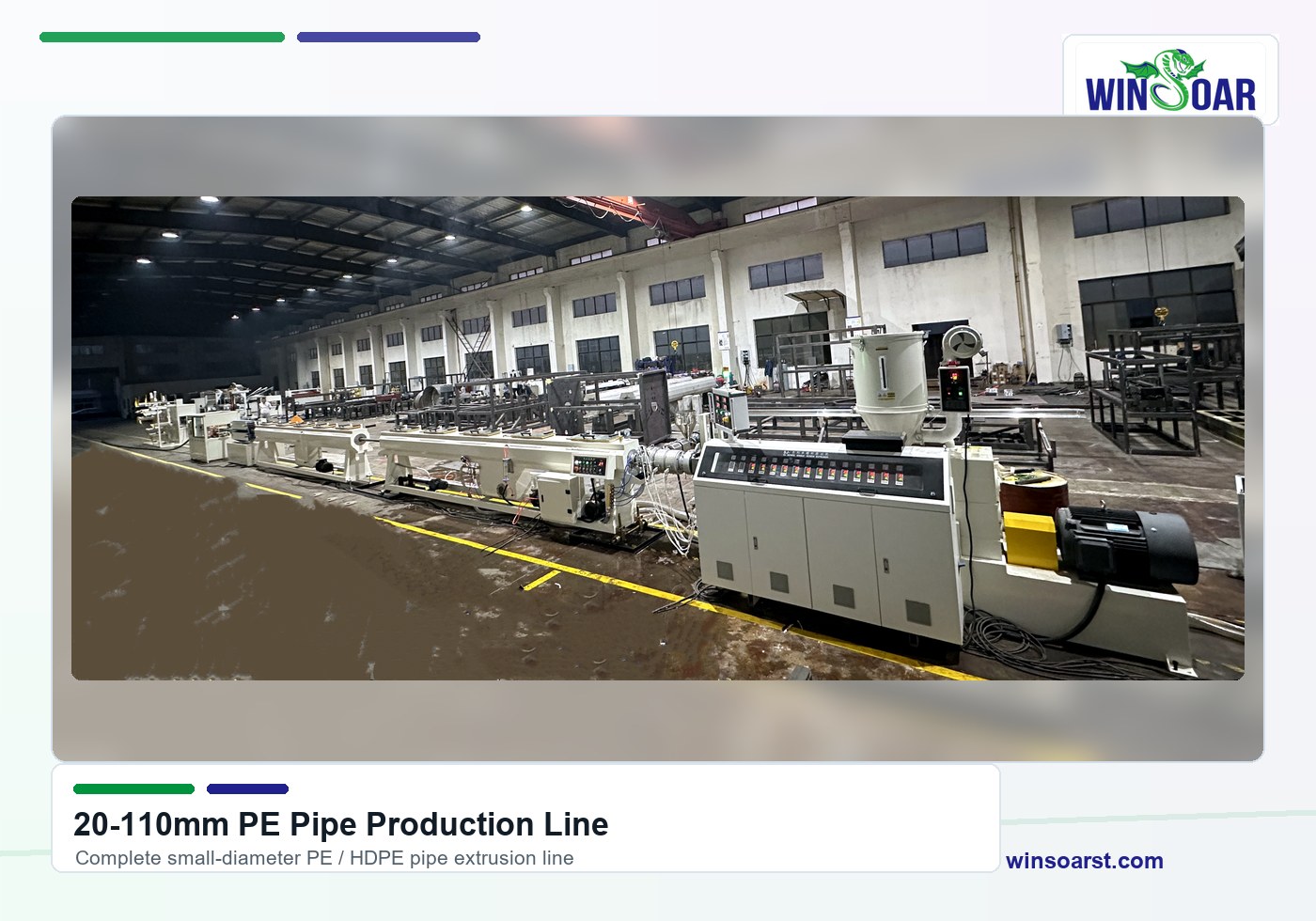
Small-Diameter HDPE Pipe Extrusion Line
This line is designed for PE and HDPE pipe projects where stable extrusion, accurate outside diameter, smooth pipe surface, mark-line quality and coiling performance are important.
Pipe range: 20-110mm, project-based configuration
Material: PE80, PE100, HDPE and polyethylene compounds
Applications: water supply, gas, irrigation, drainage, conduit and industrial pipe
Application | Typical Pipe Range | Recommended Focus |
PE water supply pipe | 20-110mm | Stable output, pipe surface, pressure grade and cooling control |
PE gas pipe | 20-110mm | Material grade, SDR, color mark line and diameter accuracy |
Agricultural irrigation pipe | 20-110mm | Production speed, coiling, wall thickness and cost efficiency |
Drainage and industrial pipe | 20-110mm | Pipe stiffness, line speed and stable cutting/coiling |
Product name | 20-110mm PE Pipe Production Line |
Line type | Small diameter PE pipe production line / HDPE pipe extrusion line |
Applicable material | PE80, PE100, HDPE and polyethylene compounds |
Pipe diameter range | 20-110mm, customized by project |
Typical applications | Water supply pipe, gas pipe, irrigation pipe, drainage pipe and industrial pipe |
Main extruder | Single screw extruder selected according to output, SDR and wall thickness |
Optional system | Color marking co-extruder, printer, pipe coiler and auxiliary equipment |
Customization | Pipe SDR, wall thickness, output, voltage, coiling diameter, control system and line layout |
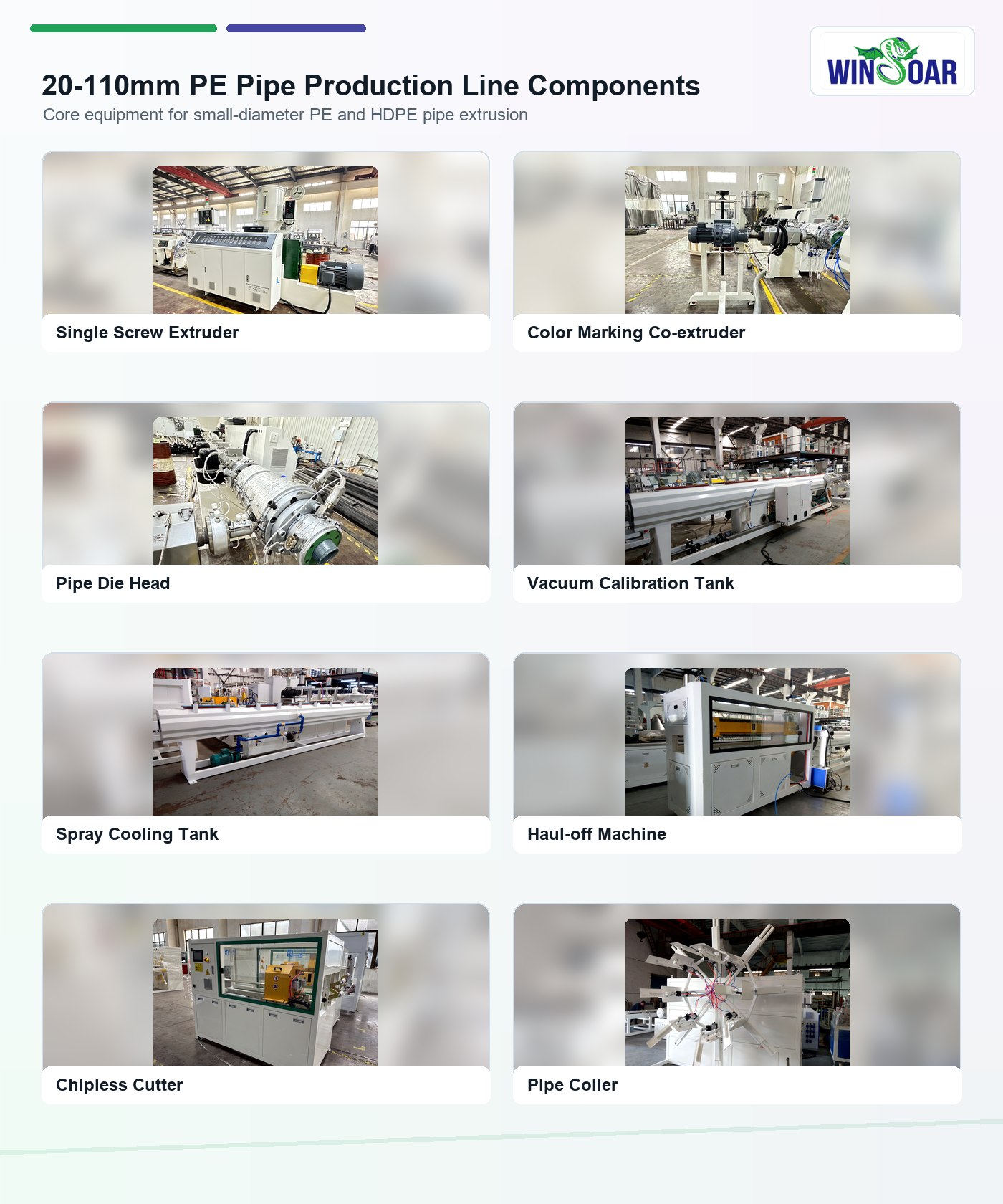
Core Machines for 20-110mm PE Pipe Extrusion
The 20-110mm range is a small-diameter PE and HDPE pipe extrusion line for water supply, gas, irrigation, conduit, cable protection and utility applications. Compared with a medium-diameter straight-pipe line, this configuration gives the buyer more attention to small-pipe sizing, stable low-diameter haul-off, color marking and optional coiling for transport and installation.
Application | Important configuration point |
|---|---|
PE water supply pipe | Confirm material grade, SDR or wall thickness, diameter tolerance and whether blue color marking is required. |
PE gas pipe | Confirm the project standard, yellow or customized mark line, pressure requirement and fixed or coiled delivery format. |
Irrigation and farm water pipe | Match output, pipe flexibility, winding diameter and coil length to the installation method. |
Conduit and cable protection pipe | Confirm wall thickness, cut length, surface requirements and whether straight lengths or coils are preferred. |
One line may cover several diameters, but the die head, calibration sleeve, cooling condition, haul-off speed and coiler setting must be matched to the main production sizes. A buyer producing mostly 20-32mm pipe has different output and coiling priorities from a buyer producing 75-110mm pressure pipe.
20-32mm: suitable for small water, irrigation, conduit and utility pipe projects; pay attention to small-diameter stability and accurate winding.
32-63mm: commonly used for irrigation branches, water supply, gas and cable protection; confirm color marking and required coil length.
63-110mm: often requires stronger cooling and traction for thicker-wall or pressure pipe, with a coiler or straight-pipe receiving method selected according to the product.
Multiple sizes: confirm the regular production size first and list the required die and calibration tools for the full range.
The downstream format is a key difference for this size range. A pipe coiler is useful when flexible small-diameter PE pipe will be transported and installed in coils. Straight-pipe production may be preferred when the buyer needs fixed lengths, socket connections, easier inspection or a project-specific receiving layout. The quotation should therefore state the target coil diameter or fixed length rather than only the pipe diameter.
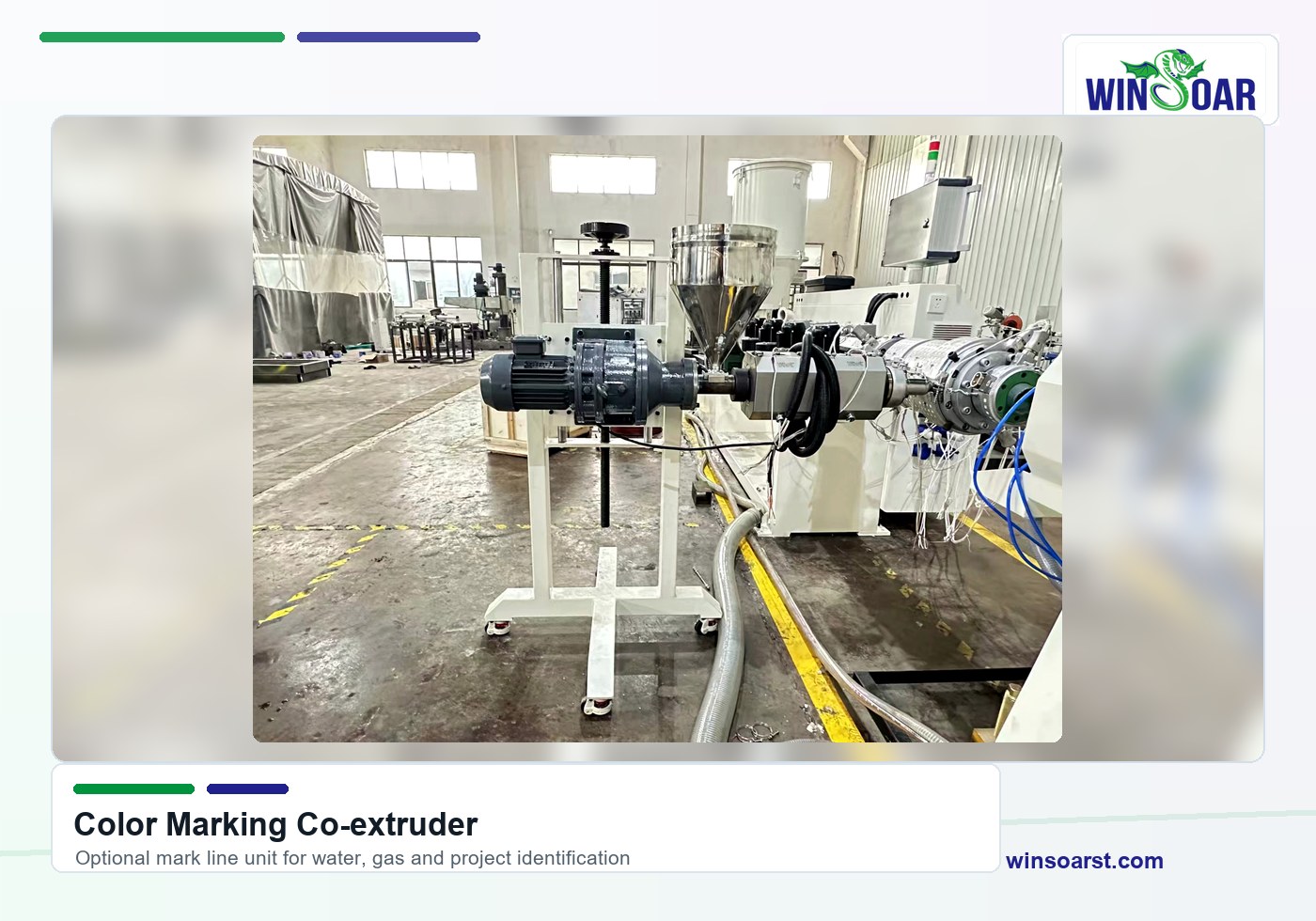
A color marking co-extruder can add a longitudinal identification stripe to the pipe when required by the application or local standard. The color, stripe position and mark-line stability should be confirmed together with the die head and material formula. For water, gas, conduit and customized utility pipe, the mark-line requirement may affect both the co-extruder and the control settings.
Small-diameter PE output is affected by material grade, wall thickness, screw design, line speed and the selected delivery format. When the line uses a coiler, winding tension and coil handling must be stable so the finished pipe is not deformed. When the line produces fixed lengths, the chipless cutter and receiving rack must be matched to the requested pipe length.
Buyer data | Why it matters |
|---|---|
Diameter, SDR and wall thickness | Determines die tools, calibration, cooling and the practical output range. |
PE80, PE100 or other compound | Influences melting, pressure-pipe performance, marking and process settings. |
Target kg/h or line speed | Helps match the extruder, haul-off, cooling and coiler capacity. |
Coil diameter or fixed pipe length | Determines the downstream winding, cutting and receiving arrangement. |
List the full diameter range and the main size produced most often.
Provide SDR, wall thickness or pressure-class requirements.
Confirm PE material grade, application and color-marking requirements.
Set the target output and line speed, if available.
Confirm coiled pipe or straight pipe, including coil diameter or fixed length.
Provide local voltage, cooling-water conditions and available workshop space.
Confirm whether printing, online measurement, belling or other downstream equipment is needed.
With these details, Winsoar can match the extruder, color marking unit, die head, vacuum calibration, spray cooling, haul-off, chipless cutter and coiler or receiving system to the actual small-diameter PE pipe project.
The 20-110mm range is useful when a pipe producer needs more coverage than a small 16-63mm line but does not need a large-diameter municipal line. The production plan should separate coiled small pipe from straight medium pipe because the downstream handling requirements are different.
Size planning | Typical configuration priority |
|---|---|
20-32mm | Accurate calibration, low-diameter haul-off, color marking and controlled coiling. |
32-63mm | Flexible choice between coiled irrigation/conduit pipe and fixed-length utility pipe. |
63-90mm | Stable cooling, synchronized haul-off and clean chipless cutting for regular lengths. |
90-110mm | More downstream cooling and handling capacity, especially for thicker-wall pipe. |
Coiled delivery is common for flexible irrigation, small water and conduit pipe because it reduces joints during installation. Straight lengths are often preferred for selected water, gas or utility projects where bundling and fixed length are part of the sales specification. The same headline range may therefore require different coiler, cutter, receiving-table and packing decisions.
Which diameter will be produced most frequently?
What is the maximum wall thickness and required SDR or pressure class?
What output is required at the main 32mm, 63mm, 90mm or 110mm size?
Will the line run coils, straight lengths, or both?
Is a color stripe, online printer or special marking required?
These details help prevent a line from being sized only for the smallest pipe while the commercial target is actually 90-110mm straight HDPE pipe. Winsoar can match the extruder, tooling, vacuum calibration, spray cooling, haul-off, cutter, receiving table and coiler to the intended production mix.
Video & Technical Parameters
Use the video and complete parameter table together: the video shows the real equipment structure, while the table helps compare all available PE / HDPE model ranges.
Watch this 20-110mm PE pipe production line video on YouTube.
| Production line | Diameter range (mm) | Extruder type | Max. capacity (kg/h) | Max. haul-off speed (m/min) | Extrusion power (kW) |
| WS-63 I | Ф20-63 | SJ65/33 | 220 | 12 | 55 |
| WS-110 I | Ф20-110 | SJ65/33 | 220 | 12 | 55 |
| WS-160 I | Ф50-160 | SJ75/33 | 400 | 10 | 110 |
| WS-250 I | Ф90-250 | SJ90/33 | 400 | 6 | 110 |
| WS-450 I | Ф160-450 | SJ120/33 | 500 | 4 | 160 |
| WS-630 I | Ф400-630 | SJ120/33 | 850 | 2 | 280 |
| WS-800 II | Ф500-800 | SJ120/33 | 850 | 2 | 280 |
| WS-630 I | Ф315-630 | SJ120/33 | 850 | 2 | 355 |
| WS-800 I | Ф500-800 | SJ150/33 | 1100 | 1 | 400 |
| Production line | Diameter range (mm) | Extruder type | Max. capacity (kg/h) | Max. haul-off speed (m/min) | Extrusion power (kW) |
| WS-63 II | Ф20-63 | WSD60/38 | 320 | 30 | 70 |
| WS-110 II | Ф20-110 | WSD60/38 | 380 | 20 | 90 |
| WS-160 II | Ф40-160 | WSD60/38 | 460 | 15 | 110 |
| WS-250 II | Ф50-250 | WSD75/38 | 600 | 12 | 160 |
| WS-450 II | Ф110-450 | WSD90/38 | 850 | 8 | 250 |
| WS-630 II | Ф250-630 | WSD90/38 | 1050 | 4 | 280 |
| WS-800 II | Ф500-800 | WSD120/38 | 1300 | 2 | 355 |
| WS-1200 II | Ф710-1200 | WSD75/38 + WSD90/38 | 1450 | 1 | 160/250 |
| WS-1600 II | Ф1000-1600 | WSD90/38 + WSD90/38 | 1900 | 0.6 | 280/280 |
| Buyer question | How to use the table |
| Which rows are most relevant to 20-110mm projects? | For this product page, focus on WS-63 I, WS-110 I, WS-63 II and WS-110 II. The full table is kept so customers can compare all PE line model ranges. |
| Do I need 33D or 38D? | 33D is a classical configuration. 38D is selected when higher output, better plasticizing efficiency or higher line speed is required. |
| Why does small-diameter PE pipe need a coiler? | Many 20-110mm PE pipes are supplied in coils. The coiler must match pipe size, wall thickness, line speed and coil diameter. |
| What data should I send for quotation? | Pipe diameter range, SDR or wall thickness, material grade, output target, voltage, workshop layout, color mark-line requirement and coiling requirement. |
Before checking the final quotation, you can review the matching running video solution for this 20-110mm PE Pipe Production Line. See the small diameter PE / HDPE line running test, including chipless cutting and optional coiling layout.
Machine Configuration
The configuration of a 20-110mm HDPE pipe extrusion line should be selected according to pipe application, SDR, output target, mark-line requirement and coiling method.
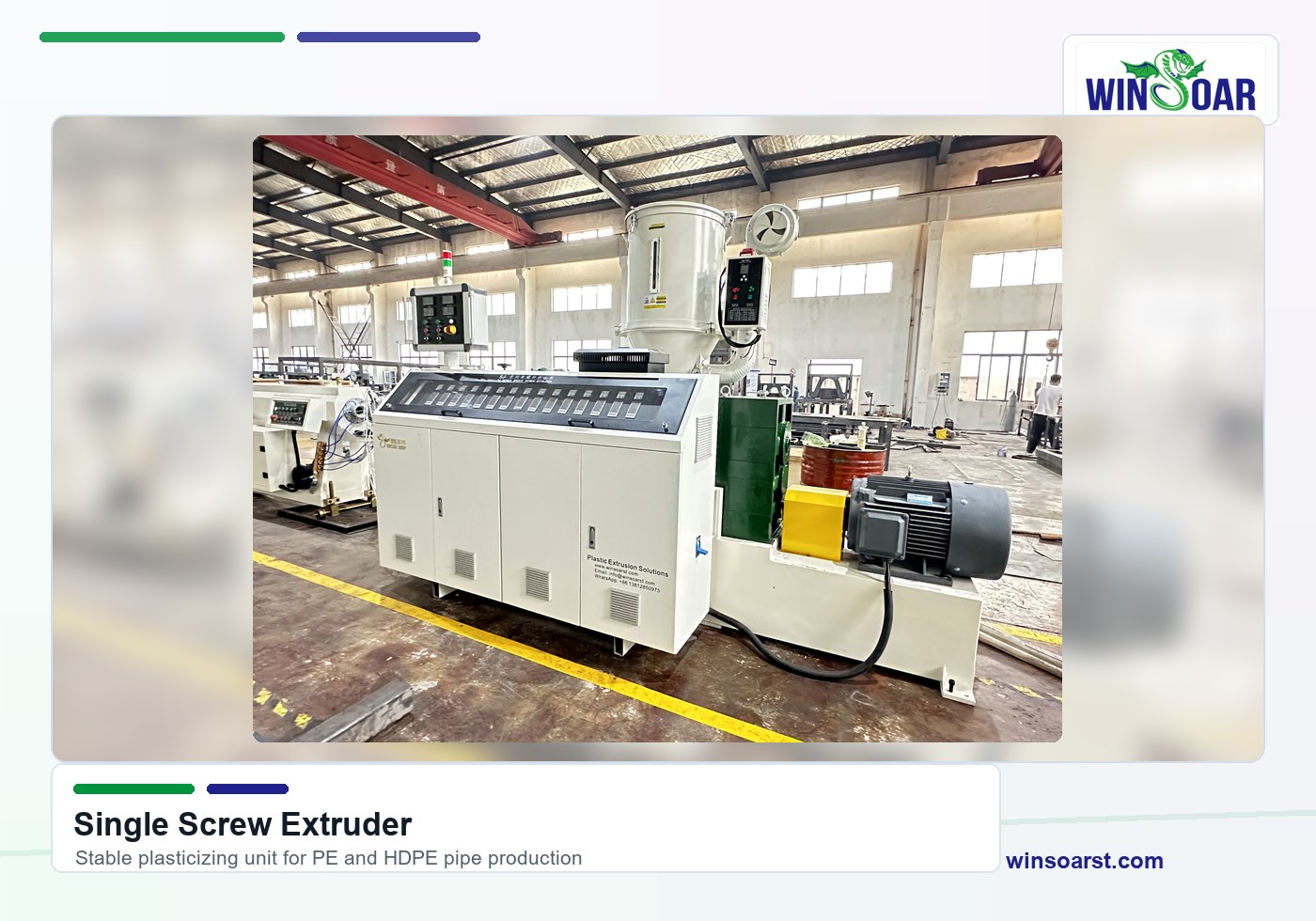
The single screw extruder is selected according to PE material, pipe size, SDR and target output. For small-diameter pipe production, stable plasticizing and smooth pipe surface are important.
A color marking co-extruder is used when water supply or gas pipe needs blue, yellow or customized mark lines. The mark line must be matched with the pipe die head and pipe standard.
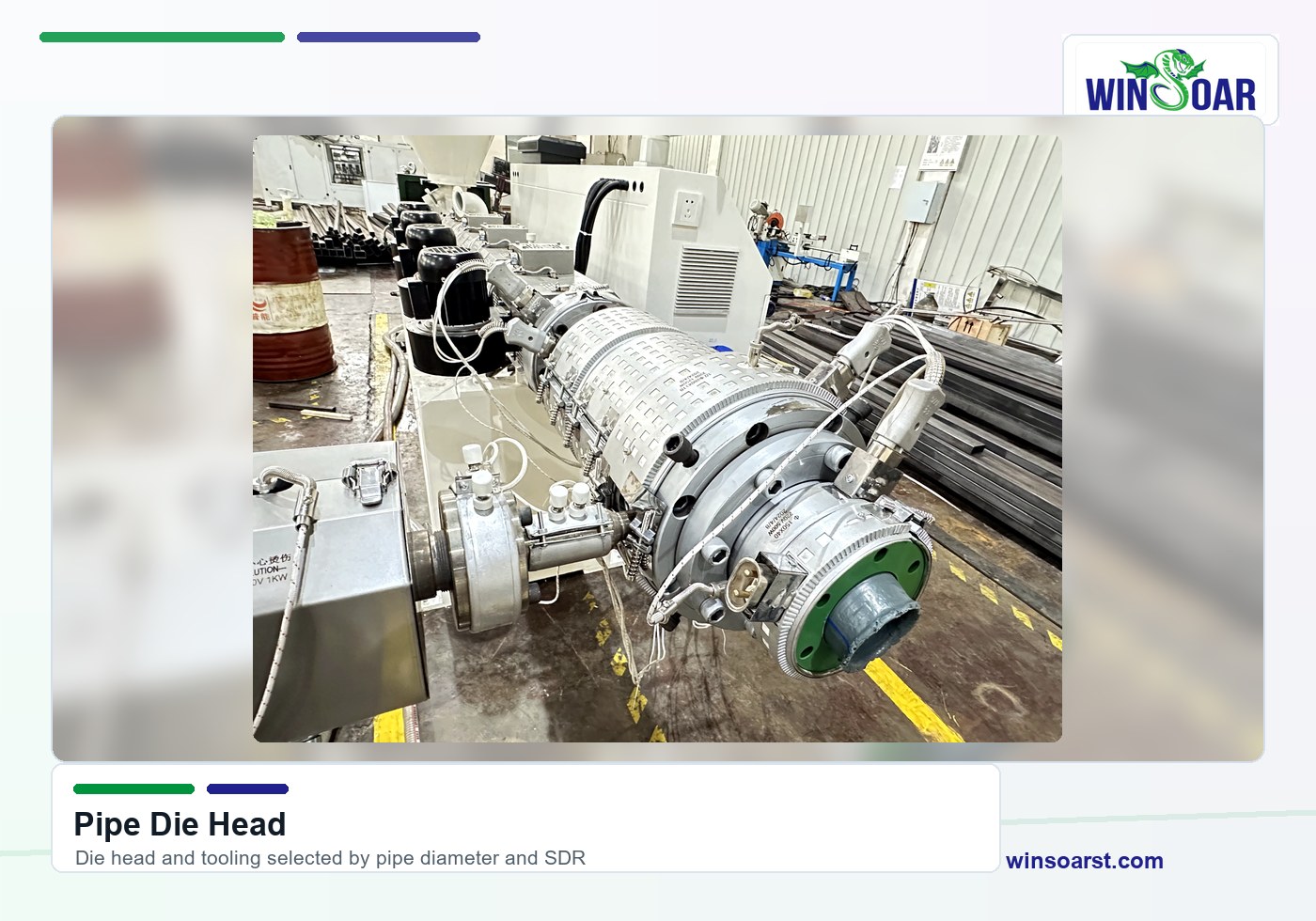
The PE pipe die head forms the pipe diameter and wall thickness. For 20-110mm pipe production, die design affects pipe surface, concentricity and mark-line position.
The vacuum calibration tank controls pipe outside diameter and initial cooling. Small-diameter PE pipes need stable vacuum and water temperature for consistent size.
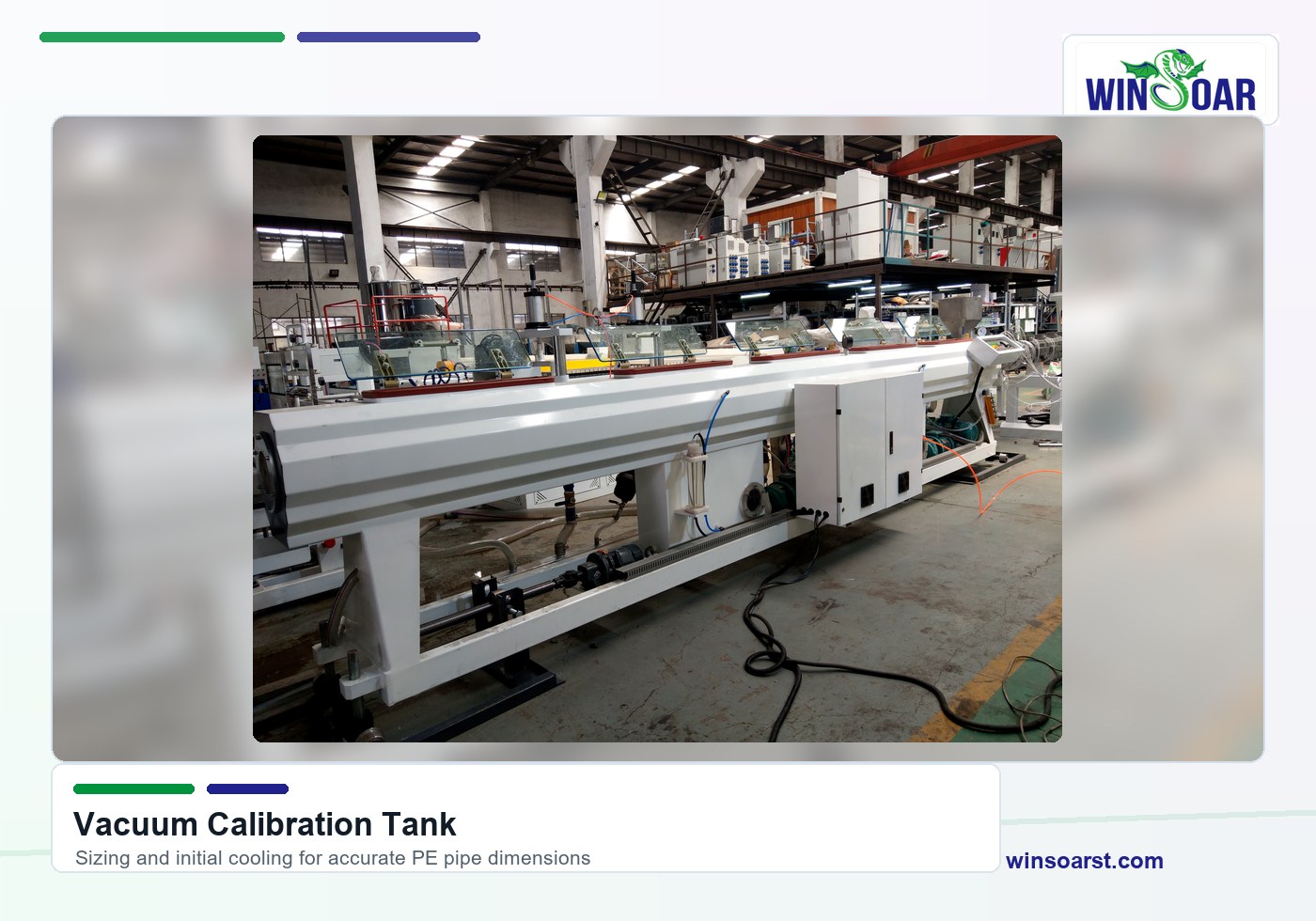
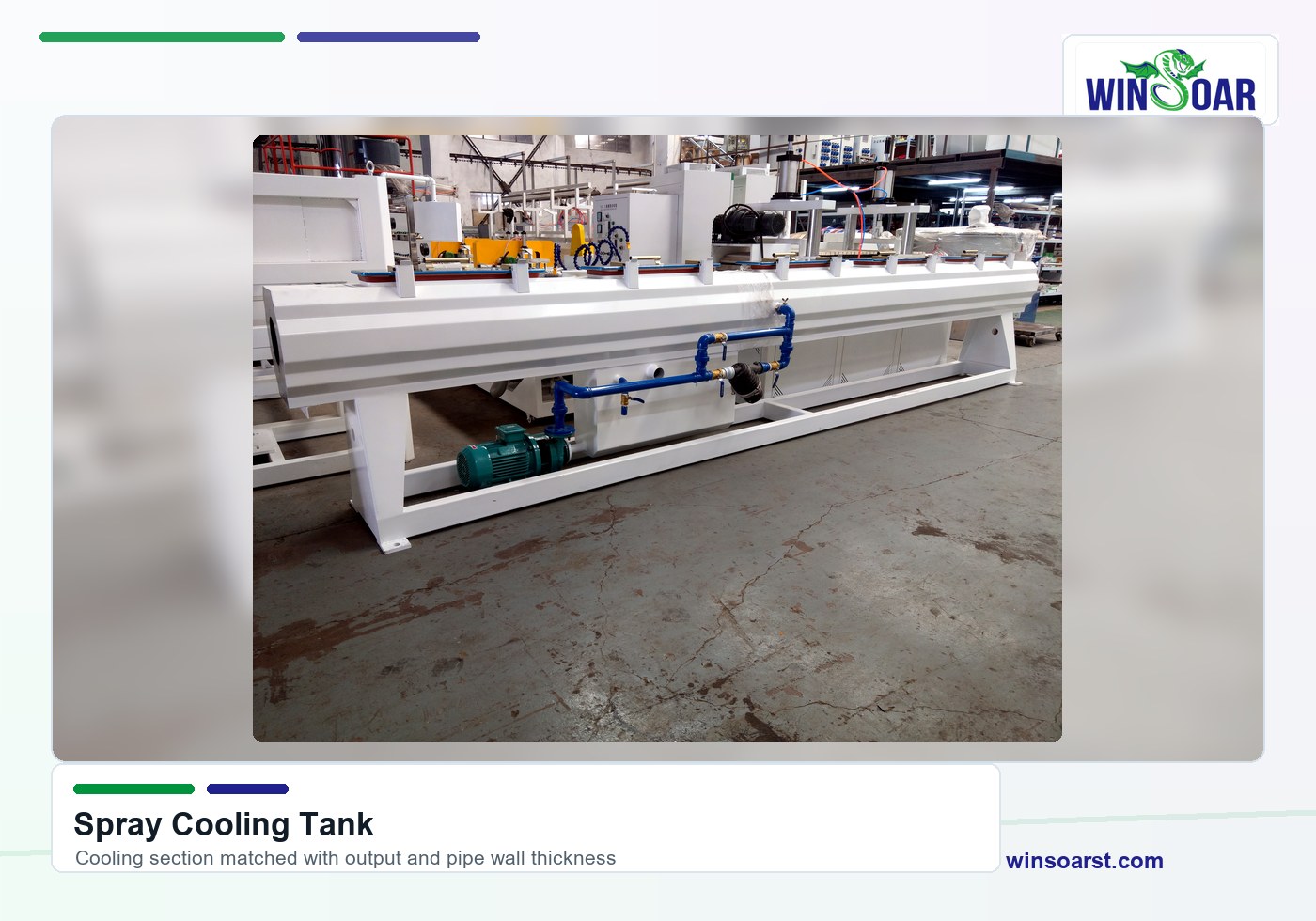
The spray cooling tank provides additional cooling before hauling and cutting. Cooling stability helps protect roundness, surface quality and line speed.
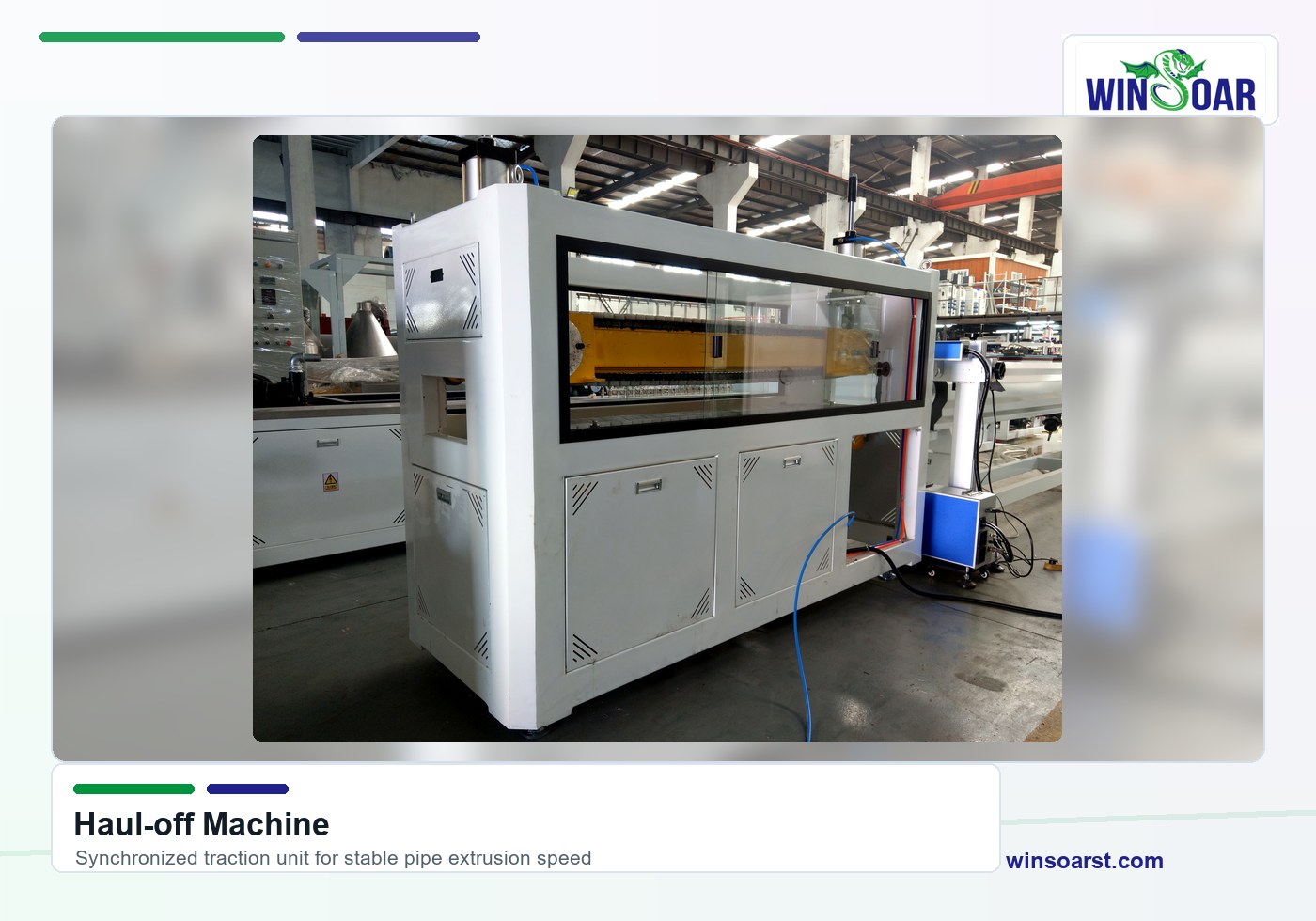
The haul-off machine pulls the pipe at synchronized speed. Stable traction is important for pipe wall thickness, outside diameter and coiling quality.
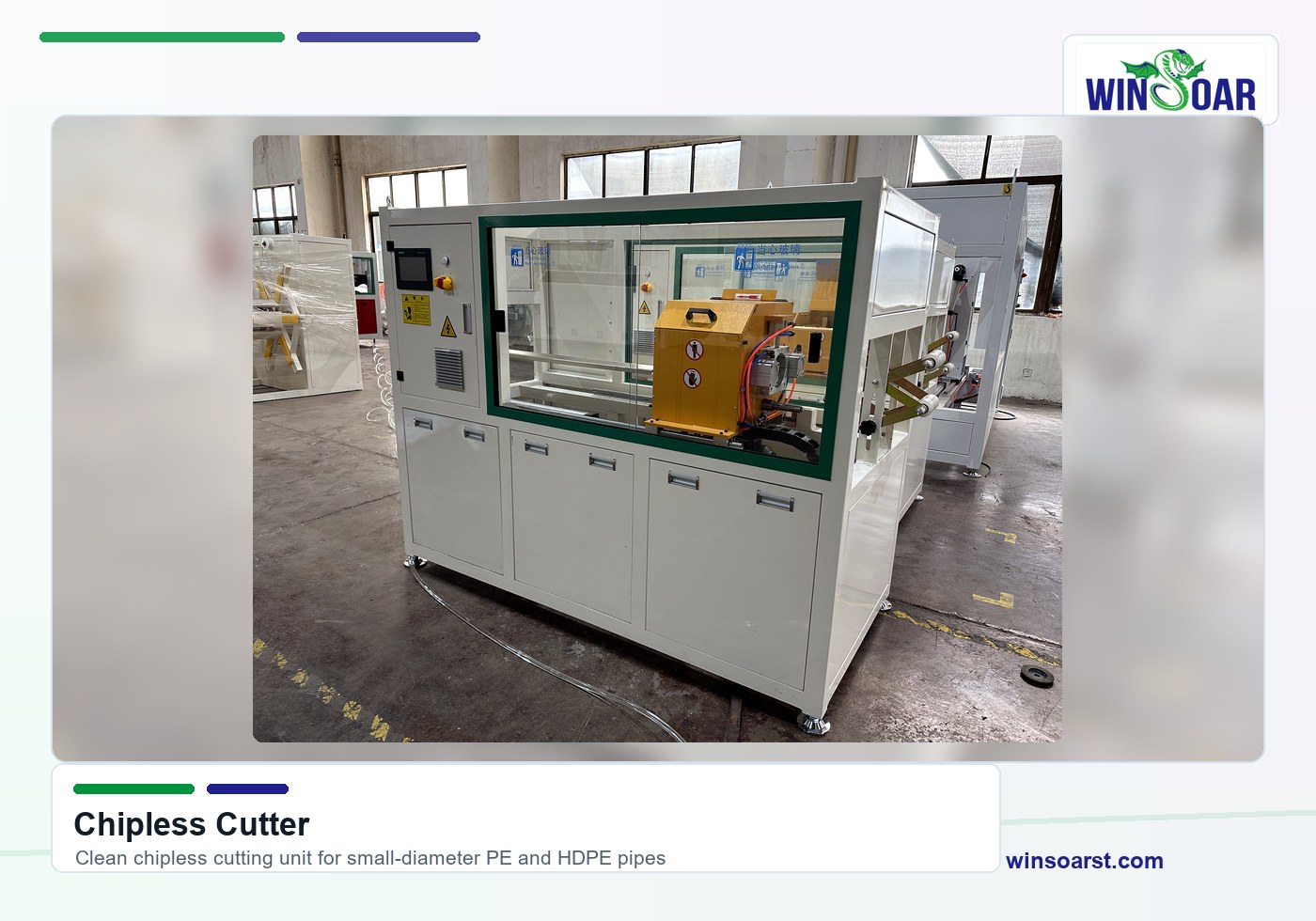
The chipless cutter is used when fixed-length pipe cutting is required for small-diameter PE pipe. It should be matched with pipe diameter, wall thickness and production speed.
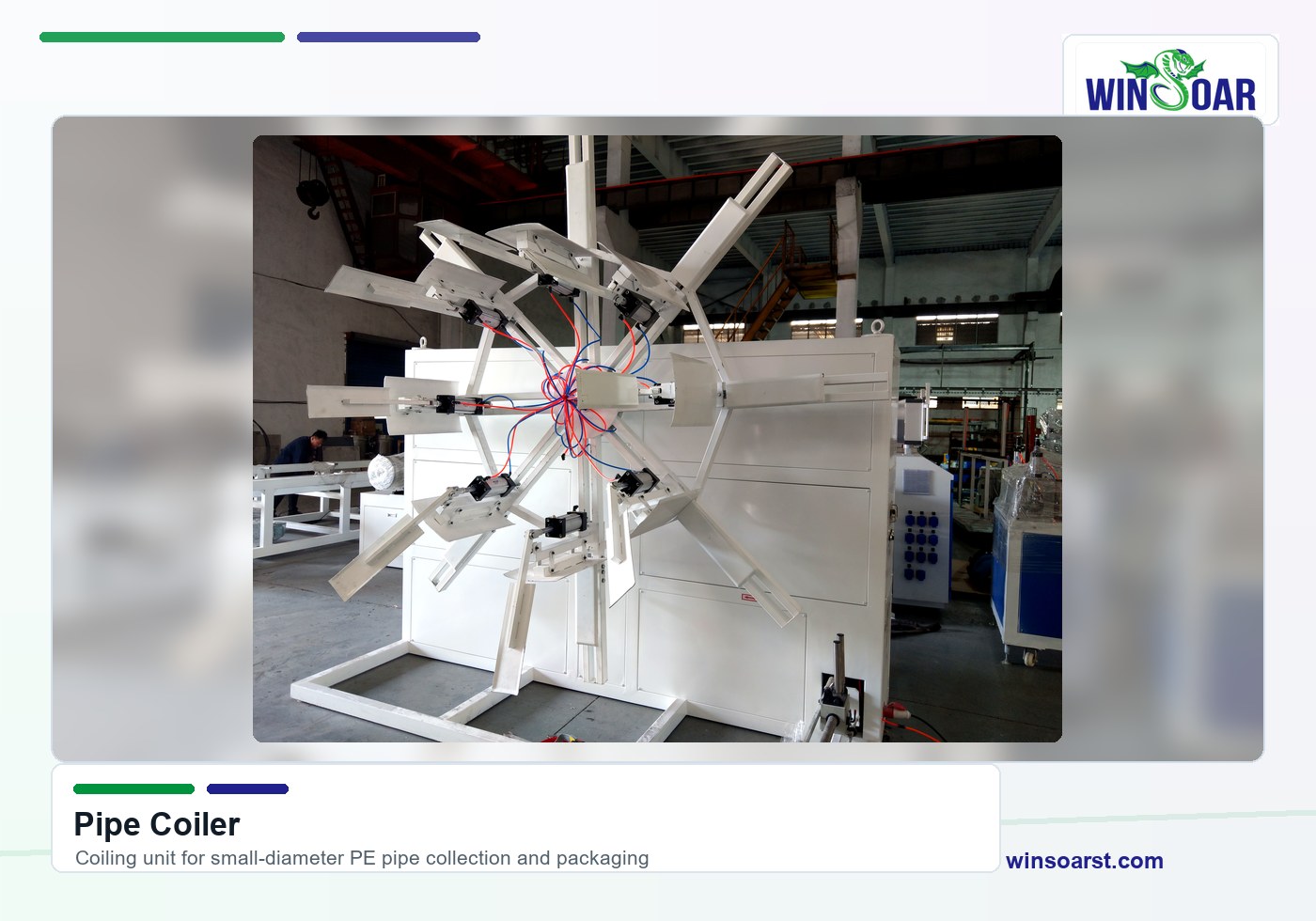
The pipe coiler is used for small-diameter PE pipe coils. Coiling design should be confirmed according to pipe diameter, coil size, pipe stiffness and packing method.
| Selection item | Why it matters |
| Pipe diameter and SDR | Determines extruder output, die head, cooling length, haul-off and coiler selection. |
| Pipe application | Water, gas, irrigation and drainage pipes may require different standards and mark-line settings. |
| Color mark line | Confirm whether blue, yellow or customized mark line is required before selecting co-extruder and die head. |
| Coiling requirement | Confirm pipe size, coil diameter, coil weight and packing method. |
| Output target | Used to select 33D classical or 38D high-efficiency extruder configuration. |
| Workshop layout | Affects tank length, coiler position, cooling water and electrical layout. |
Factory, Packaging & Exhibition
Winsoar supports PE and HDPE pipe extrusion line projects with configuration design, manufacturing, assembly checking, export packaging, container loading and customer communication.
Small-diameter PE pipe production lines require careful matching between extruder, mark-line co-extruder, die head, calibration, cooling, haul-off, cutter and coiler.
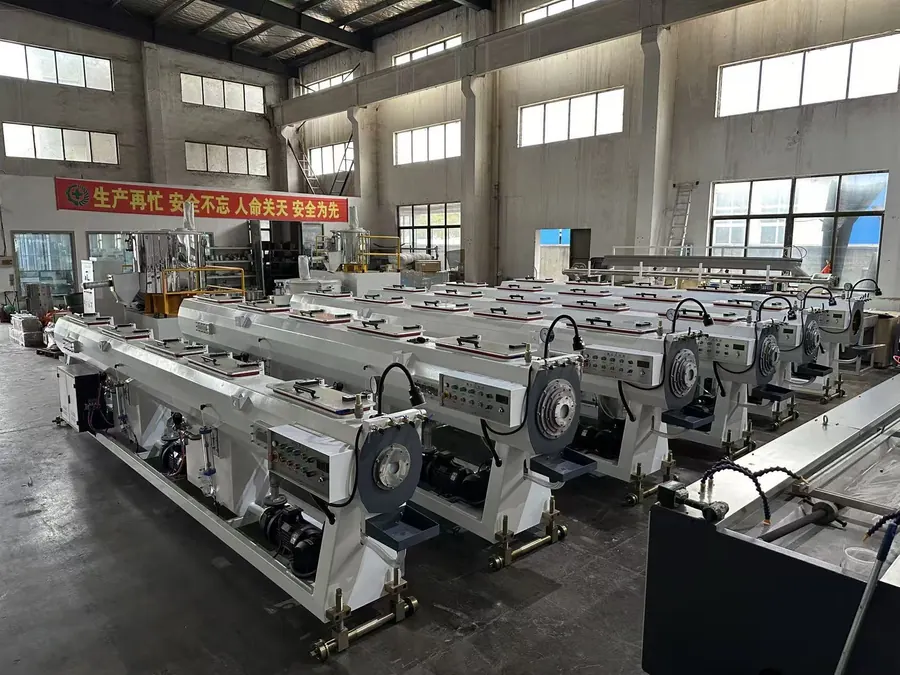
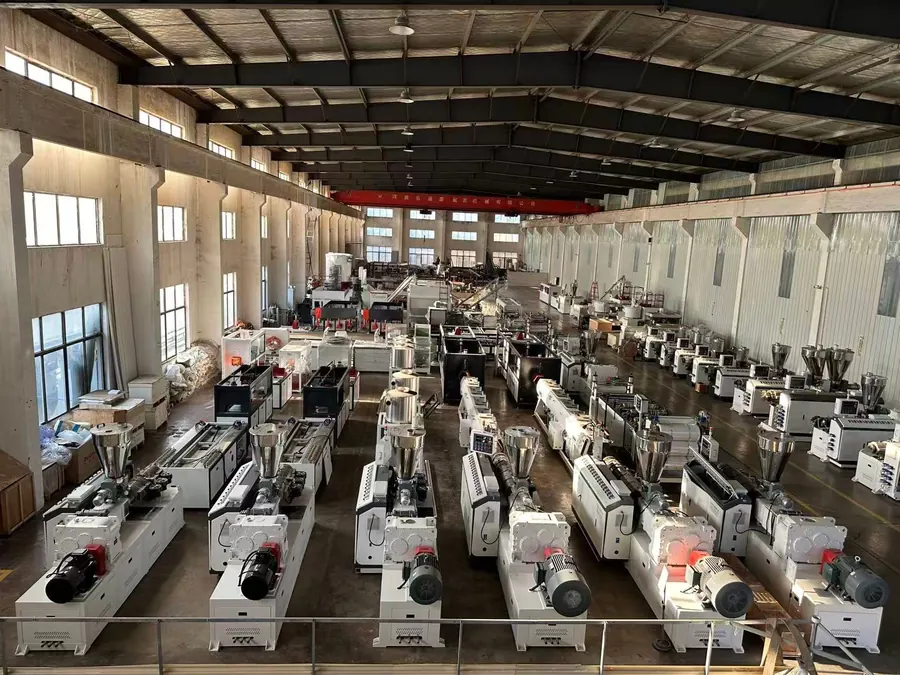
Before delivery, moulds, calibration parts, electrical cabinet, coiler and spare parts are checked according to the final configuration list.
Packaging and loading plans are arranged according to equipment dimensions, shipment route, spare parts and unloading conditions.
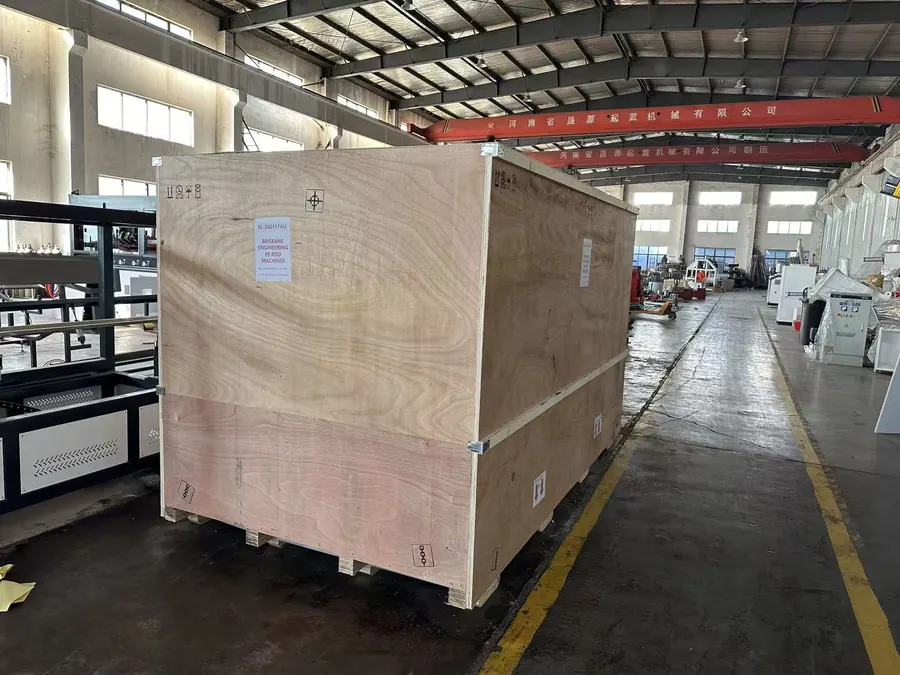
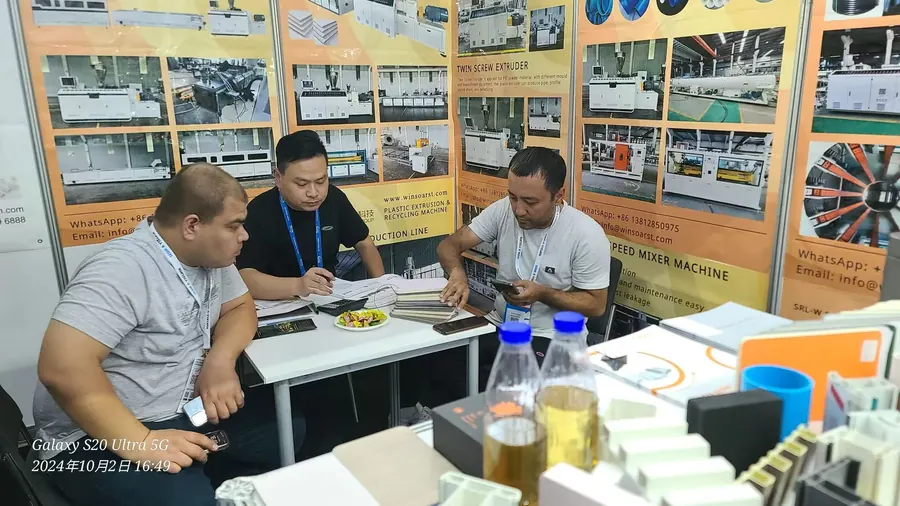
Winsoar communicates with buyers about pipe diameter range, SDR, application, color mark line, coiling, output and factory conditions before preparing a practical quotation.
It is a small-diameter HDPE pipe extrusion line for producing polyethylene pipes from 20mm to 110mm, including extrusion, color marking, calibration, cooling, hauling, cutting and coiling.
Yes. The configuration can be selected for PE water supply pipes, PE gas pipes, irrigation pipes, drainage pipes and industrial pipe projects according to pipe standard and SDR.
A color marking co-extruder is required when the pipe needs blue, yellow or customized mark lines for water, gas or project identification.
Many small-diameter PE pipes are packed and shipped in coils. Coiler size, winding force and control method affect coil quality and packing efficiency.
Please provide pipe diameter range, SDR or wall thickness, material grade, pipe application, output target, voltage, color mark-line requirement and coiling requirement.
Tell Winsoar your pipe diameter, SDR, wall thickness, output requirement, mark-line requirement, coiling requirement and factory voltage. We will recommend a suitable HDPE pipe extrusion line configuration for your project.
Use these PE / HDPE pipe extrusion line guides to compare machine configuration, production process, equipment cost and diameter selection before confirming your project layout.
| Guide | When to read it |
| What Machines Are Included in a PE Pipe Production Line? | Check the complete equipment list, including extruder, die head, tanks, haul-off, cutter, coiler and stacker. |
| PE Pipe Production Line Process | Understand extrusion, vacuum calibration, cooling, haul-off and cutting process flow. |
| PE Pipe Production Line Cost | Review cost factors before requesting a PE or HDPE pipe extrusion line quotation. |
| How to Choose an HDPE Pipe Extrusion Line | Match pipe diameter range, SDR, application and output target to the right machine configuration. |